
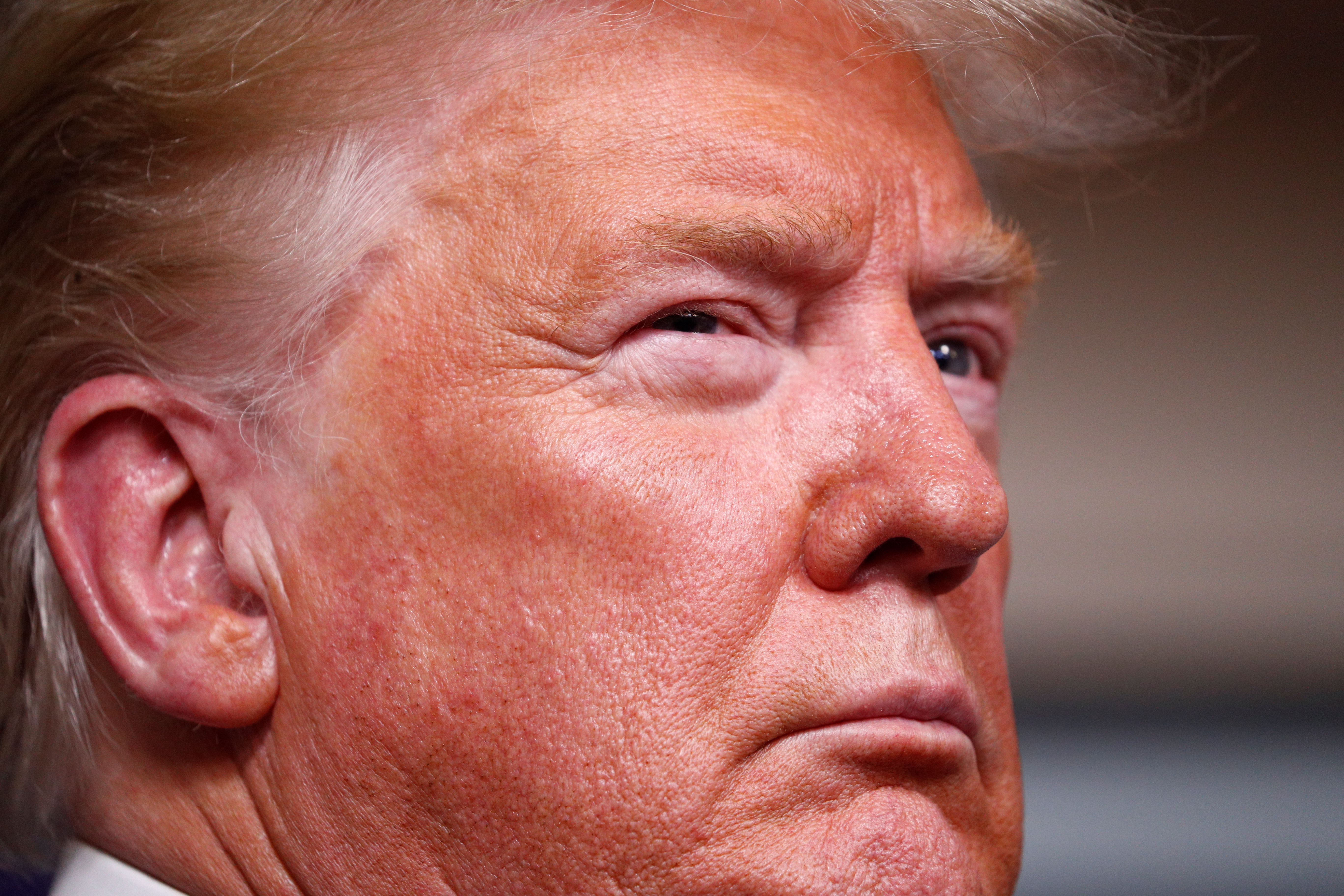
His time in office may be nearly over, but President Trump is headed for what may be a first: an attempt by Congress to override his veto.
Lawmakers are moving ahead with the $741 billion National Defense Authorization Act this week, despite Trump’s threat to veto the bill over its failure to remove legal protections for tech companies.
The House is expected to vote Tuesday on the annual defense policy bill, with the Senate following soon thereafter. On Tuesday morning, Trump reiterated a threat he has made several times before, referring to a specific provision of the Communications Decency Act that provides broad immunity to content posted on sites run by the likes of Facebook and Twitter.
“I hope House Republicans will vote against the very weak National Defense Authorization Act (NDAA), which I will VETO,” Trump tweeted. “Must include a termination of Section 230 (for National Security purposes) ...”
The president also referred to issues involving national monuments, troop levels overseas and 5G technologies, though it’s not clear if he was issuing a new set of demands for lawmakers to consider.
Veto by the numbers: Both the House and Senate passed earlier versions of the bill with veto-proof two-thirds majorities, but it’s not clear that Congress could provide the same margins this time around. The House Freedom Caucus said Tuesday that it supported the president’s veto threat, and the group’s roughly three dozen members could tilt the House vote in favor of a successful veto.
House Minority Leader Kevin McCarthy (R-CA) signaled that he would not support an effort to overcome a veto. “I don’t believe Republicans, in our work with the president, always, that you vote to override a veto,” McCarthy told reporters Tuesday.
Other Republicans called for lawmakers to support the bill. “The stronger the vote, the less chance of having to deal with a veto later,” Rep. Mac Thornberry (TX), the top Republican on the House Armed Services Committee, told reporters Monday. “If somebody is going to vote no on a bill because of what’s not in it, that has nothing to do with it … that can’t be the standard,” Thornberry added.
Another veto option: Even if Congress is able to provide veto-proof majorities, Trump has another option for gumming up the works: the pocket veto. A president can simply refuse to sign a bill that lands on his desk, allowing the legislation to expire after 10 days (not including Sundays). Trump could take the route, forcing Congress to return to town after Christmas for another vote – a particularly challenging course during a pandemic.