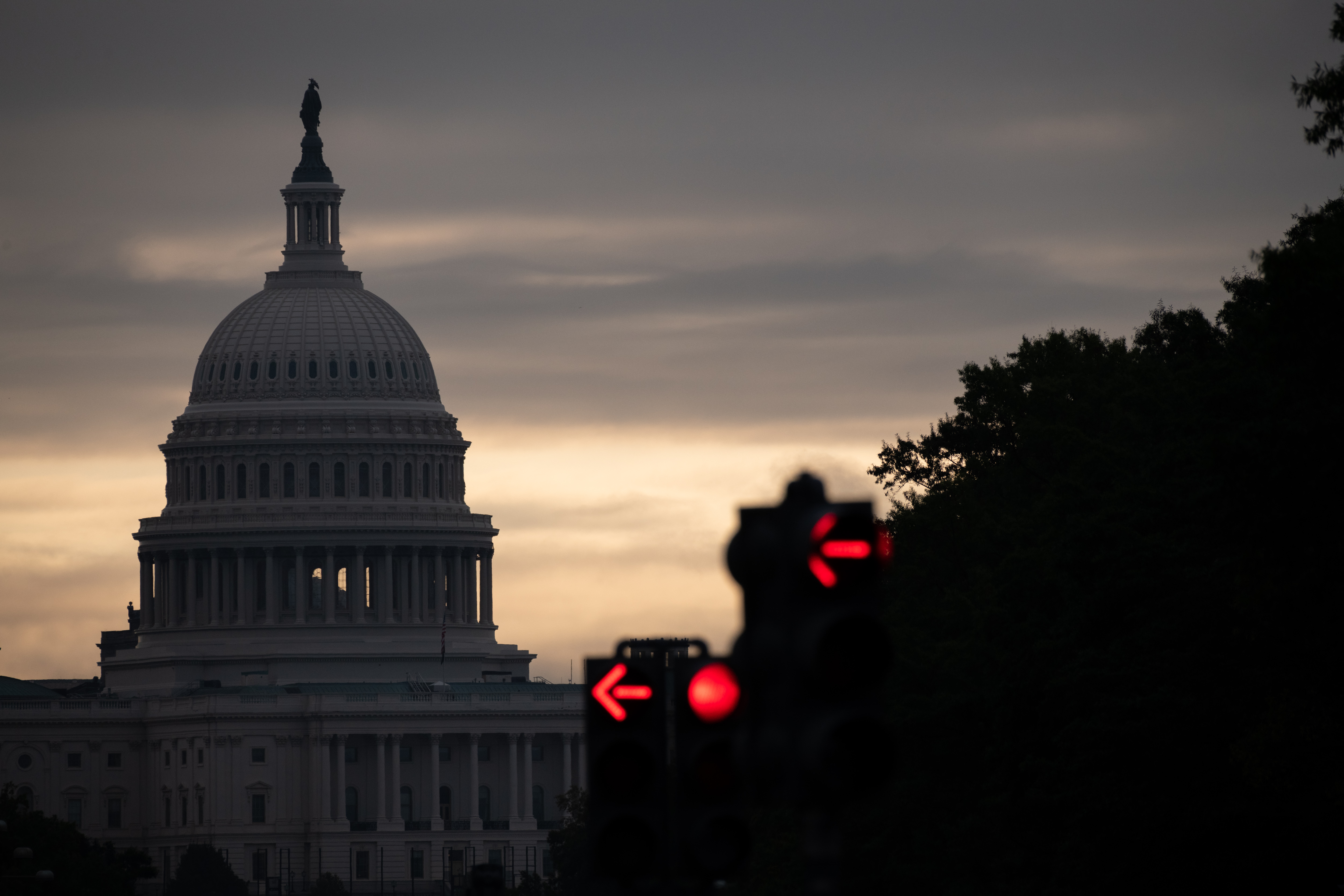
Congress is heading for its third stopgap spending bill for the fiscal year that started just over four months ago.
Facing a February 18 deadline to extend government funding and prevent a government shutdown, congressional appropriators had reportedly hoped to make some progress this week toward an agreement on a spending package for the rest of the fiscal year that began in October. But negotiations on the long-delayed funding bill have been slow, with Democrats and Republicans still divided over key issues.
“We haven’t resolved anything yet,” Sen. Richard Shelby (R-AL), the top Republican on the Senate Appropriations panel, told reporters Thursday.
The two sides haven’t yet settled on topline spending levels, as Democrats push for a larger increase in non-defense spending while Republicans continue to insist on “parity,” or equal-sized increases for the defense and non-defense portions of the budget.
“Right now, we are going back and forth with offers between the Democrats and Republicans and we're hoping to reach a deal on a topline very soon on that,” House Speaker Nancy Pelosi (D-CA) said at her weekly press conference Thursday.
Roll Call’s Lindsey McPherson reports that Republicans on Wednesday proposed a larger boost to the defense budget than 5% increase approved on a bipartisan basis in the annual National Defense Authorization Act, which would put total Pentagon and security spending at $778 billion.
Another stopgap: There’s no deal on topline spending numbers at hand. “Am I optimistic? Probably not at this point,” Shelby told reporters. “But I’m not glum. Not yet.”
Without an agreement, and with the February 18 deadline approaching, lawmakers will almost certainly need to fall back on another stopgap extension, known as a continuing resolution. “Even if appropriators could reach a deal on defense and nondefense toplines in the next few days, they would still need time to hammer out spending levels for the individual 12 bills and all the policy details under them,” McPherson writes. “That’s a massive task that would be difficult to negotiate in less than two weeks, let alone draft finalized text for and pass through both chambers.”
The question is how long that stopgap measure will last — and the answer will depend on how much progress appropriators can make in the coming days.
The bottom line: Each side has reason to want to reach a deal. While the prospect of a full-year continuing resolution extending funding at fiscal 2021 levels holds some appeal for Republicans, many also want to provide the Pentagon with a funding increase and the flexibility that would come with new appropriations. Democrats, meanwhile, are eager to fund their agenda and show some progress. Much of the spending authorized under last year’s bipartisan infrastructure bill, for example, requires lawmakers to pass the annual spending package. And Democrats are pushing for additional pandemic relief funding, which may be unlikely without a larger agreement.
Congress Crawls Toward Another Stopgap Spending Bill