
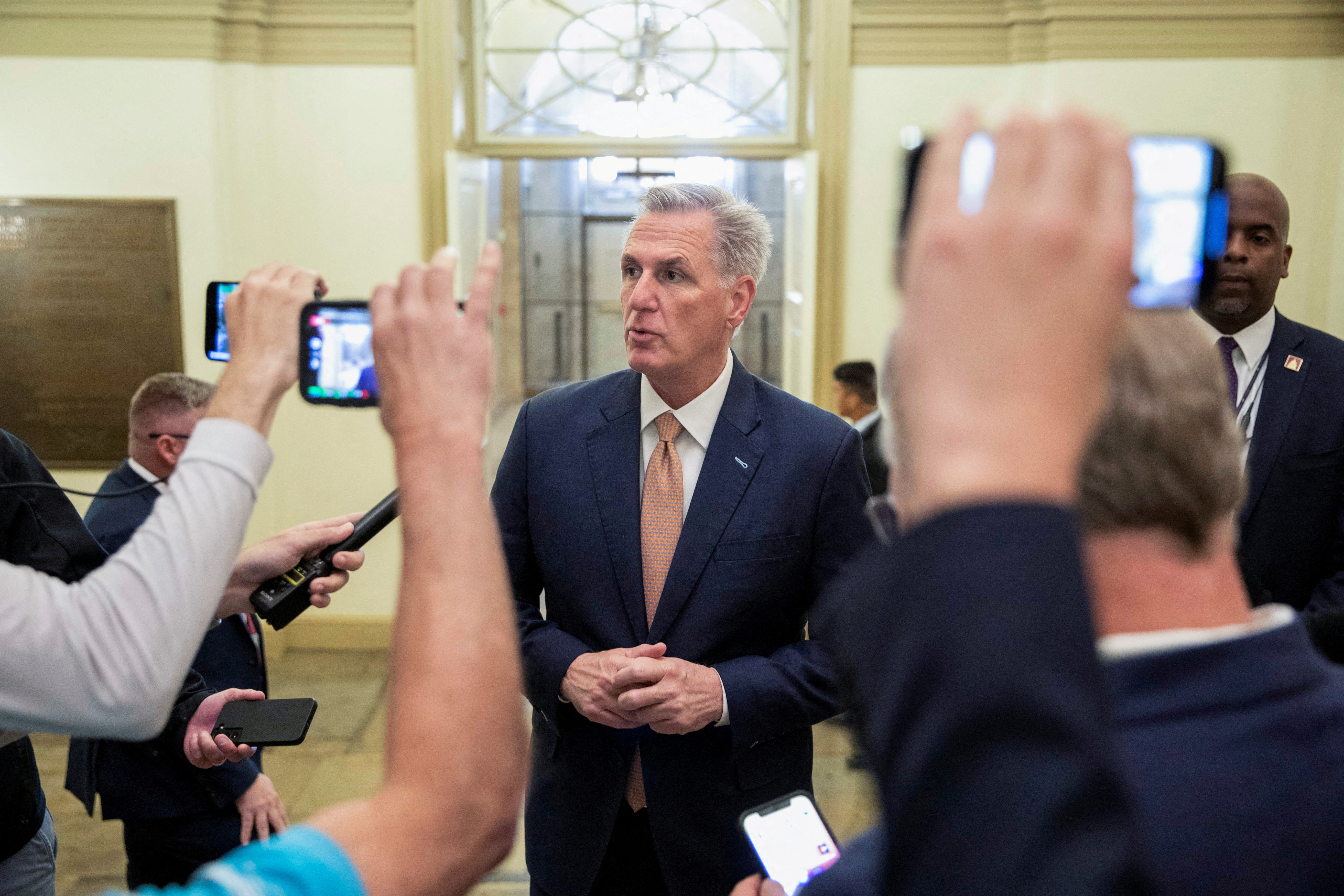
The new week started with the same headache for Speaker Kevin McCarthy: The 11 House Freedom Caucus conservatives who last week revolted against their own leaders by preventing floor votes on a group of partisan Republican messaging bills had yet to give up their blockade. But by the end of the day, the rebels reportedly relented after McCarthy apparently agreed to rework a “power-sharing agreement” he had made in January to win support for his bid to become speaker.
“Emerging from McCarthy’s office on Monday evening, those hardliners said no firm agreement has been reached with the Speaker,” The Hill reported. “But they’re encouraged by the direction of the talks and will release their stranglehold on the House this week while those discussions continue.”
The group of 11 agreed to support a vote as soon as Tuesday on a new rule covering bills that were held up last week, Rep. Ralph Norman of South Carolina said, according to Roll Call. But Reps. Matt Gaetz of Florida and Matt Rosendale of Montana warned that conservatives could still shut down legislative action in the future if they did not see enough progress on their demands.
“It has to be renegotiated in a way so that what happened on the debt limit vote would never happen again, where House conservatives would be left as the less desirable coalition partner than Democrats,” Gaetz said.
The hardliners were able to bring House floor proceedings to a halt because Republicans only have a narrow 222-213 majority in the chamber, meaning that they can’t afford to lose more than four votes on any legislation that Democrats oppose.
Spending still an issue: The GOP rebels reportedly were pressing for concessions on federal spending levels and the appropriations process. McCarthy said he’s open to the idea of setting spending levels below the caps he agreed to as part of his deal with the White House to suspend the debt limit. “You can always do less," he told reporters — but Democrats are sure to oppose further cuts, and some Republicans insist that defense spending levels in the deal are too low and will need to be supplemented.
Why it matters: The infighting hasn’t yet derailed any key legislation, but if it continues it could still complicate critical votes and deadlines ahead, including on annual spending bills, defense authorization and more. The tactics of the House Freedom Caucus could also prompt a backlash that affects future votes.
What else is ahead this week: There’s plenty happening this week even as House floor action is stalled. The House Ways and Means Committee will meet Tuesday morning to mark up the new Republican tax cut package. Also on Tuesday morning, the House Appropriations Committee will begin its markup of the fiscal year 2024 Military Construction and Veterans Affairs bill. And Treasury Secretary Janet Yellen will testify before the House Financial Services Committee on the state of the international financial system.
On top of all that, the Federal Reserve’s policymaking committee will meet Tuesday and Wednesday to decide whether to pause its rate-hiking campaign after 10 straight increases. We’ll hear from Fed Chair Jerome Powell on Wednesday afternoon.