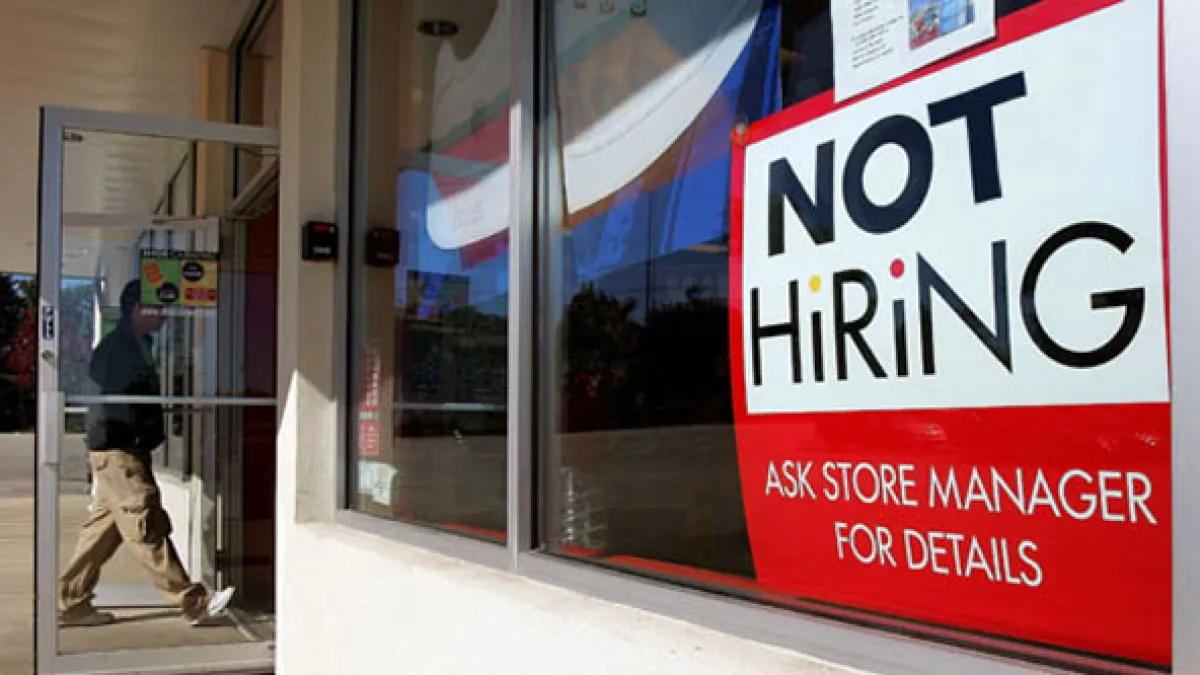
U.S. employers added just 29,000 jobs in September, and the unemployment rate rose a tenth of a percentage point to 4.2%, the Labor Department announced Friday. Both results failed to meet expectations, as analysts had projected job growth of about 90,000 and a steady unemployment rate for the month.
Job growth in the previous two months was moved lower, as well, with the numbers for July reduced by 31,000, moving the final tally to a loss of 10,000, and August falling by 29,000 to 133,0000.
The healthcare sector provided the majority of the growth in September, as it has for many months, adding a weaker-than-usual 17,000 jobs. Construction firms created 11,000 jobs, and manufacturers 9,000.
Employment in federal, state and local governments fell by 17,000, while professional and business services firms cut 9,000 jobs.
Wages grew 3.0% on an annual basis, the smallest 12-month gain since May 2021.
What the analysts are saying: Analysts downplayed the miss in the top-line numbers, saying the labor market appears to be holding more or less steady, despite the monthly variations. From July through September, job growth has averaged 51,000 per month, a level many economists see as a stable level in a "low hire, low fire" job market.
"The September employment report came in a little bit softer than expected but overall wasn't too worrying," JPMorgan's Michael Feroli wrote in a note to clients. Feroli pointed out that the unemployment rate rose because 485,000 people entered the workforce, a positive sign about the strength of the economy. And he described the three-month growth average as being "close to most estimates of trend monthly growth in the labor supply, i.e. breakeven job growth."
RSM Chief Economist Joseph Brusuelas said the labor market appears to have settled into a new normal, shaped by political policy and basic demographics. "Growth in the domestic supply of labor will remain soft given the well-known long-term demographic challenges posed by the retirement of baby boomers and restrictive immigration policies," he said in a research note. "Soft readings like September's and an underlying trend of around 50,000 new jobs added monthly will be the norm over the next two years at the least."
Heather Long, chief economist at Navy Federal Credit Union, emphasized the same point. "The September jobs report tells us the 'low hire, low fire' job market is still here," she said on X. "There was hope that hiring was picking up, but it's stabilizing at a low ~50k a month." Long noted that job growth is being driven largely by two sectors: healthcare and the buildout of artificial intelligence infrastructure.
Long added the latest data confirms the worry that millions of American workers are feeling "financial pain," with the lowest year-over-year wage growth in five years (see her chart below). "Inflation has eaten up all wage gains for the average worker since April," she wrote. "Many people are having to make hard choices about what to buy and what to skimp on right now. Yes, consumption is still strong (mainly due to wealthier Americans and people dipping into savings or credit cards), but a lot of people have to think hard about every dollar they spend."
Fed may sit tight: The soft jobs and wage data indicate that the labor market is not contributing to inflation, reducing pressure on the Federal Reserve to raise interest rates at its next meeting at the end of the month.
According to CME's FedWatch tool, traders now assign a 22% chance of a quarter-point rate hike at the meeting, a big drop from the 35% reading a week ago.
"This report strengthens the case for the Federal Reserve to remain patient," said Adam Schickling, a senior economist at Vanguard, per CNBC. "The labor market has not deteriorated sharply, but there is also little evidence that it has meaningfully strengthened, giving policymakers reason to wait for additional data."