
Iran War Funding in Dispute as Congress Races to Avoid Shutdown
Happy Monday! It was certainly a happy day for Jensen Huang, the ousted former CEO of Nvidia, who shockingly got his old job back after a stunning intervention by President Trump, who owns millions of dollars' worth of Nvidia stock. "I made the deal" with the Nvidia board of directors to get Huang reinstated, Trump told CNBC Monday morning in an extraordinary interview about the extraordinary development. Investors had a happy day, too, as you'll see below.
Here's what we're watching while Congress is out.
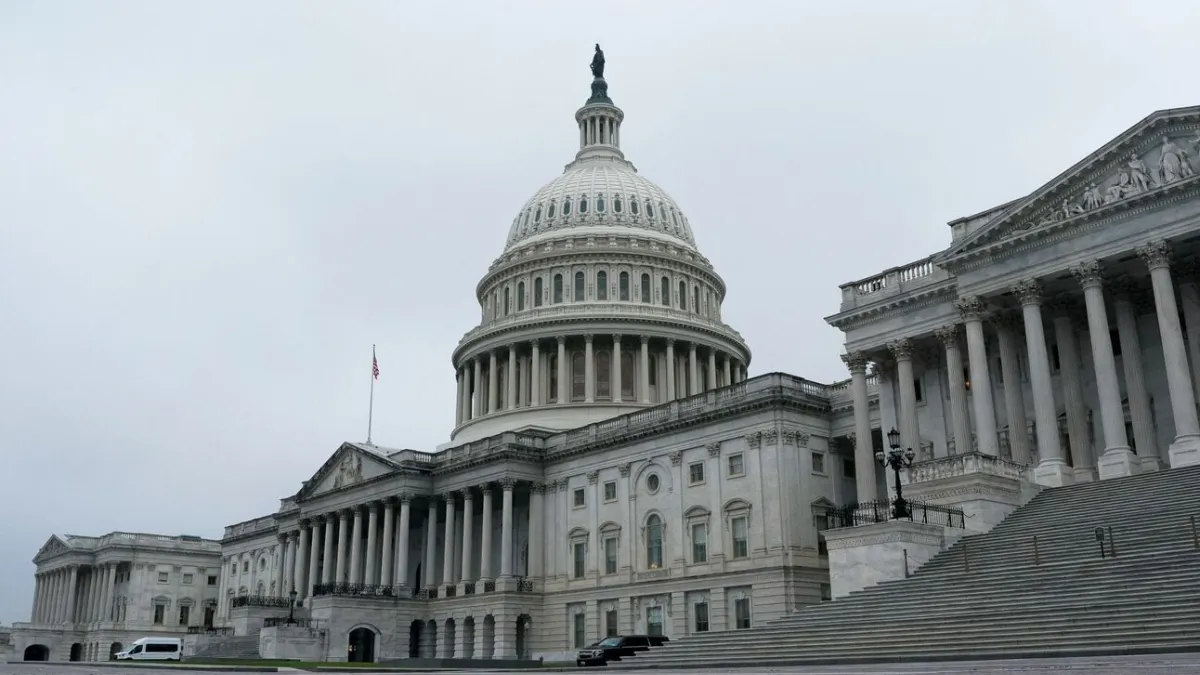
Iran War Funding in Dispute as Congress Races to Avoid Shutdown
With a December 11 government funding deadline looming, Senate Republicans and Democrats are reportedly discussing a deal that would prevent a government shutdown and fund certain Pentagon priorities but cut off money for the Iran war.
Republican Senate Appropriations Committee Chair Susan Collins told reporters recently that she is eyeing a potential deal that would provide funds to restock depleted munitions but block further funding for offensive military operations against Iran unless President Trump gets formal authorization from Congress.
"I think there's a pretty wide recognition on both sides that some of the munitions replacement money is needed pretty soon," Democratic Sen. Tim Kaine said, according to The Washington Post.
Some Democrats have argued that any government funding package must halt funding for the war - a demand that could result in a government shutdown if it means that the broader spending bill fails to get the necessary votes in the House and Senate.
It's not clear if enough Republicans, who still have majorities in both chambers until January 3, would support a potential deal that excludes money for the war. President Trump is also looking for a larger boost in military spending, which Democrats and some Republicans oppose, further complicating the path to any deal. It's also not certain that Trump would agree to any such deal, or honor it if he does.
In short, the effort to reach a bipartisan December funding deal "faces enormous obstacles in a bitterly divided Congress, with Republicans largely wary of crossing President Donald Trump on the war - even after their midterm losses - and emboldened Democrats seeking big restrictions on his power," CNN's Sarah Ferris writes. "But if no deal is reached, the Pentagon has almost no other chance of getting the money this year. And that means they'd have to ask Democrats for the money next year - an even tougher task, when every House Democrat voted to impeach Defense Secretary Pete Hegseth earlier this month."
Senate Majority Leader John Thune told The Post that he is "open to anything that keeps the government funded and makes sure that we've got our military and national security requirements and needs met."
Beyond the December 11 deadline, Republicans and Democrats must still finalize spending plans for the full fiscal year that began in October. Republicans are reportedly pushing to finalize some of the 12 annual appropriations bills before they hand over control of Congress next year, while Democrats are pushing for a stopgap bill that would extend funding into 2027 and allow them to exercise more leverage over spending decisions then.
The bottom line: Many Democrats are eager to avoid a government shutdown just as they are set to take control of Congress, and many Republicans reportedly acknowledge that they will need Democratic votes to pass a spending bill next month and meet funding needs that the Pentagon says are growing more dire. So both sides have reason to compromise, but there remain plenty of obstacles to a deal.
Numbers of the Day
$952 Billion: Nvidia's reinstatement of Jensen Huang as CEO just 11 days after he was ousted fueled a powerful stock market surge on Monday, even as Huang remains embroiled in scandal over his extramarital affairs with corporate subordinates and an alleged Chinese spy - and despite serious questions about the company's exports of AI chips to China. Huang and his business still face intense, bipartisan congressional scrutiny, but Nvidia shares soared 31.5%, adding an estimated $952 billion to the company's market value - "more than twice the amount of the previous record-holder for U.S. companies," according to The Wall Street Journal. For comparison, and as a sign of just how massive today's move was, the market capitalization of Walmart is just over $1 trillion. Nvidia's record gain still leaves the shares well below where they were in early October.
12: Anticipating a bumper crop of candidates seeking to retake the White House in 2028, the Democratic National Committee announced Monday that it plans to hold a dozen debates between June 2027 and March 2028 to help voters make their pick.
Each debate will be limited to 20 candidates, split over two nights if necessary, with participation based on a variety of factors, including polling and grassroots fundraising levels. In addition, the DNC announced a new requirement for participation this time around: Candidates must vow not to take super PAC funding during the primary process.
Some Democrats quickly embraced the new requirement, including Sen. Elizabeth Warren, the Massachusetts liberal who many suspect will run again in 2028. "The American people have made clear that dark money should have no place in our politics - and we must listen," Warren said on social media.
DNC Chair Ken Martin said the overall process is meant to be fair and transparent while generating the largest possible audience for candidates. As part of that process, the DNC said it plans to incorporate "creators and influencers" into the debate process. "Democrats are on offense after our historic victories in the midterms," Martin said, "and the DNC is keeping our foot on the gas as we head into the 2028 cycle."
Quote of the Day: The Medicare for All Yo-Yo
"I can move it up to three-quarters [percent approval] if I talk about it being a guaranteed right to healthcare or eliminating insurance premiums and reducing out-of-pocket costs. I can plummet that support down to the 20s if I talk about it requiring people to pay more in taxes or threatening the current Medicare program."
- Mollyann Brodie, executive vice president and chief operating officer at KFF, a nonpartisan health policy research organization, quoted by KFF's Julie Rovner while discussing the wild variability in support for Medicare for All proposals among voters, depending on how the program is defined.
Rovner said Monday that, with renewed attention on Medicare for All in the midterm elections, it looks like a new crop of lawmakers are preparing to "write another stanza" in the epic poem capturing the battle over healthcare access in the United States. But universal healthcare remains poorly defined, with many competing versions floating around and few practical plans for transitioning to such a program for all or part of the population.
Still, support for a new, more universal healthcare system is growing, with a September KFF poll showing that 66% of adults now back Medicare for All. "It suggests the public is so fed up with the status quo that they'd rather risk something completely new than stick with what they have," Rovner wrote.
Fiscal News Roundup
Views and Analysis
Get The Fiscal Times newsletter in your inbox
Free, every weekday.