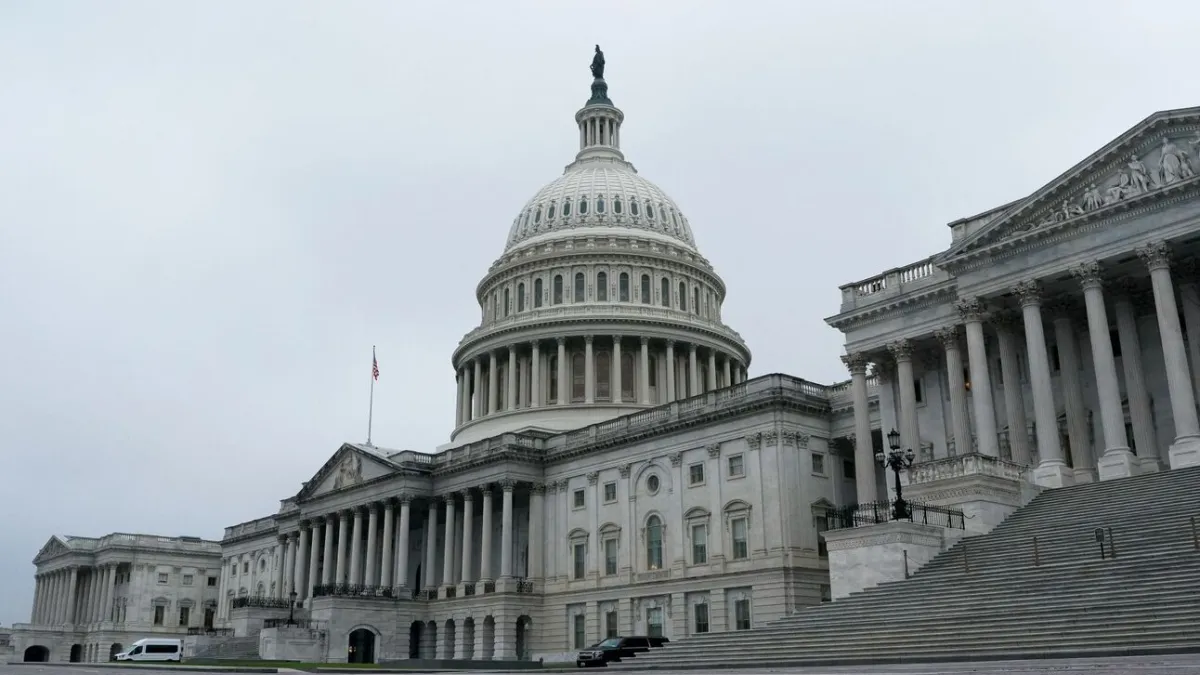
Congressional appropriators on Monday released the text of a bipartisan three-bill funding package they aim to pass before current funding expires at the end of the month. The legislation bundles full-year funding for the departments of Commerce, Justice, Energy and Interior as well as federal science programs, water development and the Environmental Protection Agency.
As House Republican leaders prepare to bring the package to a floor vote this week, lawmakers from both parties praised the compromise legislation.
“This is a fiscally responsible package that restrains spending while providing essential federal investments that will improve water infrastructure in our country, enhance our nation’s energy and national security, and spur scientific research necessary to maintain U.S. competitiveness,” said Sen. Susan Collins of Maine, the top Republican appropriator in the Senate.
House Speaker Mike Johnson highlighted Republican efforts to avoid the sort of “bloated omnibus bill” that conservatives have long opposed. “As these bills come to the floor, we are reaffirming our commitment to return to regular order, restore accountability to the process, and be responsible stewards of taxpayer dollars,” he said in a statement.
Democrats said that the bills exclude Republican poison pills and reject more than $163 billion in proposed cuts to public services. They added that the package would protect funding for Democratic priorities, including clean energy, environmental protection, scientific research and public safety grants — and rein in efforts by the Trump administration and White House budget director Russ Vought to exert more control over spending.
“This legislation is a forceful rejection of draconian cuts to public services proposed by the Trump Administration and Republicans in Congress,” said Rep. Rosa DeLauro of Connecticut, the ranking member on the House Appropriations Committee. “Perhaps most importantly, this legislation reasserts Congress’s power of the purse. Rather than another short-sighted stopgap measure that affords the Trump Administration broader discretion, this full-year funding package restrains the White House through precise, legally binding spending requirements. There is still much more work to do before January 30, but this is an important first step.”
Congress had previously passed three of the 12 required annual spending bills as part of the November deal to end the 43-day government shutdown. Passage of this trio of bills would leave six other annual spending measures to be completed for fiscal 2026, including those covering Defense and the Departments of Health and Human Services, Labor and Education.
The bottom line: With time running short — the House has just 12 legislative days this month while the Senate has just 15 — Congress will need another big, bipartisan breakthrough or, more likely, another stopgap spending bill to prevent a partial shutdown at the end of the month.