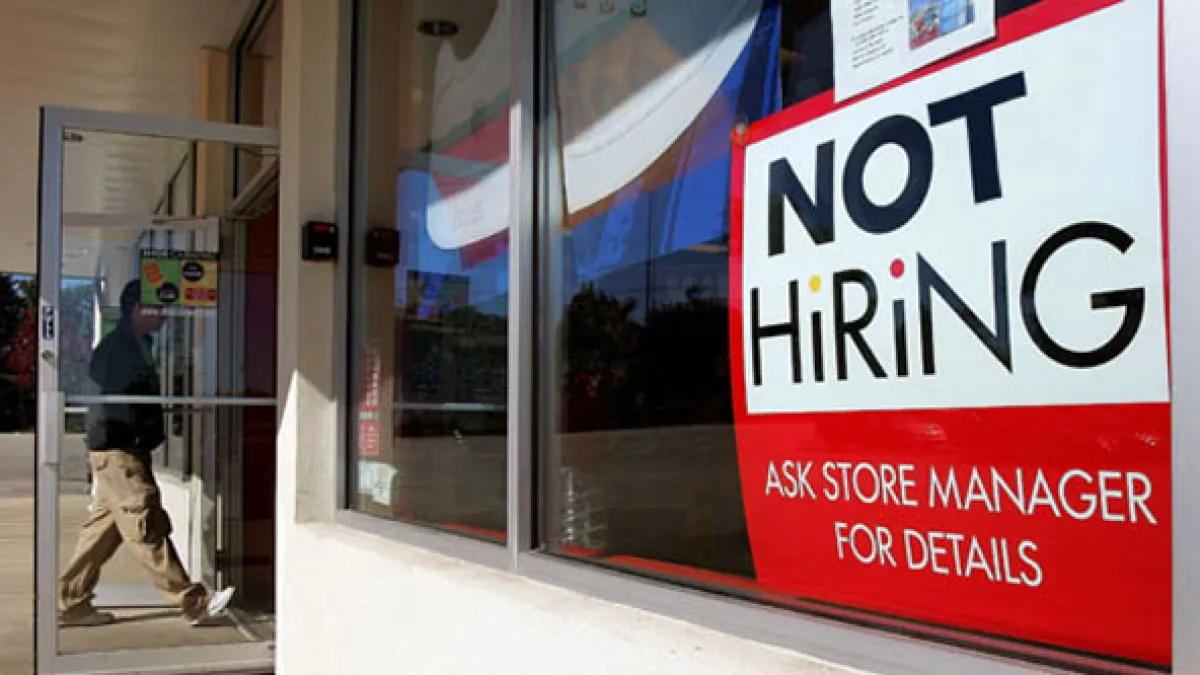
The U.S. economy shed 92,000 jobs and the unemployment rate rose a tenth of a percentage point to 4.4% in February, the Bureau of Labor Statistics announced Friday. The results fell far short of expectations, as Wall Street analysts predicted job growth of about 60,000 during the month. The unexpected weakness raised concerns about an economy that now also faces serious headwinds from rising energy costs and rapidly escalating global conflict.
Job losses cut across industries, though they were likely amplified by one-time effects. The construction sector lost 11,000 jobs, due in part to exceptionally cold weather in many parts of the country. Restaurants and bars cut 30,000 jobs, which might also have been related to weather. Healthcare, a rare bright spot in hiring recently, lost 38,000 jobs, driven by healthcare worker strikes in California and Hawaii.
Continuing a longer-term trend, manufacturers cut 12,000 jobs. The sector has seen losses in 14 of the past 15 months, shedding 100,000 jobs since President Trump took office.
Federal employment continued to shrink as well, dropping by 10,000 in February. The federal government has cut 327,000 jobs since January 2025.
Financial firms were a bright spot, adding 11,000 jobs. And wage growth was solid, with average hourly wages rising 0.4% from the previous month and 3.8% from a year earlier.
What the analysts are saying: The February jobs report highlights the precarious state of the U.S. labor market.
“Just when it looked like the labor market was stabilizing, this report delivers a knock-down blow to that view,” said economist Olu Sonola of Fitch Ratings, per the Associated Press. “It’s bad news whichever way you look at it.”
Navy Federal Credit Union Chief Economist Heather Long noted that the “US economy has LOST jobs since April 2025,” with job growth between May 2025 and February 2026 totaling -19,000. “Companies are not hiring in the face of all of these headwinds and uncertainty,” she wrote. “And even healthcare is starting to slow down.”
Still, some analysts emphasized that monthly labor market data is bumpy, and it’s too early to come to any firm conclusions. JPMorgan’s Abiel Reinhart noted that when you look at January and February together, average job growth is about 30,000, not far off the 2025 average of 25,000 — soft, but not disastrous. Still, the “bad news is it’s not clear this is good enough to stabilize the unemployment rate, which may still be gradually trending upward,” Reinhart said in a report.
At the same time, there’s no denying that job growth during the second Trump administration has been exceptionally weak. “In the 13 months since Trump took office, the economy has created a net total of 198,000 jobs compared with 1.4 million created in the last 13 months of the Biden administration,” said Peter Baker of The New York Times.
Stagflation threat: Economists have been worried about the possibility of stagflation, in which unemployment and inflation rise at the same time. Inflation is still running above the 2% target set by the Federal Reserve. The recent increase in the cost of oil — prices shot above $90 a barrel on Friday after Trump demanded “unconditional surrender” from Iran — raises the odds that inflation could register another surge in the weeks and months ahead. Factor in a faltering labor market, and it could mean a period of stagflation that is painful for American workers and a serious challenge for the nation’s central bank.
“The weak February jobs report is a problem for the Federal Reserve,” Gus Faucher, chief economist at PNC Economics, said in a research note. “With inflation running at around 3%, above the central bank’s target, and with inflation moving higher last year, the Federal Open Market Committee has expressed caution about near-term fed funds rate cuts, worried that they could stoke demand and push inflation even higher. High oil prices due to the conflict in Iran exacerbate that concern. But now the other part of the Fed’s dual mandate, maximum employment, looks more at risk after the weak February jobs report. Rate cuts could support demand and stabilize the jobs market but could also push inflation higher.”
RSM Chief Economist Joseph Brusuelas said he expects the threat of inflation to be weighed more heavily than the apparent weakness in the jobs market at the next Fed meeting in two weeks. “The risk of stagflation permeates this report,” he said in a note Friday, “and all eyes will continue to be focused on the direction of energy prices and inflation.”
