U.S. inflation accelerated in May for the third month in a row, as the Consumer Price Index rose 4.2% from a year earlier, the Bureau of Labor Statistics reported Wednesday. On a monthly basis, the index rose 0.5%.
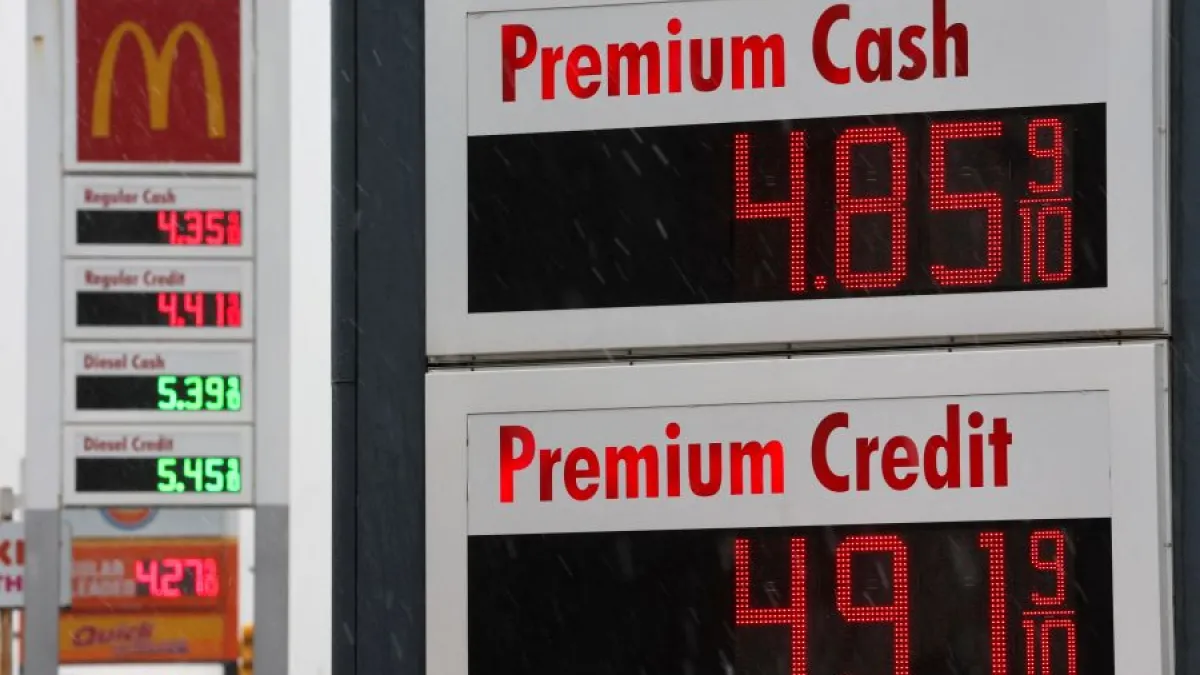
A spike in energy prices prompted by the war with Iran was the largest factor in the inflationary surge, contributing 60% of the overall increase while helping push the inflation rate over 4% for the first time in more than three years and well above the 2.4% rate recorded in January.
The energy price index rose 3.9% in May on a monthly basis, following increases of 3.8% in April and 10.9% in March. The energy index rose 23.5% year-over-year. Within the energy index, gasoline prices rose 40.5% compared with a year ago, while fuel oil rose 58.9%. Electricity prices rose a more modest but still painful 5.9%.
Other sectors seeing significant price increases include apparel (up 4.8% year-over-year), transportation services (up 4.1%) and medical care services (up 3.6%).
The core inflation rate, which ignores volatile food and fuel prices, showed a significantly smaller increase, rising 2.9% on an annual basis and just 0.2% on a monthly basis.
Trump says it’s “great”: Asked by a reporter in the Oval Office if he was concerned about the inflation numbers, Trump said he approved. “No, I love it. The numbers were great,” he said. “I love the inflation.”
Trump started to explain his surprising and confusing statement but then veered toward a discussion of oil and Iran. “Because as soon as this war is over, you know I can say it now ... you know we’ve been taking out millions of barrels of oil,” he said, apparently referring to the Persian Gulf, where he indicated that the United States was secretly guiding oil tankers past the Iranian blockade.
Trump again predicted that inflation would fall sharply once the war with Iran is over. “When the war is over? It's coming down. It's going to come down like a rock," he said, before returning to the situation in the Gulf. “And again, we're taking out millions, which, I'm just announcing today for the first time, but we've been taking out millions of barrels of oil. Millions. Every night.”
On his social media platform later in the day, Trump said that he had directed the military to undertake a “secret mission”— apparently not so secret — to guide oil tankers through the Strait of Hormuz. “This wildly successful effort is because the UNITED STATES of AMERICA CONTROLS the Strait of Hormuz — NOT Iran,” he said. “Their military is defeated, and their economy is lost. It’s over for Iran!”
He did not, however, explain why he thinks the current bout of inflation is “great.”
Wages suffer: “Inflation is so high that it's erasing all wage gains,” said Navy Federal Credit Union Chief Economist Heather Long. Wage growth was 3.4% over the last 12 months, Long noted, well below the 4.2% inflation rate.
“Americans are getting squeezed financially,” Long said on X. “This isn't just ‘bad vibes’ about the economy. There is real pain, especially for middle-class and lower-income households. It's tough because so many basic items are seeing sizable price increases: gas, electricity, food, medical care.”
Ben Zipperer of the Economic Policy Institute said the recent rise in inflation has wiped out a year and a half of wage growth, leaving workers with the same wages as in January 2025 on average. And there could be more pain ahead as higher energy prices start rippling through the economy.
“So far, excessive inflation has been limited to energy and airfares,” Zipperer wrote. “But as long as the war continues, there is a heightened threat that price increases will spill over to the broader economy, triggering a more permanent increase in the cost of living and further reductions in real earnings.”
A silver lining: Economists who are worried about higher energy prices causing problems in other sectors were relieved to see the price surge remain largely contained — at least for now.
“[4.2%] is still too hot for comfort, but the more important news was that the increase was concentrated mainly in energy, especially gasoline, rather than spreading widely across the economy,” economist Sung Won Sohn of Loyola Marymount University said Wednesday, per CNN.
The relatively modest results for core inflation also provided some hope that the price surge will remain an energy-specific phenomenon. Bloomberg economists Anna Wong and Troy Durie said they think it’s likely that headline inflation peaked in May. Still, many analysts warned that the longer the war with Iran lasts, the more likely it will be that inflation spreads out, if it hasn’t started to do so already.
EY-Parthenon Chief Economist Gregory Daco warned about the risks ahead. “The longer the Middle East conflict persists, the broader and more persistent inflationary pressures are likely to become,” he said in a research note, per Bloomberg. “Higher fertilizer prices will place upward pressure on food inflation, while rising transportation and production costs gradually pass through to a wider range of goods and services.”
