
Tequila’s Stunning Rise: How It Shot Up in U.S. Popularity

Americans are drinking more and better-quality tequila, and not only in margaritas on Cinco de Mayo.
Tequila sales have been growing at an average rate of 5.6 percent a year since 2002, according to February figures from the Distilled Spirits Council of the United States. In 2014 alone, 13.8 million nine-liter cases were sold.
Related: U.S. Surpasses France As Biggest Wine Market
The U.S. represents tequila’s largest market, with about 52 percent of global sales. America’s renewed thirst for mixed cocktails has been a boon for spirits overall, but especially for tequila. Meanwhile, sales in Mexico have remained flat largely because the market there is mature, with little room for growth.
The Distilled Spirits Council said that one of the keys to tequila’s U.S. growth has been distillers’ ability to offer a product for every budget and occasion, but the fastest growth has been in high-end and super-premium brands.
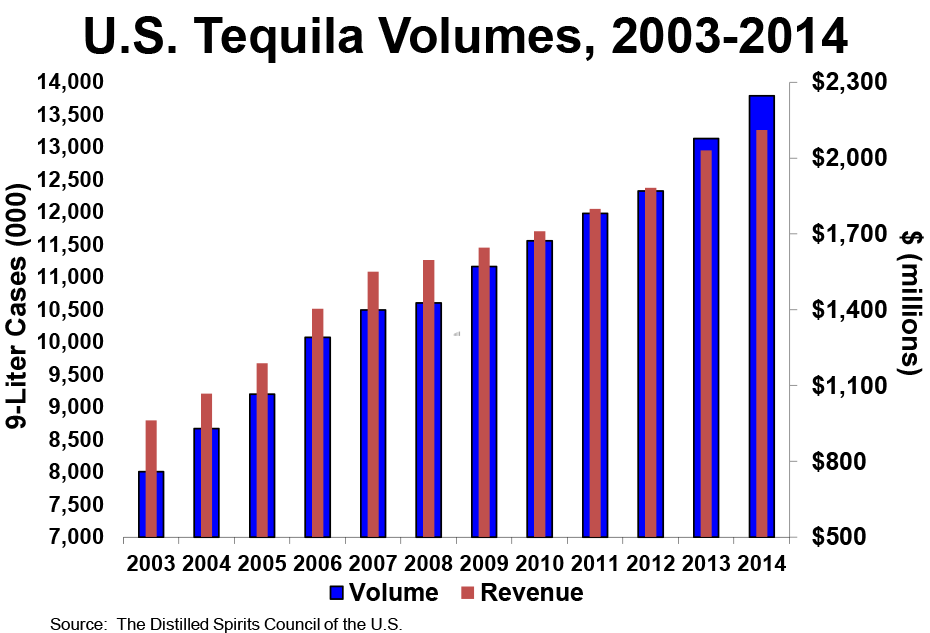
“High-end brands have grown 189 percent in volume since 2002,” it noted. “Virtually unknown in 2002, super-premium tequila volumes have skyrocketed 568 percent and today account for 2.4 million 9-liter cases.”
Celebrity endorsements may have also raised the status of tequila. George Clooney, Sean Combs and Justin Timberlake have all promoted tequila brands.
In addition, distillers are trying to boost the popularity of high-end tequilas further by offering tastings and tours — at least one of which is aimed at the super-wealthy.
Tequila Avion, an ultra-premium tequila maker, is offering a $500,000, three-day trip for 10 to Jalisco, Mexico, to taste its spirits and partake of luxury accommodations, butler service and a private dinner among other amenities.
Related: Kentucky’s McConnell and Paul Offer Tax Breaks for Bourbon
If that seems a tad pricey, Experience Tequila in Portland, Ore., offers four-day tours to Mexico for just under $1,500, and you can find tequila-tasting classes in many cities for about $100.
Economists See More Growth Ahead

Most business economists in the U.S. expect the economy to keep chugging along over the next three months, with rising corporate sales driving additional hiring and wage increases for workers.
The tax cuts, however, don’t seem to be playing a role in hiring and investment plans. And the trade conflicts stirred up by the Trump administration are having a negative influence, with the majority of economists at goods-producing firms who replied to the most recent survey by the National Association for Business Economics saying that their companies were putting investments on hold as they wait to see how things play out.
New Tax on Non-Profits Hits Public Universities
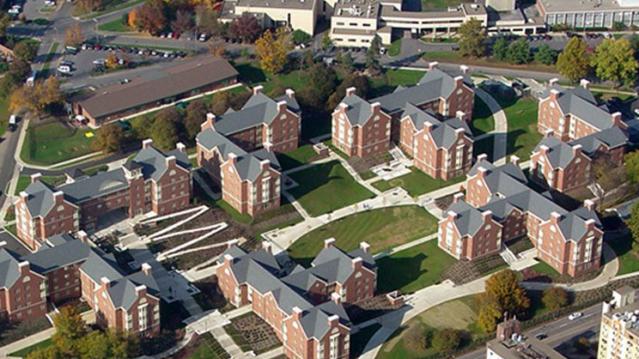
The Republican tax bill signed into law late last year imposed a 21 percent tax on employees at non-profits who earn more than $1 million a year. According to data from the Chronicle of Higher Education cited by Bloomberg, there were 12 presidents of public universities who received compensation of at least $1 million in 2017, with James Ramsey of the University of Louisville topping the list at $4.3 million. Endowment managers could also get hit with the tax, as could football coaches, some of whom earn substantially more than the presidents of their institutions.
Government Revenues Drop as Tax Cuts Kick In
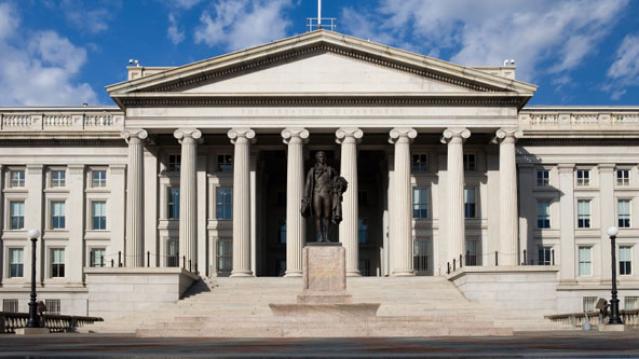
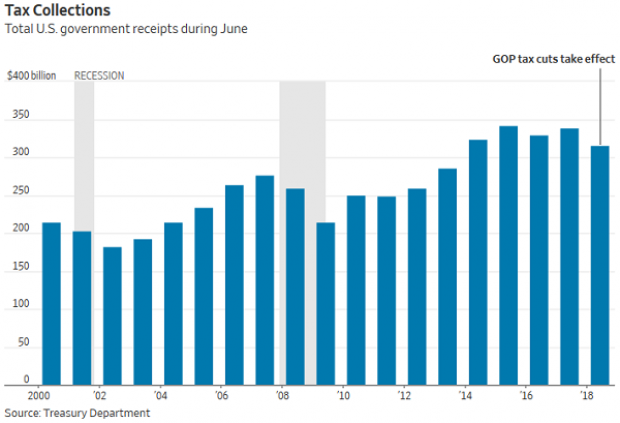
Corporate tax receipts in June were 33 percent lower than a year ago, according to data released by the Treasury Department Thursday, as companies made smaller estimated payments due to the reduction in their tax rates. Total receipts were down 7 percent, while payroll taxes were 5 percent lower compared to June 2017.
“June receipts to US government were our first mostly-clear look at the revenue effects of the new tax law, with lots of estimated payments and little noise from the 2017 tax year,” The Wall Street Journal’s Richard Rubin tweeted Friday.
Surprisingly, the deficit was smaller in June compared to a year ago, narrowing to $74.86 billion from $90.23 billion last year. The drop was driven by a 9 percent reduction in government outlays that reflected accounting changes rather than any real changes in spending, Rubin said in the Journal.
“More broadly, the federal deficit is swelling as government spending outpaces revenues,” Rubin wrote. “The budget gap totaled $607.1 billion in the first nine months of the 2018 fiscal year, 16% larger than the same point a year earlier.”
Kyle Pomerleau of the Tax Foundation pointed out that the drop in corporate tax receipts is a permanent feature of the Republican tax cuts, tweeting: “Even in a Trump dream world in which these cuts paid for themselves, corporate tax collections would remain below baseline forever. It would be higher income and payroll receipts that made up the difference.”
Deficit Jumps in Trump’s First Fiscal Year

The federal budget deficit rose by 16 percent in the first nine months of the 2018 fiscal year, which began last October. The shortfall came to $607 billion, compared to $523 billion in the same period the year before, according to a U.S. Treasury report released Thursday and reported by Bloomberg. Both revenue and spending rose, but spending rose faster. Revenues came to $2.54 trillion, up 1.3 percent from the same nine-month period in 2017, while spending came to $3.15 trillion, up 3.9 percent.
Where’s the Obamacare Navigator Funding for 2019, PA Insurance Commissioner Asks
Pennsylvania’s insurance commissioner sent a letter this week to Health and Human Services Secretary Alex Azar and Centers for Medicare and Medicaid Services (CMS) Administrator Seema Verma requesting that they “immediately release the funding details for the Navigator program for the upcoming open enrollment period for 2019.” Navigators are the state and local groups that help people sign up for Affordable Care Act plans.
“In years past, grant applications and new funding opportunities were released by CMS in April, CMS required Navigator organizations to apply by June and approved applications and new funding by late August,” Pennsylvania’s Jessica Altman wrote. “The current lack of guidance has put Navigator organizations – and states - far behind in their planning and creates an inability for the Navigator organizations to design a successful plan for helping people enroll during the 2019 open enrollment period.”