
Tequila’s Stunning Rise: How It Shot Up in U.S. Popularity

Americans are drinking more and better-quality tequila, and not only in margaritas on Cinco de Mayo.
Tequila sales have been growing at an average rate of 5.6 percent a year since 2002, according to February figures from the Distilled Spirits Council of the United States. In 2014 alone, 13.8 million nine-liter cases were sold.
Related: U.S. Surpasses France As Biggest Wine Market
The U.S. represents tequila’s largest market, with about 52 percent of global sales. America’s renewed thirst for mixed cocktails has been a boon for spirits overall, but especially for tequila. Meanwhile, sales in Mexico have remained flat largely because the market there is mature, with little room for growth.
The Distilled Spirits Council said that one of the keys to tequila’s U.S. growth has been distillers’ ability to offer a product for every budget and occasion, but the fastest growth has been in high-end and super-premium brands.
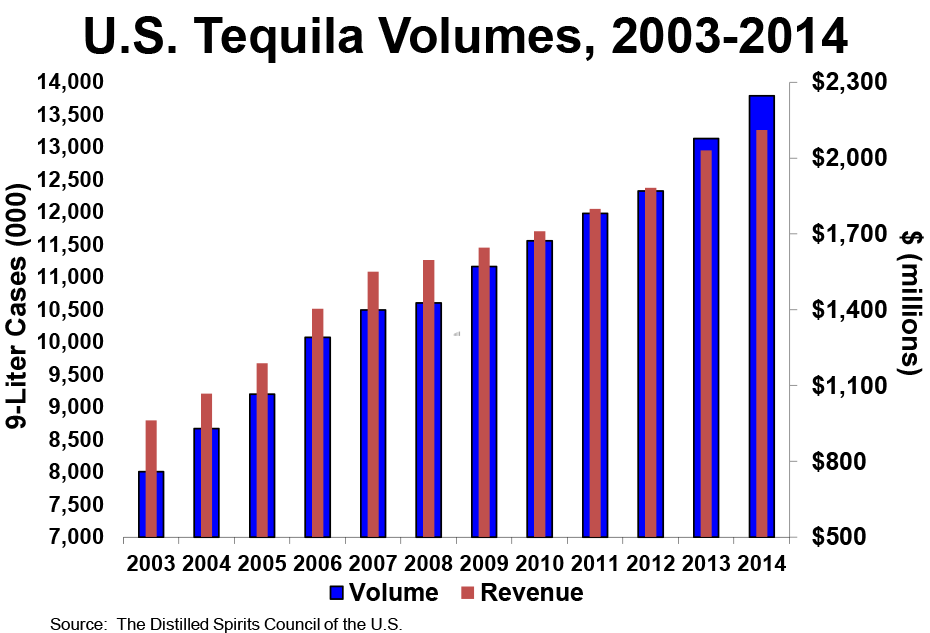
“High-end brands have grown 189 percent in volume since 2002,” it noted. “Virtually unknown in 2002, super-premium tequila volumes have skyrocketed 568 percent and today account for 2.4 million 9-liter cases.”
Celebrity endorsements may have also raised the status of tequila. George Clooney, Sean Combs and Justin Timberlake have all promoted tequila brands.
In addition, distillers are trying to boost the popularity of high-end tequilas further by offering tastings and tours — at least one of which is aimed at the super-wealthy.
Tequila Avion, an ultra-premium tequila maker, is offering a $500,000, three-day trip for 10 to Jalisco, Mexico, to taste its spirits and partake of luxury accommodations, butler service and a private dinner among other amenities.
Related: Kentucky’s McConnell and Paul Offer Tax Breaks for Bourbon
If that seems a tad pricey, Experience Tequila in Portland, Ore., offers four-day tours to Mexico for just under $1,500, and you can find tequila-tasting classes in many cities for about $100.
Budget ‘Chaos’ Threatens Army Reset: Retired General
One thing is standing in the way of a major ongoing effort to reset the U.S. Army, writes Carter Ham, a retired four-star general who’s now president and CEO of the Association of the U.S. Army, at Defense One. “The problem is the Washington, D.C., budget quagmire.”
The issue is more than just a matter of funding levels. “What hurts more is the erratic, unreliable and downright harmful federal budget process,” which has forced the Army to plan based on stopgap “continuing resolutions” instead of approved budgets for nine straight fiscal years. “A slowdown in combat-related training, production delays in new weapons, and a postponement of increases in Army troop levels are among the immediate impacts of operating under this ill-named continuing resolution. It’s not continuous and it certainly doesn’t display resolve.”
Pentagon Pushes for Faster F-35 Cost Cuts
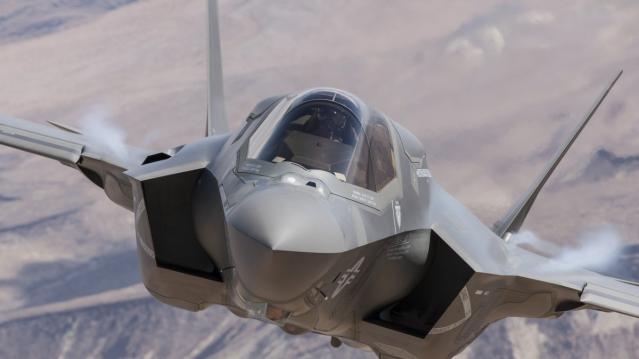
The Pentagon has taken over cost-cutting efforts for the F-35 program, which has been plagued by years of cost overruns, production delays and technical problems. The Defense Department rejected a cost-saving plan proposed by contractors including principal manufacturer Lockheed Martin as being too slow to produce substantial savings. Instead, it gave Lockheed a $60 million contract “to pursue further efficiency measures, with more oversight of how the money was spent,” The Wall Street Journal’s Doug Cameron reports. F-35 program leaders “say they want more of the cost-saving effort directed at smaller suppliers that haven’t been pressured enough.” The Pentagon plans to cut the price of the F-35A model used by the Air Force from a recent $94.6 million each to around $80 million by 2020. Overall, the price of developing the F-35 has climbed above $400 billion, with the total program cost now projected at $1.53 trillion. (Wall Street Journal, CNBC)

Chart of the Day - October 6, 2017
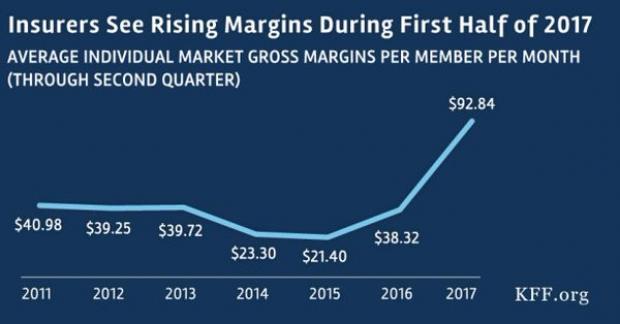
Financial performance for insurers in the individual Obamacare markets is improving, driven by higher premiums and slower growth in claims. This suggests that the market is stabilizing. (Kaiser Family Foundation)
Quote of the Day - October 5, 2017
"The train's left the station, and if you're a budget hawk, you were left at the station." -- Rep. Mark Sanford, R-S.C.