
Your Airplane Carry-on Bag Is About to Shrink
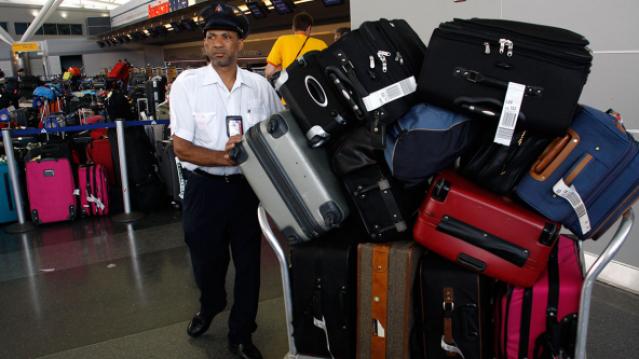
Are you one of those people who likes to brag about how you can fit a week’s worth of stuff into your carry-on suitcase? If so, your job is about to get harder.
The International Air Transport Association, a trade group representing some 250 airlines, has introduced a proposal to reduce the maximum allowable carry-on suitcase size. Under the proposed rule change, carry-on bags would have to be less than 21.5 x 13.5 x 7.5 inches. Current rules for carry-on size vary by airline, but they’re generally larger than that.
The organization claims that this would allow all passengers on a plane to store their bags in the cabin. “The development of an agreed optimal cabin bag size will bring common sense and order to the problem of differing sizes for carry-on bags,” IATA Senior Vice President for Airport, Passenger and Cargo Security said in a statement. “We know the current situation can be frustrating for passengers.
Related: 6 Sneaky Fees That Are Making Airlines a Bundle
Several major airlines have signaled interest in introducing the guidelines, according to IATA. Luggage manufacturers will start labeling bags that meet the new criteria as “IATA Cabin OK.”
The rule change may force more consumers to check luggage and pay the checked-bag fees many airlines have introduced in the past few years. Airlines typically charge $25 for the first bag, $35 for the second, and more than $100 for a third bag.
Some airlines, including Spirit, Allegiant and Frontier, also charge passengers for carry-on bags.
Maybe Don’t Count Out Obamacare Repeal Just Yet
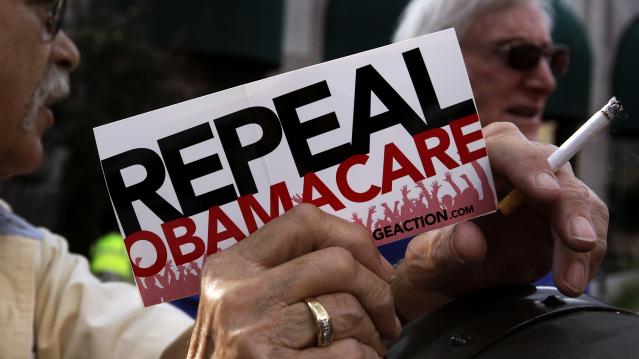
Sen. Bill Cassidy (R-LA) told reporters on Friday that he’s getting close to securing enough votes to pass the last-ditch ACA repeal and replacement bill he’s put forth with Sens. Lindsey Graham (R-SC), Dean Heller (R-NV) and Ron Johnson (R-WI).
“I am pretty confident we’ll get there on the Republican side,” Cassidy said. “We’re probably at 48-49 [votes] and talking to two or three more.” And Senate Majority Leader Mitch McConnell has asked the Congressional Budget Office to estimate the effects of the Cassidy-Graham bill, which would speed up the scoring process.
Of course, those last two or three votes have been the challenge for the GOP all along, and they may not be any easier to round up this time. Sen. Rand Paul (R-KY), who voted for a prior repeal bill, said Friday that he won't support this one. Plus, opponents are already stepping up their criticisms about the effects of the bill. And time is running out: Cassidy and his colleagues only have until September 30 to pass the bill this year under a process that would require only 50 supporters in the Senate. So while the Obamacare repeal may still have life, it remains a longshot.
Orrin Hatch Signals Just How Complicated Tax Reform Will Be
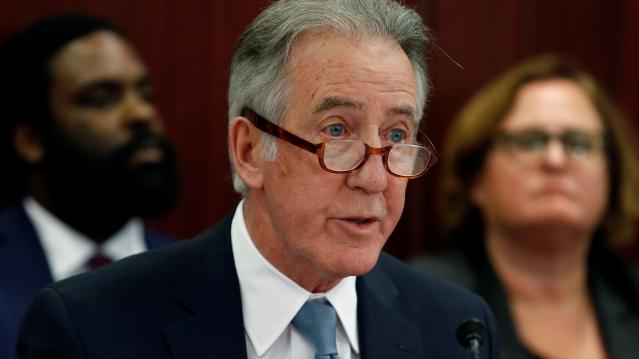
GOP leaders said Wednesday that they'd issue a more detailed framework of their tax overhaul the week of September 25. But while lawmakers are eager to get more details about the outline being hashed out by the so-called Big Six team of negotiators, Republicans are still divided on key elements of the plan — going from blueprint to bill is bound to be a contentious process.
In his opening remarks at a Senate Finance Committee hearing today on individual tax reform, Sen. Orrin Hatch (R-UT) said the plan from the Big Six — of which he is one — "will not dictate the direction" the tax-writing committee takes. "Anyone with any experience with the Senate Finance Committee knows that we are not anyone’s rubber stamp," he said. "If a bill – particularly on something as consequential as tax reform – is going to pass in this committee, the members of the committee will have to be involved in putting it together."
Oh, and remember: Republicans also need to agree on a budget before they can push through tax reform without Democratic votes.
Aging Baby Boomers Drive Down the Uninsured Rate
About 10,000 boomers turn 65 every day, becoming eligible for Medicare on their birthdays. The Census Bureau says that the sheer number of boomers entering Medicare is affecting the uninsured rate for the whole population. That rate fell to 8.8 percent in 2016, down from 9.1 percent a year earlier, with most of the decline driven by the aging of the post-war generation. (Wall Street Journal)
Social Security Kept 26.1 Million Out of Poverty Last Year
Social Security kept more than 26 million people out of poverty last year, according to a new report from the Census Bureau. Refundable tax credits such as the one for earned income kept 8.2 million people out of poverty, while food stamps lifted 3.6 million above the line, housing subsidies reduced the number of poor people by 3.1 million and unemployment insurance kept 680,000 out of poverty. Overall, the Census Bureau reported, the poverty rate was 12.7 percent, while a more sophisticated alternative measure that factors in government programs for low-income families put the rate at 13.9 percent, down from 14.5 percent in 2015.
Read more about the new Census Bureau numbers here.
Tax Reform on Menu for Trump's Dinner with Dems
President Trump is set to host three moderate Democratic senators for dinner on Tuesday as part of his push for tax reform, Politico reports. The Democrats on the guest list: Sens. Joe Manchin of West Virginia, Heidi Heitkamp of North Dakota and Joe Donnelly of Indiana, all of whom are up for reelection in 2018 in states Trump won last November. Vice President Mike Pence and GOP Sens. Orrin Hatch of Utah, John Thune of South Dakota and Pat Toomey of Pennsylvania are also slated to attend.