Your Airplane Carry-on Bag Is About to Shrink
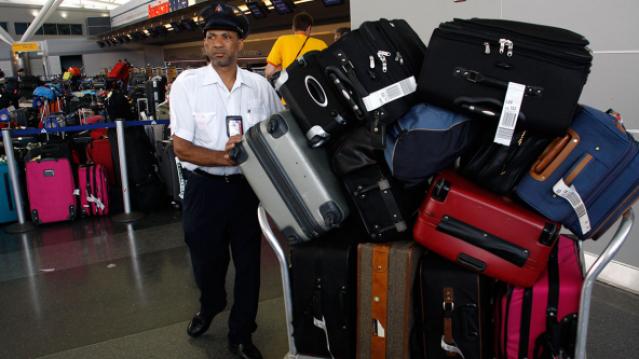
Are you one of those people who likes to brag about how you can fit a week’s worth of stuff into your carry-on suitcase? If so, your job is about to get harder.
The International Air Transport Association, a trade group representing some 250 airlines, has introduced a proposal to reduce the maximum allowable carry-on suitcase size. Under the proposed rule change, carry-on bags would have to be less than 21.5 x 13.5 x 7.5 inches. Current rules for carry-on size vary by airline, but they’re generally larger than that.
The organization claims that this would allow all passengers on a plane to store their bags in the cabin. “The development of an agreed optimal cabin bag size will bring common sense and order to the problem of differing sizes for carry-on bags,” IATA Senior Vice President for Airport, Passenger and Cargo Security said in a statement. “We know the current situation can be frustrating for passengers.
Related: 6 Sneaky Fees That Are Making Airlines a Bundle
Several major airlines have signaled interest in introducing the guidelines, according to IATA. Luggage manufacturers will start labeling bags that meet the new criteria as “IATA Cabin OK.”
The rule change may force more consumers to check luggage and pay the checked-bag fees many airlines have introduced in the past few years. Airlines typically charge $25 for the first bag, $35 for the second, and more than $100 for a third bag.
Some airlines, including Spirit, Allegiant and Frontier, also charge passengers for carry-on bags.
Will Trump's Tax Cuts Really Happen? Economists Are Surprisingly Optimistic
Despite all the thorny questions swirling around President Trump's nascent tax reform plan, 29 of 38 economists surveyed by Bloomberg in a monthly poll said they expect Congress to cut taxes by November of next year.
The hitch: The economists don’t expect the cuts will help the economy much. The median projection of a larger group of 71 economists is for 2018 growth of 2.3 percent, up only slightly from 2.1 percent this year — and by 2019, the economists see growth slipping back to 2 percent.