
What Your Smartphone Knows That Your Mother Doesn’t
Can Your Smartphone Be Used to Detect Depression?

It’s always there, in your pocket or purse or on your desk, quietly collecting information. And apparently, when it comes to depression, there’s quite a lot your smartphone knows about you.
According to a small study from Northwestern Medicine, that data from your smartphone can predict with eerie 87 percent accuracy whether you’re suffering from depression or not.
The telling signs: You spend more time on your smartphone and less time leaving the house, and you visit very few places each day.
Related: Smartphone Notifications Are Killing Our Concentration
The researchers used Craigslist to find 40 test subjects between the ages of 19 and 58, and outfitted their smartphones with an app to monitor their location and usage. The individuals took a questionnaire that measured signs of depression; half of the subjects had troubling symptoms and half did not. Using GPS, the phones tracked the subjects’ movements and locations every five minutes. The subjects also were asked questions about their mood at different points during the day.
These factors were then correlated with the test subjects’ original depression test scores. And the results were uncanny. Depressed people used their phones more often and for longer periods of time —an average of 68 minutes a day. By comparison, the individuals who didn’t show signs of depression spent only 17 minutes on theirs. Researchers attributed the increased use of the phone to task avoidance, another symptom of depressed people.
Perhaps more significant than the findings of this small study — only 28 of the 40 subjects had enough data to be studied — is the potential the researchers felt that smartphones could play in future medical diagnosis.
When loaded up with the correct sensors, the smartphone can be used to detect a person’s emotional states, and monitor moods, without the user having to utter a word. It also has the ability to offer suggestions to reinforce positive behaviors when depression is detected. The results of the study were published in the Journal of Medical Internet Research yesterday, but one conclusion was becoming increasingly evident even before the report came out: Smartphones — and the sensors they now contain — just keep getting smarter.
Hollywood Box Office Fail: A Memorial Day to Forget

For years, Memorial Day weekend has been the unofficial beginning of summer blockbuster season, with the multitudes rushing in to enjoy free air conditioning, buttered popcorn and big explosions. And though Hollywood has started releasing its blockbusters earlier and earlier (Marvel/Disney, in particular seems to love the first weekend in May), the audiences don’t seem to have gotten the message.
Tomorrowland, the weekend’s No. 1 grossing film, took in an unimpressive $40.7 million, just ahead of 2010’s groan-worthy Prince of Persia on the list of holiday weekend openers.
Memorial Day 2015 was the worst holiday weekend for Hollywood since 2001, when Michael Bay’s infamous WWII flop Pearl Harbor graced the screens. Considering the 44 percent increase in ticket prices over that time, this is a particularly bleak outlook for theaters.
Related: 13 Movies You Should See This Summer
Tomorrowland only barely beat Pitch Perfect 2, in its second week of release.
In 2014, X-Men: Days of Future Past took home $110.6 million, while the previous year had the sixth entry in the Fast and the Furious franchise to drive $97.4 million domestically.
The news is better internationally, where the most recent Avengers film (Avengers: Age of Ultron) continues to rake in the yuan, millions at a time. But the outlook for the rest of the domestic season is less rosy, with no obvious saviors later in the summer (Jurassic World, maybe?).
It’s not even June yet, but it is already looking like a chilly summer for Hollywood.
Here’s Why Your Breakfast Just Got Way More Expensive

You’re going to have to start shelling out a lot more for your eggs.
U.S. farmers in 20 states have killed more than 40 million chickens and turkeys since December, including about a third of the commercial, egg-laying birds in Iowa, as the United States experiences its biggest-ever bird flu outbreak.
The diminishing poultry population has led to an egg supply crunch, pushing prices some 85 percent higher, according to The Wall Street Journal. Economists say prices could spike another 20 to 30 percent.
The outbreak comes just as eggs are returning to favor with consumers after years of fighting perceptions that they’re unhealthy. In 2013, Americans consumers munched on more than 250 eggs per capita, the highest rate in six years.
Related: Minnesotans in contact with avian flu birds getting preventive drugs
Last year, the U.S. poultry industry produced nearly 100 billion eggs. USDA associate deputy administrator Jack Shere told the Associated Press that the avian flu could cost the U.S. taxpayers about $400 million this year.
Big Food companies are already considering changes to their menus and their pricing following the shortage. McDonald’s, Panera Bread, and General Mills, The New York Times reports.
The last serious avian flu outbreak in the United States occurred in 1983 and led to the killing of 17 million chickens, turkey, and guinea fowl in Pennsylvania and Virginia. While avian flu spread to humans in Asia in 2003, the Centers for Disease Control considers the risk to people from the current strain to be low.
Amazon’s Jeff Bezos Has Gotten $9.5 Billion Richer This Year
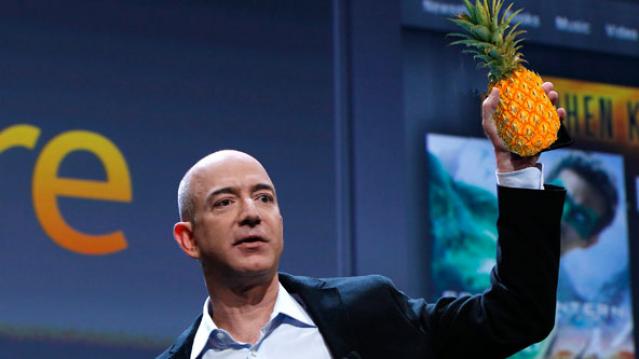
The stock market has inched its way to one record high after another this year, with the S&P 500 gaining a solid if unspectacular 3.5 percent so far. That rise has enriched investors by some $900 billion in 2015, as Matt Krantz at USA Today points out.
As Krantz also notes, though, some shareholders have done far, far better than the broader market. Jeff Bezos, for example.
The Amazon CEO has benefitted from a 40 percent rise in his company’s stock in 2015, adding a whopping $9.5 billion in paper gains to his already sizable net worth to lift it to $38.2 billion, good enough for 11th highest in the world, according to Bloomberg’s Billionaires Index.
Related: 7 Quirky Economic Indicators – from Dogs to Guns

As well as Bezos has done, four foreign billionaires have actually made more in 2015: Pan Sutong, chairman of Hong Kong investment conglomerate Goldin Group, has made more than $20 billion; Wang Jianlin, the founder and chairman of another Chinese conglomerate, Dalian Wanda, has made $19.4 billion; Zhou Qunfei, China’s richest woman, has added nearly $11 billion; and Patrick Drahi, the French chairman and largest shareholder of Luxembourg-based telecom company Altice, has gained $9.7 billion.
Bezos may be far ahead of the U.S. pack, but the USA Today analysis of data from S&P Capital IQ shows some other CEOs of American companies have fared extremely well as a result of their stock holdings, too. Facebook’s Mark Zuckerberg has made more than $1 billion on paper, while Google’s Larry Page has gained just under $1 billion. And as shares of drugstore chain Walgreens Boots Alliance have surged more than 11 percent this year, acting CEO Stefano Pessina has profited to the tune of $645.6 million. The CEOs of salesforce.com, Under Armour, Starbucks, Mohawk Industries, Constellation Brands and Netflix have all seen paper gains of more than $260 million so far in 2015.
You can see USA Today’s full list here.
This Man Just Lost $15 Billion in a Half Hour

In the history of sudden wealth loss, Li Hejun may have set a new record.
Li, who was China's richest man until this week, saw his fortune drop by as much as $15 billion in a half-hour as the stock in his company, Hanergy Thin Film Power Group, fell by nearly half. Trading in the shares was halted Wednesday and Li didn't attend the company's annual meeting.
While plenty of billionaires have seen their fortunes cut in half over time, few if any have seen $15 billion wiped out in a half-hour. Li's total fortune was around $30 billion before the stock plunged.
Prior to the drop, the company's shares had risen by more than fivefold since September, baffling analysts. Reuters reports that Hong Kong regulators are looking at alleged market manipulation with the stock.
Related: America’s Highest Paid CEO: It’s Not Who You Think
In a similar wealth decline, Hong Kong property and electronics magnate Pan Sutong has lost more than $11 billion this week as shares of two listed companies, Goldin Financial and Goldin Property, both closed down more than 40 percent.
Pan owns around 65 percent of Goldin Property and more than 70 percent of Goldin Financial, according to filings. His fortune was listed at more than $28 billion, making him Hong Kong's second-richest man.
That means that the two men have lost more in one day that the total net worth of Carl Icahn, Steve Ballmer or Michael Dell.
Pan is known for his large lifestyle. He's a big polo supporter and has sponsored a polo event in Britain attended by Princes William and Harry. He's said that the sport "is a way of life and belief in a sense of nobility."
Pan also owns vineyards around the world, including three in France and one in California's Napa Valley, called the Sloan Estate, which he purchased in 2011 for around $40 million.
This article originally appeared on CNBC
Read more from CNBC:
Playboy keeps it's clothes on
Kickstarter darling Pebble may be in a rough patch
McDonald's CEO: Ronald is here to stay
How to Avoid the Worst Fees in America
Nothing gets under the skin of a savvy consumer like unwarranted and unwanted fees.
The Web site GoBankingRates.com has put together a list of the “31 Worst Fees in America,” listing some of the most egregious fees out there, as well as tips on two avoid them. The list includes 11 banking fees, 10 travel fees, and handful of fees from other categories such as health care and cell phones.
“At the bank, while traveling, or just when going about your daily business, fees are on the rise in seemingly all industries—and not just in quantity, but in price,” writes author Paul Sisolak. “Many times, they’re so well obscured that you end up paying fees without realizing it.”
The good news is that in most cases, there’s an easy fix for the fees: Avoid bank teller fees, for example, by using remote deposit and ATMs; and steer clear of ATM fees by using your bank’s app to find the nearest in-network machine.
Related: 10 Infuriating Consumer Fees to Stop Paying Now
While bank fees may be rising, the institutions are getting better about being transparent in disclosing them. More than 60 percent of the banks reviewed last week by The Pew Charitable Trusts have adopted a summary disclosure box of terms and fees that meets the organization’s standards, up from just 25 percent in 2013.
When it comes to avoiding fees while traveling, pack light to avoid overweight bag charges and call ahead of time to get a sense of Wi-Fi and other hotel/resort fees.