
The 10 Friendliest Cities in the U.S.

The friendliest city for visitors is Honolulu, according to more than 6,400 respondents in a newly released poll by Travelzoo.
Survey takers were asked to pick the cities, states and countries where they felt the most welcome, could easily ask for directions, and get dining recommendations. New York City came in second, followed by New Orleans.
Last year was a record-breaking year for tourism, and the numbers confirm the popularity of these destinations for travelers. In 2014, 8.3 million visitors came to the Aloha State, with total visitor expenditures estimated at $14.7 billion. On average, 205,044 visitors are in the state of Hawaii on any given day.
Related: They’re Leaving Las Vegas: Fewer I Do’s in Last Decade
New York City, where tourism also hit a record high in 2014 with 56.4 million visitors streaming into the Big Apple, claimed the second spot in the poll.
Third place New Orleans has 9.52 million visitors and tourism spending of $6.81 billion in 2014. Fourth place Las Vegas also broke tourism records with 40 million visitors last year, thanks to renovated and rebranded resorts and direct flights from Canada and Mexico. Boston rounded out the top five, with a total of 16,250,000 international and domestic visitors in 2014.
Here are the top 10 friendly cities:
- Honolulu
- New York
- New Orleans
- Las Vegas
- Boston
- San Diego
- San Francisco
- Charleston, S.C.
- Chicago
- Seattle
Travelzoo also ranked states for friendliness, with warm climes dominating the list. In the top spot was Florida, followed by California and Hawaii. New York and Maine were the only states from the Northeast to make the list.
- Florida
- California
- Hawaii
- New York
- Texas
- South Carolina
- Maine
- Georgia
- Washington
- Arizona
In Europe, Amsterdam, London, and Dublin were considered the friendliest cities to visit, with Italy and Ireland seen as the friendliest countries.
Budget ‘Chaos’ Threatens Army Reset: Retired General
One thing is standing in the way of a major ongoing effort to reset the U.S. Army, writes Carter Ham, a retired four-star general who’s now president and CEO of the Association of the U.S. Army, at Defense One. “The problem is the Washington, D.C., budget quagmire.”
The issue is more than just a matter of funding levels. “What hurts more is the erratic, unreliable and downright harmful federal budget process,” which has forced the Army to plan based on stopgap “continuing resolutions” instead of approved budgets for nine straight fiscal years. “A slowdown in combat-related training, production delays in new weapons, and a postponement of increases in Army troop levels are among the immediate impacts of operating under this ill-named continuing resolution. It’s not continuous and it certainly doesn’t display resolve.”
Pentagon Pushes for Faster F-35 Cost Cuts
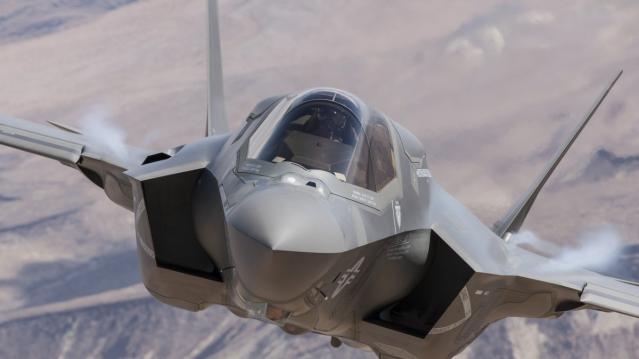
The Pentagon has taken over cost-cutting efforts for the F-35 program, which has been plagued by years of cost overruns, production delays and technical problems. The Defense Department rejected a cost-saving plan proposed by contractors including principal manufacturer Lockheed Martin as being too slow to produce substantial savings. Instead, it gave Lockheed a $60 million contract “to pursue further efficiency measures, with more oversight of how the money was spent,” The Wall Street Journal’s Doug Cameron reports. F-35 program leaders “say they want more of the cost-saving effort directed at smaller suppliers that haven’t been pressured enough.” The Pentagon plans to cut the price of the F-35A model used by the Air Force from a recent $94.6 million each to around $80 million by 2020. Overall, the price of developing the F-35 has climbed above $400 billion, with the total program cost now projected at $1.53 trillion. (Wall Street Journal, CNBC)

Chart of the Day - October 6, 2017
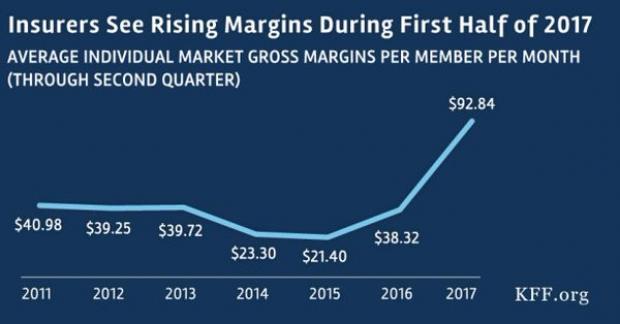
Financial performance for insurers in the individual Obamacare markets is improving, driven by higher premiums and slower growth in claims. This suggests that the market is stabilizing. (Kaiser Family Foundation)
Quote of the Day - October 5, 2017
"The train's left the station, and if you're a budget hawk, you were left at the station." -- Rep. Mark Sanford, R-S.C.