
Don’t Feel Like a Chump When You Close on Your New Mortgage

Mortgage closing costs dropped 7 percent over the past year, falling to $1,847 on a $200,000 loan, according to a new analysis by Bankrate.
Typical closing costs varied by state, ranging from $2,163 in Hawaii to $1,613 in Ohio. You can find the average rate for your state in the table below.
Lenders compete for business, so shopping around with at least three mortgage providers can help you reduce the fees associated with your loan. “Homebuyers have more say over closing costs than they think,” Bankrate Senior Mortgage Analyst Holden Lewis said in a statement.
Even as banks lower their mortgage fees, they’re increasing fees in most other categories, according to MoneyRates.com.
While lower mortgage fees are good news for homebuyers and those refinancing their loans, the average saving amount to just $140. That’s not much relative to the total costs associated with buying a house. The average down payment for homebuyers in the first quarter of 2015 was $57,710, for example.
Related: Want Your Own Home? Here’s How to Do the Math
The costs don’t stop once the buyers move in. On top of mortgage payments, homeowners face an average of more than $6,000 in additional costs related to their house, including homeowners insurance, property taxes and utilities.
The National Association of Realtors expects home prices to increase 6.5 percent this year to a median $221,900, which would put them at the same level as their 2006 record high.
For buyers, better news than the lower mortgage fees is that rates remain relatively low, falling to 3.98 percent last week, per Freddie Mac.
Closing costs | |||
|---|---|---|---|
| State | Average origination fees | Average third-party fees | Average origination plus third-party fees |
| Alabama | $1,066 | $776 | $1,842 |
| Alaska | $935 | $922 | $1,857 |
| Arizona | $1,208 | $761 | $1,969 |
| Arkansas | $1,057 | $760 | $1,817 |
| California | $937 | $896 | $1,834 |
| Colorado | $1,192 | $719 | $1,910 |
| Connecticut | $1,074 | $960 | $2,033 |
| Delaware | $904 | $924 | $1,828 |
| District of Columbia | $1,077 | $718 | $1,794 |
| Florida | $1,028 | $778 | $1,806 |
| Georgia | $1,058 | $821 | $1,879 |
| Hawaii | $1,033 | $1,130 | $2,163 |
| Idaho | $894 | $788 | $1,682 |
| Illinois | $1,080 | $767 | $1,847 |
| Indiana | $1,067 | $770 | $1,837 |
| Iowa | $1,161 | $762 | $1,923 |
| Kansas | $1,047 | $753 | $1,800 |
| Kentucky | $1,060 | $737 | $1,797 |
| Louisiana | $1,060 | $817 | $1,877 |
| Maine | $897 | $830 | $1,727 |
| Maryland | $1,093 | $742 | $1,835 |
| Massachusetts | $905 | $851 | $1,756 |
| Michigan | $1,072 | $746 | $1,818 |
| Minnesota | $1,067 | $689 | $1,757 |
| Mississippi | $1,046 | $837 | $1,884 |
| Missouri | $1,040 | $792 | $1,833 |
| Montana | $1,062 | $855 | $1,917 |
| Nebraska | $1,047 | $770 | $1,817 |
| Nevada | $1,002 | $848 | $1,850 |
| New Hampshire | $1,084 | $750 | $1,835 |
| New Jersey | $1,181 | $913 | $2,094 |
| New Mexico | $1,076 | $876 | $1,952 |
| New York | $1,032 | $879 | $1,911 |
| North Carolina | $1,036 | $875 | $1,911 |
| North Dakota | $1,045 | $791 | $1,836 |
| Ohio | $933 | $681 | $1,613 |
| Oklahoma | $1,027 | $734 | $1,761 |
| Oregon | $1,080 | $785 | $1,864 |
| Pennsylvania | $1,055 | $678 | $1,733 |
| Rhode Island | $1,093 | $802 | $1,896 |
| South Carolina | $1,058 | $837 | $1,895 |
| South Dakota | $1,055 | $704 | $1,759 |
| Tennessee | $1,033 | $773 | $1,806 |
| Texas | $1,031 | $833 | $1,864 |
| Utah | $909 | $788 | $1,697 |
| Vermont | $1,074 | $862 | $1,936 |
| Virginia | $1,050 | $787 | $1,837 |
| Washington | $1,077 | $824 | $1,901 |
| West Virginia | $1,067 | $904 | $1,971 |
| Wisconsin | $1,047 | $723 | $1,770 |
| Wyoming | $874 | $814 | $1,689 |
| Average | $1,041 | $807 | $1,847 |
Bankrate.com surveyed up to 10 lenders in each state in June 2015 and obtained online Good Faith Estimates for a $200,000 mortgage to buy a single-family home with a 20 percent down payment in a prominent city. Costs include fees charged by lenders, as well as third-party fees for services such as appraisals and credit reports. The survey excludes title insurance, title search, taxes, property insurance, association fees, interest and other prepaid items.
Top Reads from The Fiscal Times:
- You’re Richer Than You Think. Really.
- The 10 Fastest-Growing Jobs Right Now
- The 5 Worst Cities to Raise a Family
Medical ID Theft is a Way Bigger Problem Than You Think
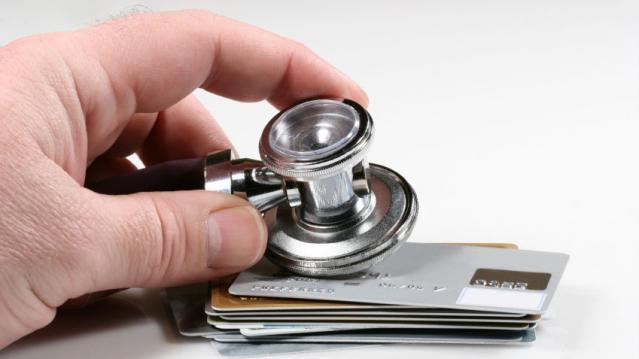
Forget Target and Home Depot. You may be risking identity theft every time you visit the doctor’s office.
Medical ID theft, in which thieves steal your Social Security number and health insurance info in order to fraudulently obtain medical services or treatment, is skyrocketing.
More than 90 percent of healthcare organizations have had a data breach, and 40 percent had more than five data breaches in the past two years, according to a report released last month by ID Experts. Attacks by criminal organizations are up 125 percent over the past five years. Medical identities are worth far more on the black market than financial identities.
The study estimates that data breaches may have cost the industry $6 billion in the last two years. The scariest stat for consumers: Half of organizations surveyed have little or no confidence in their ability to detect all patient data loss or theft.
Related: Now You Could Lost Your Medical Identity, Too
Victims of medical ID theft spend thousands to restore their credit and correct inaccuracies in their medical records, and unlike banks and credit card issuers, most healthcare organizations offer no protection services for victims.
In addition to the financial toll, there are health risks to victims of medical ID theft. If someone steals your identity and receives treatment that gets added to your medical records, doctors may have incorrect information regarding your health history and allergies.
It’s difficult to prevent medical ID theft, but monitoring your credit and closely reading your healthcare bill and explanation of benefits notices can help you catch it early.
Can a Few Chocolate Euros Stop a Grexit?

German Finance Minister Wolfgang Schaeuble has clashed repeatedly with Yanis Varoufakis over Greece's debt and economic reforms since the leftist Syriza party took power in January, pledging to end austerity and renegotiate the bailout terms.
In an interview with the children's television program "Logo" on German broadcaster ZDF last week, a girl reporter gave Schaeuble a supportive handful of the chocolate coins.
"I'll take a few for my Greek colleague, he also needs strong nerves," Schaeuble replied.
Greece hopes to secure a cash-for-reforms deal with its lenders this week. But after four months of tortuous negotiations no breakthrough is in sight. Without a deal Athens risks default or bankruptcy in weeks.
A Made-Up Holiday That Could Help Your Kids Go to College

Marketers are great at making up holidays—and who doesn’t love having an excuse to eat donuts on National Donut Day or pizza on National Pizza Day?
Most of these special days, however, tend to take a toll on both our wallets and our waistlines. Today may be an exception: The personal finance and college saving industries have dubbed today 529 Day (Get it? 5/29), a day to celebrate saving for college via tax-favored 529 plans.
Americans could benefit from any impetus to save more for higher education. The average American family that’s saving for college put away about $2,600 last year and has a total of just over $10,000 socked away for education, according to Sallie Mae’s annual How America Saves for College report. That’s the lowest amount since the survey began in 2009 — or about enough to send one kid to college for one semester at today’s prices.
Related: Top-rated 529 Plans Probably Are Not For You
Many states are “celebrating” the day with everything from waived enrollment fees to discounted admission to local baseball games. (Each plan is sponsored by a state but run by financial firms.) Check out this interactive map to find out if your state is offering any incentives today.
Contributions to a 529 plan are made after federal taxes, but the money grows tax-free as long as the proceeds are used for education costs. Some states also offer tax breaks on contributions.
The average cost of attending public college this year is $19,000. For private college it’s $33,000, according to The College Board. So there’s no time like today to start saving.
The 5 Funniest 2015 Commencement Speakers
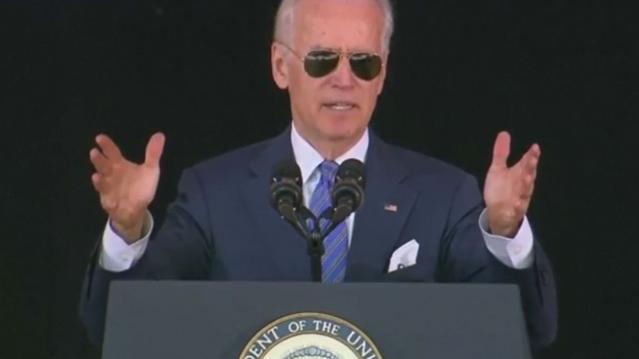
At commencement ceremonies, every speaker gets to be a comedian, even comedians. The competition was tough, but at least two of the best lines compiled by The Washington Post, came from politicians.
“I stand here humbled, gracious and completely naked under this robe.”
--Maya Rudolph, Tulane University
“The UVA community has some experience with being defined by outsiders. It has been said that a rolling stone gathers no moss. I would add that sometimes a rolling stone also gathers no verifiable facts or even the tiniest morsels of journalistic integrity.”
--Ed Helms, University of Virginia
“Tisch graduates, you made it. And you’re f----ed. The graduates from the College of Nursing, they all have jobs. The graduates from the College of Dentistry, fully employed. The Leonard N. Stern School of Business graduates, they’re covered. The School of Medicine graduates, each one will get a job. The proud graduates of the NYU School of Law, they’re covered. And if they’re not, who cares? They’re lawyers.”
--Robert DeNiro, Tisch School of the Arts, New York University
…[Yale was] one touchdown away from beating Harvard this year for the first time since 2006. So close to something you’ve wanted for eight years. I can only imagine how you feel. I can only imagine.”
--Vice President Joe Biden, Yale University
Those of you who are graduating this afternoon with high honors, awards and distinction, I say, ‘Well done.’ And as I like to tell the C students, ‘You, too, can be president.’”
--former President George W. Bush, Southern Methodist University
Denny Hastert: Uh, About That $500,000 Statue…
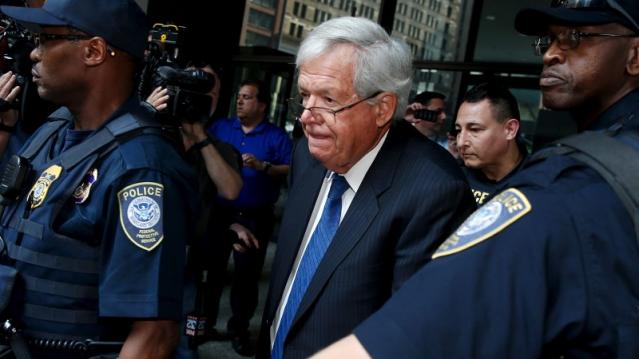
Illinois state lawmakers are hitting the breaks on a proposal to spend half a million dollars for a statue honoring former U.S. House Speaker Dennis Hastert after the Justice Department indicted the Illinois Republican on multiple charges Thursday.
About a month before the DOJ announced the indictment against Hastert,
Illinois House Speaker Michael Madigan introduced a bill to allocate $500,000 from the Illinois Development Fund for a statue of Hastert, who represented Illinois’ 14th Congressional for 20 years after serving as a state representative.
Related: Lying, Cheating, Stealing: How Corrupt is America?
However, Madigan’s spokesperson, Steve Brown, said Hastert contacted lawmakers asked that they defer the proposal because of the state’s financial condition. Illinois currently is running a $9 billion deficit. Still, the bill, which passed through a house committee, was placed on the calendar for a third reading on May 18.
In the indictment released Thursday evening, federal investigators allege that Hastert paid $3.5 million in hush money to “cover up misconduct.” The money allegedly went to someone in Yorkville, Ill., where he previously coached high school wrestling. The seven-page indictment also accused him of lying to the FBI.
Following the announcement, Hastert reportedly resigned from his current position at Washington, D.C., law firm Dickstein Shapiro, as well as a board member at CME Group, according to Reuters.