
Here’s Why Home Prices Are Climbing So Quickly
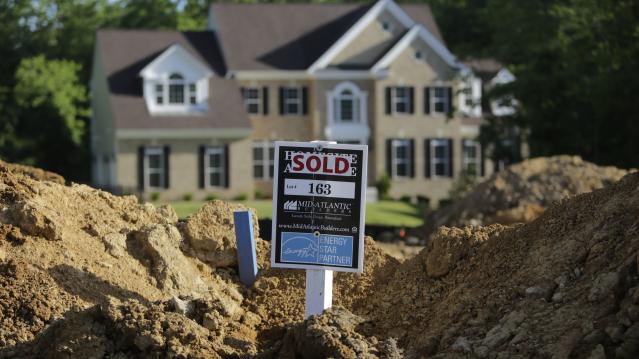
Want to buy a home but finding slim pickings? Blame the builders.
New home construction has not kept pace with the improving job market in recent years and is part of the reason that housing inventory is so scarce and home prices are growing so quickly, according to a report released today by the National Association of Realtors.
After over-building leading up to the housing bubble, developer laid off workers and scaled back construction by more than 75 percent. After the crash many of those workers migrated to other industries, making it harder for builders to quickly ramp up work. There are also fewer builders now than there were a decade ago, with many going bust in the bubble and others consolidating with competitors.
Related: How a Smart Home Can Save You Time and Money
While home starts have come back since the recession, the new NAR report finds that in two-thirds of markets homebuilding activity has not kept pace with the number of newly employed workers. In particular, construction of single-family homes remains at less than half its prerecession levels.
Many of the markets with the largest disparity of jobs versus home construction were hit hardest by the housing crisis but have fully rebounded, including San Jose, San Francisco, San Diego and Miami. New York is also among the top cities where home building has not kept pace.
There are several reasons that new home construction has grown so slowly in recent years, including rising construction and labor costs and tight credit. Despite those headwinds, new home construction is expected to grow by more than 25 percent this year.
Top Reads From The Fiscal Times:
- Can Anyone Stop the $38 Billion Airline Fee Squeeze?
- 7 Common Myths That Can Ruin Your Retirement
- The 25 Most Expensive Cities for Renters
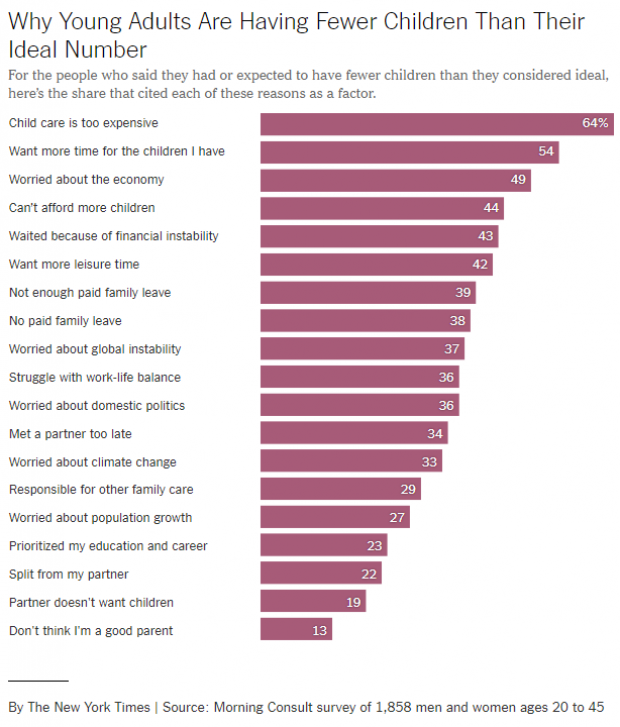
Chart of the Day: Why US Fertility Rates Are Falling

U.S. fertility rates have fallen to record lows for two straight years. “Because the fertility rate subtly shapes many major issues of the day — including immigration, education, housing, the labor supply, the social safety net and support for working families — there’s a lot of concern about why today’s young adults aren’t having as many children,” Claire Cain Miller explains at The New York Times’ Upshot. “So we asked them.”
Here are some results of the Times’ survey, conducted with Morning Consult. Read the full Times story for more details.
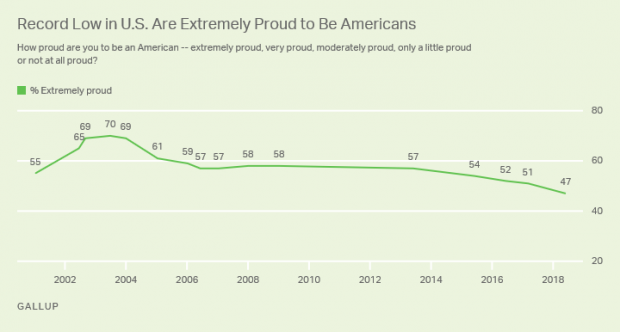
A Record Low 47% of US Adults Say They're 'Extremely Proud' to Be American
Gallup says that, for the first time in the 18 years it’s been asking U.S. adults how proud they are to be Americans, fewer than half say they are "extremely proud." Just 47 percent now say they’re extremely proud, down from 70 percent in 2003.
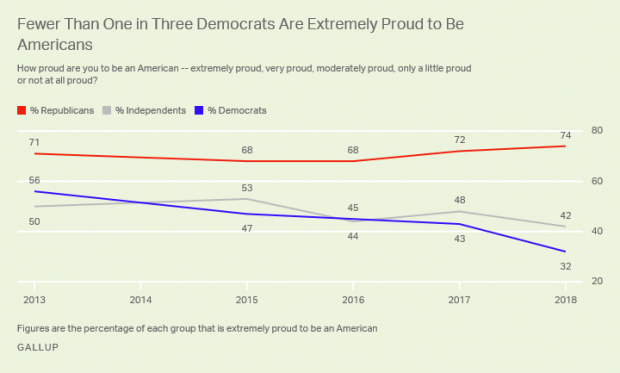
Another 25 percent say they’re “very proud” — but the combined 72 percent who say they’re extremely or very proud is also the lowest Gallup has recorded. Pride levels among liberals and Democrats have plunged since 2017. Overall, 74 percent of Republicans and just 32 percent of Democrats call themselves “extremely proud” to be American.
Pfizer Has Raised Prices on 100 of Its Products

Weeks after President Trump said that drugmakers were about to implement “voluntary massive drops in prices” — reductions that have yet to materialize — Pfizer has raised prices on 100 of its products, The Financial Times’s David Crow reports:
“The increases were effective as of July 1 and in most cases were more than 9 per cent — well above the rate of inflation in the US, which is running at about 2 per cent. … Pfizer, the largest standalone drugmaker in the US, did decrease the prices of five products by between 16 per cent and 44 per cent, according to the figures.”
Crow notes that Pfizer also raised prices on many of its medicines in January, meaning that some prices have been hiked by nearly 20 percent this year. The drugmaker said that it was only changing prices on 10 percent of its medicines and that list prices did not reflect what most patients or insurers actually paid. The net price increase after rebates and discounts was expected to be in the “low single digits,” the company told the FT.
Chart of the Day: Pass-Through Tax Deductions Made Easy

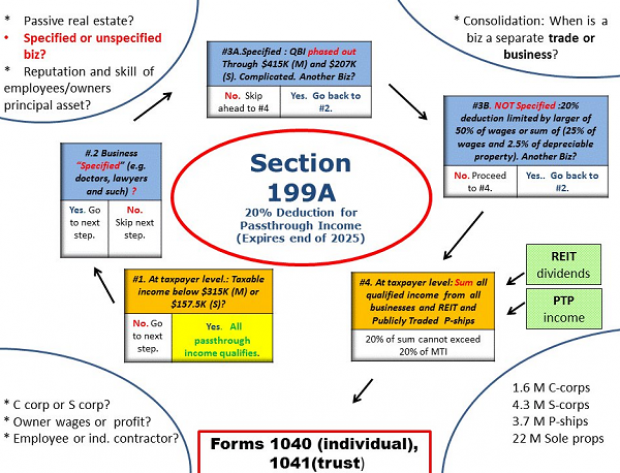
The Republican tax overhaul was supposed to simplify the tax code, but most experts say it fell well short of the goal. Martin Sullivan, chief economist at Tax Analysts, tweeted out a chart of the analysis required to determine whether income qualifies for the passthrough tax deduction of 20 percent, and as you’ll see, it’s anything but simple.
A Conservative Bashes GOP Dysfunction on Spending Cuts

Brian Riedl, a senior fellow at the conservative Manhattan Institute, offers a blistering critique of congressional Republican’s problems cutting spending:
Since the Republicans took the House in 2011, nearly every annual budget blueprint has promised to balance the budget within a decade with anywhere from $5 trillion to $8 trillion in spending cuts. And yet, you may have noticed, the budget has not moved towards balance. This is because the budget merely sets a broad fiscal goal. To actually cut spending, Congress must follow up with specific legislation to reform Medicare, Medicaid, and all the other targeted programs. In reality, most lawmakers who pass these budgets have no intention whatsoever of cutting this spending. As soon as the budget is passed, the targets are forgotten. The spending-cut legislation is never even drafted, much less voted on.
The annual budget exercise is thus a cynical exercise in symbolism. Congress calculates how much spending must be cut over ten years to balance the budget. Then they pass legislation setting a goal of cutting that amount. Then they move on to other business. It’s like a baseball team announcing that they voted to win the next World Series, and then not showing up to play the season.
Read the full piece at National Review.