
Here’s Why Home Prices Are Climbing So Quickly

Want to buy a home but finding slim pickings? Blame the builders.
New home construction has not kept pace with the improving job market in recent years and is part of the reason that housing inventory is so scarce and home prices are growing so quickly, according to a report released today by the National Association of Realtors.
After over-building leading up to the housing bubble, developer laid off workers and scaled back construction by more than 75 percent. After the crash many of those workers migrated to other industries, making it harder for builders to quickly ramp up work. There are also fewer builders now than there were a decade ago, with many going bust in the bubble and others consolidating with competitors.
Related: How a Smart Home Can Save You Time and Money
While home starts have come back since the recession, the new NAR report finds that in two-thirds of markets homebuilding activity has not kept pace with the number of newly employed workers. In particular, construction of single-family homes remains at less than half its prerecession levels.
Many of the markets with the largest disparity of jobs versus home construction were hit hardest by the housing crisis but have fully rebounded, including San Jose, San Francisco, San Diego and Miami. New York is also among the top cities where home building has not kept pace.
There are several reasons that new home construction has grown so slowly in recent years, including rising construction and labor costs and tight credit. Despite those headwinds, new home construction is expected to grow by more than 25 percent this year.
Top Reads From The Fiscal Times:
- Can Anyone Stop the $38 Billion Airline Fee Squeeze?
- 7 Common Myths That Can Ruin Your Retirement
- The 25 Most Expensive Cities for Renters

Small Business Owners Say They’re Raising Worker Pay
A record percentage of small business owners say they are raising pay for their workers, according to the latest monthly jobs report from the National Federation of Independent Business, based on a survey of 10,000 of the group’s members. A seasonally adjusted net 35 percent of small businesses say they are increasing compensation. “They are increasing compensation at record levels and are continuing to hire,” NFIB President and CEO Juanita Duggan said in a statement accompanying the report. “Post tax reform, concerns about taxes and regulations are taking a backseat to their worries over filling open positions and finding qualified candidates.”

The US Is Running Short on More Than 200 Drugs

The U.S. is officially running short on 202 drugs, including some medical staples like epinephrine, morphine and saline solution. “The medications most vulnerable to running short have a few things in common: They are generic, high-volume, and low-margin for their makers—not the cutting-edge specialty drugs that pad pharmaceutical companies’ bottom lines,” Fortune’s Erika Fry reports. “Companies have little incentive to make the workhorse drugs we use most.” And much of the problem — “The situation is an emergency waiting to be a disaster,” one pharmacist says — can be tied to one company: Pfizer. Read the full story here.
Chart of the Day: Could You Handle a Sudden $400 Expense?

More Americans say they are living comfortably or at least “doing okay” financially, according to the Federal Reserve’s Report on the Economic Well-Being of U.S. Households in 2017. At the same time, four in 10 adults say that, if faced with an unexpected expense of $400, they would not be able to cover it or would cover it by selling something or borrowing money. That represents an improvement from 2013, when half of all adults said they would have trouble handling such an expense, but suggests that many Americans are still close to the edge when it comes to their personal finances.

Kevin Brady Introduces Welfare Reform Bill
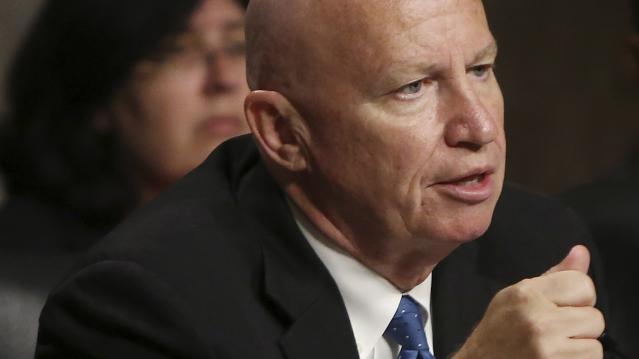
The Tax Policy Center’s Daily Deduction reports that Rep. Kevin Brady (R-TX), chair of the House Ways and Means Committee on Friday introduced The Jobs and Opportunity with Benefits and Services (JOBS) for Success Act (H.R. 5861). “The bill would rename the Temporary Assistance for Needy Families (TANF) program and target benefits to the lowest-income households. Although the House GOP leadership promised to include an expansion of the Earned Income Tax Credit as part of an upcoming welfare reform bill, this measure does not appear to include any EITC provisions.” The committee will mark up the bill on Wednesday.