
Here’s Why Home Prices Are Climbing So Quickly
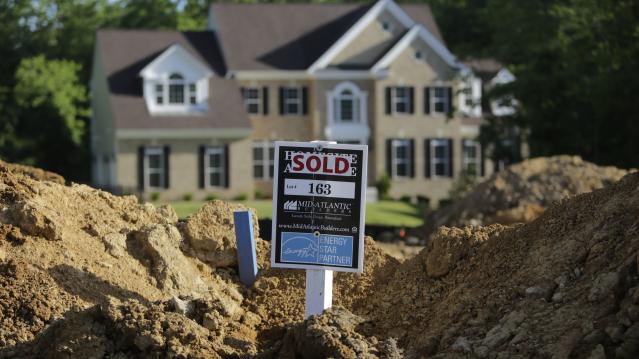
Want to buy a home but finding slim pickings? Blame the builders.
New home construction has not kept pace with the improving job market in recent years and is part of the reason that housing inventory is so scarce and home prices are growing so quickly, according to a report released today by the National Association of Realtors.
After over-building leading up to the housing bubble, developer laid off workers and scaled back construction by more than 75 percent. After the crash many of those workers migrated to other industries, making it harder for builders to quickly ramp up work. There are also fewer builders now than there were a decade ago, with many going bust in the bubble and others consolidating with competitors.
Related: How a Smart Home Can Save You Time and Money
While home starts have come back since the recession, the new NAR report finds that in two-thirds of markets homebuilding activity has not kept pace with the number of newly employed workers. In particular, construction of single-family homes remains at less than half its prerecession levels.
Many of the markets with the largest disparity of jobs versus home construction were hit hardest by the housing crisis but have fully rebounded, including San Jose, San Francisco, San Diego and Miami. New York is also among the top cities where home building has not kept pace.
There are several reasons that new home construction has grown so slowly in recent years, including rising construction and labor costs and tight credit. Despite those headwinds, new home construction is expected to grow by more than 25 percent this year.
Top Reads From The Fiscal Times:
- Can Anyone Stop the $38 Billion Airline Fee Squeeze?
- 7 Common Myths That Can Ruin Your Retirement
- The 25 Most Expensive Cities for Renters
Goldman Sachs Says Corporate Tax Rate Cuts May Get Phased In
Despite the challenges the Republican tax overhaul faces, Goldman Sachs still puts the chances of a plan becoming law by early next year at about 65 percent — but its analysts see some substantial changes coming before that happens. “The proposed tax cut is more front-loaded than we have expected; official estimates suggest a tax cut of 0.75% of GDP in 2018. However, we expect the final version to have a smaller near-term effect as competing priorities lead tax-writers to phase in some cuts—particularly corporate rate cuts—over time,” Goldman said in a note to clients Sunday.
The Hidden Tax Bracket in the GOP Plan
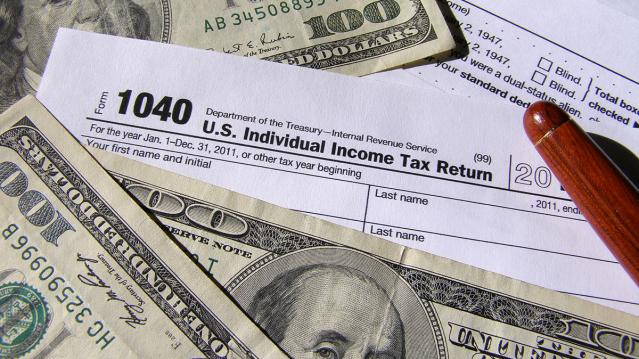
Politico’s Danny Vinik: “Thanks to a quirky proposed surcharge, Americans who earn more than $1 million in taxable income would trigger an extra 6 percent tax on the next $200,000 they earn—a complicated change that effectively creates a new, unannounced tax bracket of 45.6 percent. … The new rate stems from a provision in the bill intended to help the government recover, from the very wealthy, some of the benefits that lower-income taxpayers enjoy. … After the first $1 million in taxable income, the government would impose a 6 percent surcharge on every dollar earned, until it made up for the tax benefits that the rich receive from the low tax rate on that first $45,000. That surcharge remains until the government has clawed back the full $12,420, which would occur at about $1.2 million in taxable income. At that point, the surcharge disappears and the top tax rate drops back to 39.6 percent.”
Vinik writes that the surcharge would have affected more than 400,000 tax filers in 2015, according to IRS data, and that it could raise more than $50 billion in revenue over a decade. At a Politico event Friday, House Ways and Means Chairman Kevin Brady said the surcharge, sometimes called a bubble rate, was included to try to drive more middle-class tax relief.
Read the Republican Tax Bill, Plus the Talking Points to Sell the Plan
House Republicans on Thursday released a 429-page draft of their "Tax Cuts and Jobs Act." Read the bill below, or scroll down for the House summary or a more digestible GOP list of highlights.
Another Analysis Finds GOP Tax Plan Would Balloon Deficits
A study by the University of Pennsylvania’s Wharton School, using the Penn Wharton Budget Model (PWBM), finds that three modeled versions of the plan would raise deficits by up to $3.5 trillion over 10 years and as much as $12.2 trillion by 2040. The lowest-cost plan modeled in the study — a version that would tax corporate income at 25 percent instead of the GOP’s proposed 20 percent and pass-through income at 28 percent instead of 25 percent, among a host of other assumptions and tweaks — would lose $1.5 trillion over 10 years, or $1 trillion after accounting for economic feedback effects. (The budget adopted by Republicans last week allows for up to $1.5 trillion to the added to the deficit.) The study also found that workers’ wages would increase by about 1.4 percent over a decade, far shy of the estimated benefits being claimed by the White House.
The Budget Vote May Depend on a SALT Deal
House GOP members concerned about the proposal to repeal the deduction for state and local taxes are supposed to meet with party leaders Wednesday evening. They’re reportedly looking to reach a compromise deal to keep the tax break in some form — and the budget vote might be at stake, Bloomberg reports: “House Republicans hold 239 seats and need 217 votes to adopt the budget — a critical step to passing tax changes without Democratic support. That means 23 defections could sink the budget resolution — assuming no absences or Democratic support.”