
Here’s Why Home Prices Are Climbing So Quickly
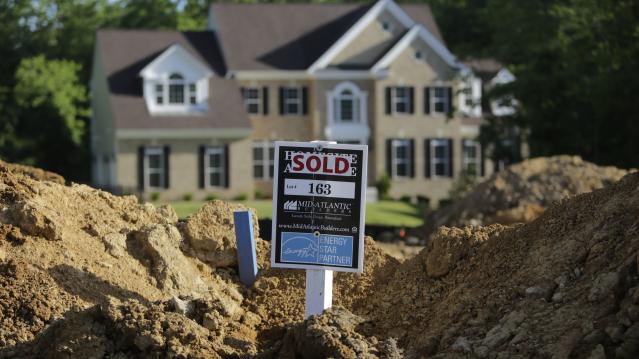
Want to buy a home but finding slim pickings? Blame the builders.
New home construction has not kept pace with the improving job market in recent years and is part of the reason that housing inventory is so scarce and home prices are growing so quickly, according to a report released today by the National Association of Realtors.
After over-building leading up to the housing bubble, developer laid off workers and scaled back construction by more than 75 percent. After the crash many of those workers migrated to other industries, making it harder for builders to quickly ramp up work. There are also fewer builders now than there were a decade ago, with many going bust in the bubble and others consolidating with competitors.
Related: How a Smart Home Can Save You Time and Money
While home starts have come back since the recession, the new NAR report finds that in two-thirds of markets homebuilding activity has not kept pace with the number of newly employed workers. In particular, construction of single-family homes remains at less than half its prerecession levels.
Many of the markets with the largest disparity of jobs versus home construction were hit hardest by the housing crisis but have fully rebounded, including San Jose, San Francisco, San Diego and Miami. New York is also among the top cities where home building has not kept pace.
There are several reasons that new home construction has grown so slowly in recent years, including rising construction and labor costs and tight credit. Despite those headwinds, new home construction is expected to grow by more than 25 percent this year.
Top Reads From The Fiscal Times:
- Can Anyone Stop the $38 Billion Airline Fee Squeeze?
- 7 Common Myths That Can Ruin Your Retirement
- The 25 Most Expensive Cities for Renters
Budget ‘Chaos’ Threatens Army Reset: Retired General
One thing is standing in the way of a major ongoing effort to reset the U.S. Army, writes Carter Ham, a retired four-star general who’s now president and CEO of the Association of the U.S. Army, at Defense One. “The problem is the Washington, D.C., budget quagmire.”
The issue is more than just a matter of funding levels. “What hurts more is the erratic, unreliable and downright harmful federal budget process,” which has forced the Army to plan based on stopgap “continuing resolutions” instead of approved budgets for nine straight fiscal years. “A slowdown in combat-related training, production delays in new weapons, and a postponement of increases in Army troop levels are among the immediate impacts of operating under this ill-named continuing resolution. It’s not continuous and it certainly doesn’t display resolve.”
Pentagon Pushes for Faster F-35 Cost Cuts

The Pentagon has taken over cost-cutting efforts for the F-35 program, which has been plagued by years of cost overruns, production delays and technical problems. The Defense Department rejected a cost-saving plan proposed by contractors including principal manufacturer Lockheed Martin as being too slow to produce substantial savings. Instead, it gave Lockheed a $60 million contract “to pursue further efficiency measures, with more oversight of how the money was spent,” The Wall Street Journal’s Doug Cameron reports. F-35 program leaders “say they want more of the cost-saving effort directed at smaller suppliers that haven’t been pressured enough.” The Pentagon plans to cut the price of the F-35A model used by the Air Force from a recent $94.6 million each to around $80 million by 2020. Overall, the price of developing the F-35 has climbed above $400 billion, with the total program cost now projected at $1.53 trillion. (Wall Street Journal, CNBC)

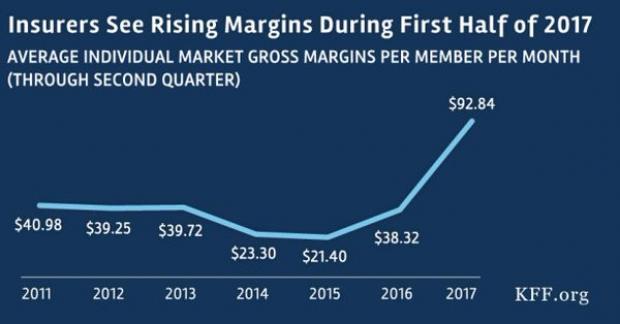
Chart of the Day - October 6, 2017
Financial performance for insurers in the individual Obamacare markets is improving, driven by higher premiums and slower growth in claims. This suggests that the market is stabilizing. (Kaiser Family Foundation)
Quote of the Day - October 5, 2017
"The train's left the station, and if you're a budget hawk, you were left at the station." -- Rep. Mark Sanford, R-S.C.