
Millennials to Employers: Show Us the Money

When it comes to company loyalty, money matters to millennials. Twenty-nine percent of millennials say that a higher salary is the biggest contributor to their loyalty, according to data released Tuesday by the Staples Advantage Workplace Index.
That compares to 20 percent of the overall workforce who place a priority on salary. The difference could be related to the fact that millennials tend to make lower wages than other workers and face higher fixed costs on things like student loans and rent.
Still, the job market is tightening, making it easier for millennials who feel they are underpaid to look elsewhere for work. The unemployment rate for millennials has fallen by nearly 40 percent since its peak in 2010.
Related: 18 Companies Americans Hate Dealing With the Most
Millennials are willing to work long hours but they want to be able to do so on their own terms. More than half of younger workers said that they work from home after the work day is over, compared to 39 percent of the all workers. Nearly half of millennials said that increased flexibility would improve their happiness.
Other important factors for millennials are office perks such as a gym or free lunches, having an eco-friendly office and a company culture that encourages breaks.
Whether or not they’re happy with their current roles, millennials are looking toward the future with ambition. Seventy percent of those surveyed said they expect to be in a management position in the next five years.
Top Reads from The Fiscal Times:
- Stocks Are Sending a Recession Warning
- The 10 Fastest-Growing Jobs Right Now
- Mark Cuban: The Lesson Investors Can Learn From China
Marco Rubio Says There’s No Proof Tax Cuts Are Helping American Workers

Sen. Marco Rubio (R-FL) told The Economist that his party’s defense of the massive tax cuts passed last year may be off base: “There is still a lot of thinking on the right that if big corporations are happy, they’re going to take the money they’re saving and reinvest it in American workers,” Rubio said. “In fact they bought back shares, a few gave out bonuses; there’s no evidence whatsoever that the money’s been massively poured back into the American worker.”
For Richer or Poorer: An Updated Marriage Bonus and Penalty Calculator

The Tax Policy Center has updated its Marriage Bonus and Penalty Calculator for 2018, including the new GOP-passed tax law. The tool lets users calculate the difference in income taxes a couple would owe if filing as married or separately. “Most couples will pay lower income taxes after they are married than they would as two separate taxpayers (a marriage bonus), but some will pay a marriage penalty," TPC’s Daniel Berger writes. “Typically, couples with similar incomes will be hit with a penalty while those where one spouse earns significantly more than the other will almost always get a bonus for walking down the aisle.”
Trump Administration Wants to Raise the Rent
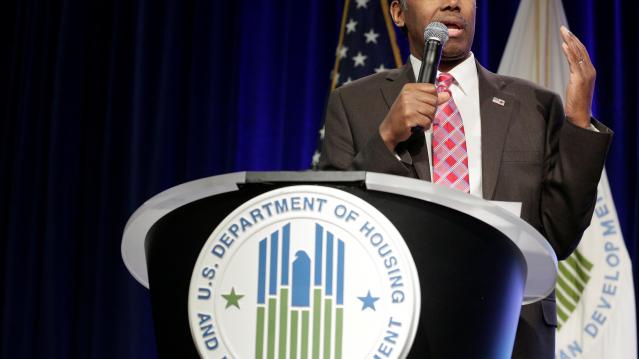
Housing and Urban Development Secretary Ben Carson will propose increasing the rent obligation for low-income households receiving federal housing subsidies, as well as creating new work requirements for subsidy recipients. Some details via The Washington Post: “Currently, tenants generally pay 30 percent of their adjusted income toward rent or a public housing agency minimum rent not to exceed $50. The administration’s legislative proposal sets the family monthly rent contribution at 35 percent of gross income or 35 percent of their earnings by working 15 hours a week at the federal minimum wage -- or approximately $150 a month, three times higher than the current minimum.” (The Washington Post)
New Push for Capital Gains Tax Cut

Anti-tax activists in Washington are renewing their pressure on lawmakers to pass new legislation indexing capital gains taxes to inflation. The Hill provided an example of such indexing that Grover Norquist recently sent to Treasury Secretary Steven Mnuchin: “Under current policy, someone who made an investment of $1,000 in 2000 and sold it for $2,000 in 2017 would pay capital gains taxes on the $1,000 difference. But if capital gains were indexed, the investor would only pay taxes on $579, since $1,000 in 2000 would be equivalent to $1,421 in 2017 after adjusting for inflation.” Proponents of indexing say it’s just a matter of fairness, but critics claim that it would be just another regressive tax cut for the wealthy. Indexing would cost an estimated $10 billion a year in lost revenues. (The Hill)
Bernie Sanders to Propose Plan Guaranteeing a Job for Every American
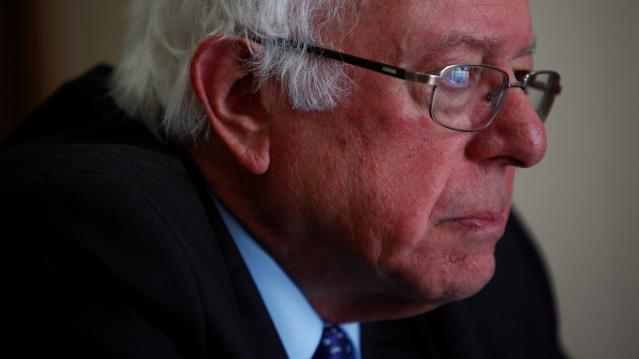
Sen. Bernie Sanders (I-VT) is preparing to announce a plan for the federal government to guarantee a job paying $15 an hour and providing health-care benefits to every American “who wants one or needs one.” The jobs would be on government projects in areas such as infrastructure, care giving, the environment and education. The proposal is still being crafted, and Sanders’ representative said his office had not yet come up with a cost estimate or funding plan. Sen. Kirsten Gillibrand (D-NY) last week tweeted support for a federal jobs guarantee, but Republicans have long opposed such proposals, saying they would cost too much. (Washington Post)