While the Trump Administration may be rife with climate-change skeptics such as Scott Pruitt, the new chief of the Environmental Protection Agency, the Pentagon is taking global warming seriously.
In an update to a previous story, the investigative website ProPublica last week published new excerpts from written exchanges between Defense Secretary James Mattis and members of the Senate Armed Services Committee in which he said, “I agree that the effects of a changing climate — such as increased maritime access to the Arctic, rising sea levels, desertification, among others — impact our security situation.”
Related: Climate doubter Pruitt takes EPA reins as Trump targets regulations
In a story this week by Shawn Snow, the website Military Times laid out several occurrences undeniably taking place that give Mattis and the Pentagon reason to worry:
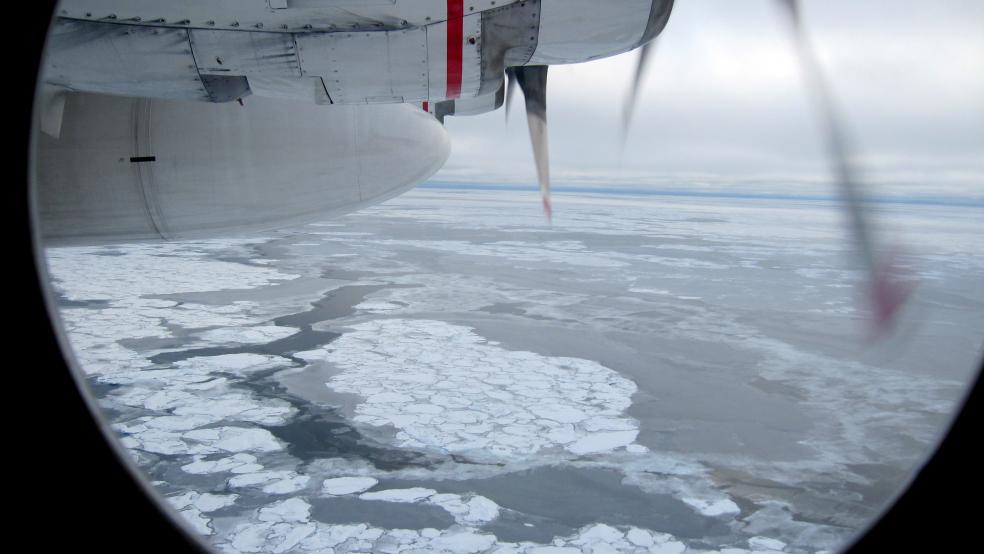
1. The Arctic Thaw. As ice caps at the Top of the World melt, nations will compete for resources there. More important, it is a strategic site for anti-missile defenses and Russia is well ahead of the U.S. there. “Its military has established a new Arctic command, added four brigades, 14 airfields, 16 ports, and has 40 operational icebreakers and 11 in production,” Military Times says. “The U.S. has only one working icebreaker, and it was commissioned in the 1970s.”
In addition, besides tensions over island-building by China in the South China Sea, there are worries that warming waters there will cause fish to migrate north, raising the chance of a serious conflict between China and Vietnam.
2. Rising Sea Levels and Droughts. A study by the Union of Concerned Scientists has warned that “Many military bases along the US East Coast and the Gulf of Mexico are at risk of permanently losing land to the ocean in the decades ahead.” The study last summer said that “A roughly three-foot increase in sea level would threaten 128 coastal DOD [Department of Defense] installations in the United States (43 percent of which are naval installations, valued at roughly $100 billion)….” Among the at-risk installations cited were the U.S. Naval Academy in Annapolis, Md.; the Marines’ Camp Lejune in North Carolina; and the naval shipyard in Portsmouth, Me.
Related: The Pentagon Is Going Green, With or Without Trump
Military Times also pointed to the 2014 wildfire at a Naval facility near the Marines’ Camp Pendleton in Southern California as an example of the devastation that droughts can cause.
3. Refugees. There are already mass migrations taking place around the world caused by war (such as Syria), economic conditions or other factors. Climate change could further disrupt unstable regions. ProPublica said Sen. Jeanne Shaheen (D-N.H) asked Mattis, a former four-star Marine general, the following: “I understand that while you were commander of U.S. Joint Forces Command you signed off on a document called the Joint Operating Environment, which listed climate change as one of the security threats the military will face in the next quarter-century. Do you believe climate change is a security threat?”
In response, Mattis said, according to ProPublica: “Climate change can be a driver of instability and the Department of Defense must pay attention to potential adverse impacts generated by this phenomenon.”