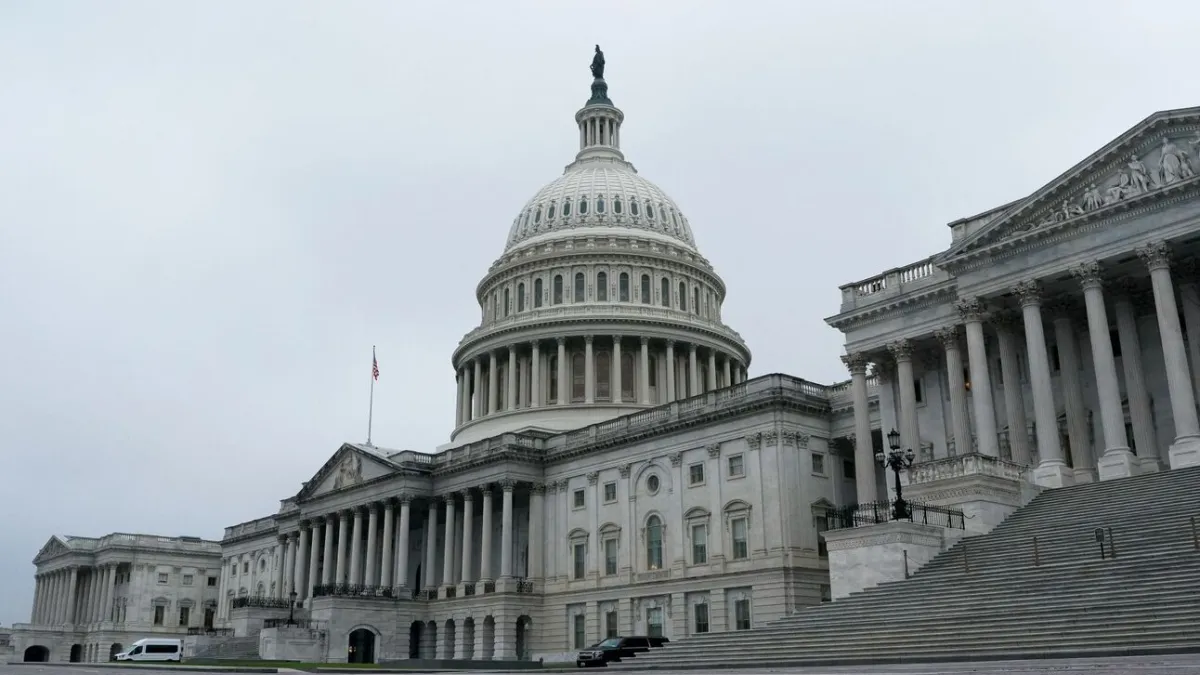
The Senate on Thursday rejected dueling Democratic and Republican healthcare bills, leaving Congress with no clear path to extend expiring Affordable Care Act subsidies and prevent steep cost increases or coverage losses for millions of Americans in 2026.
The Democratic plan called for a straight 3-year extension of the Covid-era subsidies, at a cost of about $83 billion over a decade, while the Republican bill from Idaho Sen. Mike Crapo Louisiana Sen. Bill Cassidy would have let the enhanced tax credits expire as scheduled and replaced them with pre-funded health savings accounts providing $1,000 a year to people aged 18 to 49 and $1,500 for those 50 and up. To be eligible for those accounts, enrollees would have to make less than 700% of the federal poverty level and choose “bronze” or “catastrophic” insurance plans with lower premiums and higher deductibles.
Democrats blocked the Crapo-Cassidy plan in a 51-48 vote that fell short of the 60 votes needed. Sen. Rand Paul of Kentucky was the lone Republican to vote against the bill, while Sen. Steve Daines of Montana did not vote. Republicans then blocked the Democratic bill, also 51-48. Four GOP senators voted with Democrats: Susan Collins of Maine, Josh Hawley of Missouri and Alaska’s Lisa Murkowski and Dan Sullivan.
Both votes were expected to fail, making them little more than political messaging exercises after the two sides failed to make any significant progress toward a compromise on the subsidies, which were at the heart of this fall’s government shutdown fight.
The clash over the subsidies, and over Obamacare more broadly, continued on the Senate floor Thursday, as Democrats argued that subsidies should be extended to prevent a looming healthcare crisis and Republicans countered that the Affordable Care Act has raised costs and needs to be overhauled.
Senate Minority Leader Chuck Schumer panned the GOP’s offering as essentially giving people $80 a month and forcing them onto “bare-bones bronze plans with sky-high deductibles” that could run as high as $7,000 or $10,000 for individuals and tens of thousands for couples. “The Republican bill is not true healthcare reform. It is not a healthcare plan whatsoever. It is junk insurance,” he said. “The Republican plan is a ‘when-you-get-sick-you-go-broke’ plan.”
Senate Majority Leader John Thune slammed the Democratic bill for not including any reforms to tackle waste, fraud and abuse or changes to reduce the “spiraling” costs of Obamacare. “Apparently, they think that a three-year extension with no reforms, to try and disguise the real impact of Obamacare’s spiraling costs, is actually a plan. I don’t know how you can call it a plan,” he said. “They want to extend the status quo – a failed, flawed fraud program that is increasing costs at three times the rate of inflation.”
What’s next: The likelihood of Congress extending the more generous ACA subsidies appears slim. But there are glimmers of hope for those who don’t want to see premiums spike.
In the House, Republican leaders who are trying to pull together a plan of their own reportedly offered their members a menu of ideas on Wednesday rather than a formal proposal ready for a vote. But rank-and-file lawmakers are offering up their own legislation. The backers of two bipartisan efforts to extend the expiring subsidies launched discharge petitions Wednesday seeking to force Speaker Mike Johnson to hold floor votes on their plans.
One bill, led by Pennsylvania Republican Rep. Brian Fitzpatrick, would extend the expiring tax credits through 2027, expand access to health savings accounts and enact reforms to the Affordable Care Act. “Congress cannot sit idle while American families face a preventable crisis,” Fitzpatrick said in a statement Wednesday. “If these protections expire, millions of Americans will be hit with premium increases they simply cannot afford, forcing impossible choices about their health, their finances, and their futures. They deserve a concrete solution now — not promises of one later.”
The other bill, led by Republican Rep. Jen Kiggans of Virginia and Democratic Rep. Josh Gottheimer of New Jersey, calls for a one-year extension of the enhanced tax credits with reforms meant to crack down on fraud om the program and prevent so-called “ghost beneficiaries” or “phantom enrollees.” The bill also would require a vote by July 1, 2026, on another year of premium savings and additional reforms.
“Our legislation implements income caps, puts up guardrails to protect against waste, fraud, and abuse, and even implements broader healthcare reforms,” Kiggans said in a statement. “This legislation is proof that compromise works and that Democrats and Republicans are capable of working together on behalf of the American people.”
Each of the petitions quickly gathered enough Republican signatures that Democrats could get them to the required total of 218 if they choose to do so.
The bottom line: The expanded Affordable Care Act subsidies expire in just under three weeks and hopes for a bipartisan solution are dimming. If the tax credits do sunset as scheduled, average premium payments for subsidized enrollees are projected to rise by 114%, creating hardship for millions of Americans and leaving healthcare costs as a potent political issue heading into the 2026 midterm elections.