
GOP Governor Asks Voters to Raise Their Own Taxes
Michigan voters go to the polls today to vote on Proposal 1, a referendum that would hike the state sales and gasoline taxes. An unexpected twist in the story, though, is who is backing the plan and why. Support for the proposal speaks to the declining state of infrastructure in the U.S. and the increasing urgency with which states are taking matters into their own hands.
Proposal 1 is a complex mix of policy changes that would raise more than a billion dollars to fund road construction and repair, plus hundreds of millions for education and other purposes. It would do so by hiking the Michigan state sales tax from 6 percent to 7 percent. That represents a 17 percent increase in total sales taxes Michiganders will face on taxable items.
Related: America’s Energy Infrastructure in Desperate Shape
However, the bill also abolishes the sales tax on gasoline – Michigan is one of the few states in which gas is not exempt from state sales tax – and would dramatically increase the wholesale gasoline tax. The net effect, according to the Detroit Free Press, would be an increase of between 7 and 9 cents per gallon in what consumers pay at the pump. The proposal would net about $1.9 billion per year for the state’s coffers, the majority of it coming out of the pockets of Michigan’s taxpayers. (A small percentage would come from out-of-state visitors paying taxes on items purchased in Michigan.)
Normally, a $2 billion tax hike – the biggest in the state in a generation – would be the sort of thing Republican politicians would attack mercilessly, but in Michigan, Republican Governor Rick Snyder is a strong proponent of the deal. And Snyder isn’t alone. Prominent Republican and Democratic lawmakers have thrown their support behind the measure.
Related: Get Ready to Pay More Tolls If Infrastructure Isn’t Funded
The move also has significant support from the business community. Unsurprisingly, the biggest backers of the deal are the construction companies and related industries. But there is also support in the general business community, even among some companies whose products would be more expensive.
Even with substantial support from legislative leaders and businesses, though, the prospects for Proposal 1 looked poor heading into the vote today Public opinion remains generally against the proposition despite a multimillion-dollar advertising campaign by supporters that has dwarfed efforts by the opposition.
Should the vote fail, though, the state’s pothole-pocked roads and crumbling bridges won’t fix themselves, so legislators will have to find the revenue somewhere, either by increasing taxes via a different route, or cutting spending from an already tight state budget.
Quote of the Day - October 16, 2017
Speaking at a cabinet meeting on Monday, President Trump said:
"Obamacare is finished, it's dead, it's gone ... There is no such thing as Obamacare anymore."
Click here for the video.
Poll: Trump Tax Cuts Favor the Wealthy; Deficit Should Be Higher Priority
Trump and the GOP still have work to do if they want to convince Americans that their tax plan won’t mostly help the rich. A CBS News Nation Tracker poll released Sunday finds that 58 percent say the tax reforms being discussed favor the wealthy, while 19 percent say it treats everyone equally and 18 percent say it favors the middle class.
The poll also found that 39 percent say that cutting the deficit should be a priority, even if it means taxes stay the same. About half as many people said cutting taxes should be prioritized even if the deficit rises.
The poll, conducted by YouGov, surveyed 2,371 U.S. adults between October 11 and 13. Its margin of error is 2.5 percent.
Coporate Tax Cut Could Be Phased In
House tax writers (at least some of them) are worried that slashing the corporate tax rate found will push the deficit higher in a hurry – an analysis by the Tax Policy Center found that cutting the rate to the stated goal of 20 percent would cost $2 trillion over a decade. One way to soften the fiscal blow would be to phase in the reduction over three to five years. House Republicans say such an approach would reduce the size of the lost revenue by half.
Larry Summers: GOP Tax Claims Are 'Made-Up'
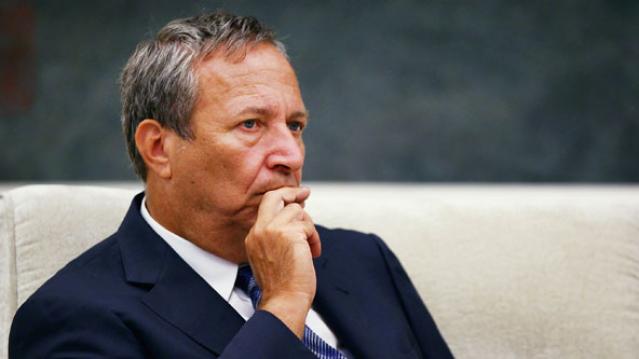
Former U.S. Treasury Secretary Lawrence Summers isn't happy with the Republican tax plan, and it's not just because he has a different set of ideas as a Democrat. More fundamentally, he says Republicans are making false claims: “When you have -- and I hate to be in a position of using this word about our government -- when you have senior economic officials making claims that are made-up ... it’s very hard to have a dialogue, and compromise, and get to a good place.”
Summers is also worried about the effects of a tax cut for the rich during a time of considerable social turmoil: “There’s a lot of unhappiness and anger out there … It’s really hard to see why focusing a corporate tax cut on those at the very high-end is going to do much to assuage that anger.”
How Much Did Mike Pence’s NFL Walkout Cost Taxpayers?
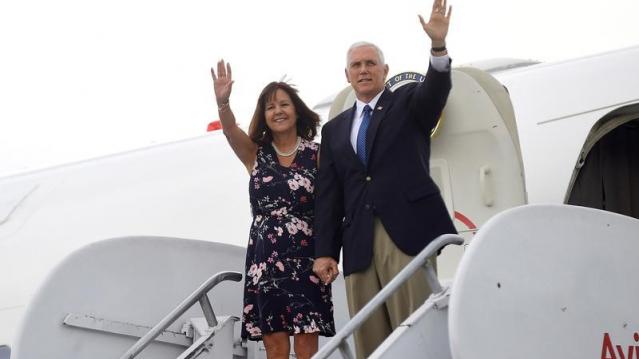
Vice President Mike Pence’s decision to attend an NFL game between the Indianapolis Colts and San Francisco 49ers yesterday and then leave after some 49ers players kneeled during the national anthem was quickly criticized by some as a planned piece of political theater — and a somewhat expensive one at that. “After all the scandals involving unnecessarily expensive travel by cabinet secretaries, how much taxpayer money was wasted on this stunt?” Rep. Adam Schiff (D-CA) tweeted Sunday afternoon.
The answer, CNN reports, is about $242,500: "According to the Air Force, flying a C-32, the model of plane used for Air Force 2, for one hour costs about $30,000. Pence's flight from Las Vegas to Indianapolis Saturday took about three hours and 20 minutes, so it cost about $100,000. Pence then flew from Indianapolis to Los Angeles on Sunday, which took about four hours and 45 minutes, costing about $142,500."
President Trump defended Pence’s trip, tweeting that it had been “long planned.” CNN also reports that some of the costs of Pence's flight from Indianapolis to Los Angeles will be paid back by the Republican National Committee because the vice president is attending a political event there.