
GOP Governor Asks Voters to Raise Their Own Taxes
Michigan voters go to the polls today to vote on Proposal 1, a referendum that would hike the state sales and gasoline taxes. An unexpected twist in the story, though, is who is backing the plan and why. Support for the proposal speaks to the declining state of infrastructure in the U.S. and the increasing urgency with which states are taking matters into their own hands.
Proposal 1 is a complex mix of policy changes that would raise more than a billion dollars to fund road construction and repair, plus hundreds of millions for education and other purposes. It would do so by hiking the Michigan state sales tax from 6 percent to 7 percent. That represents a 17 percent increase in total sales taxes Michiganders will face on taxable items.
Related: America’s Energy Infrastructure in Desperate Shape
However, the bill also abolishes the sales tax on gasoline – Michigan is one of the few states in which gas is not exempt from state sales tax – and would dramatically increase the wholesale gasoline tax. The net effect, according to the Detroit Free Press, would be an increase of between 7 and 9 cents per gallon in what consumers pay at the pump. The proposal would net about $1.9 billion per year for the state’s coffers, the majority of it coming out of the pockets of Michigan’s taxpayers. (A small percentage would come from out-of-state visitors paying taxes on items purchased in Michigan.)
Normally, a $2 billion tax hike – the biggest in the state in a generation – would be the sort of thing Republican politicians would attack mercilessly, but in Michigan, Republican Governor Rick Snyder is a strong proponent of the deal. And Snyder isn’t alone. Prominent Republican and Democratic lawmakers have thrown their support behind the measure.
Related: Get Ready to Pay More Tolls If Infrastructure Isn’t Funded
The move also has significant support from the business community. Unsurprisingly, the biggest backers of the deal are the construction companies and related industries. But there is also support in the general business community, even among some companies whose products would be more expensive.
Even with substantial support from legislative leaders and businesses, though, the prospects for Proposal 1 looked poor heading into the vote today Public opinion remains generally against the proposition despite a multimillion-dollar advertising campaign by supporters that has dwarfed efforts by the opposition.
Should the vote fail, though, the state’s pothole-pocked roads and crumbling bridges won’t fix themselves, so legislators will have to find the revenue somewhere, either by increasing taxes via a different route, or cutting spending from an already tight state budget.
Maybe Don’t Count Out Obamacare Repeal Just Yet
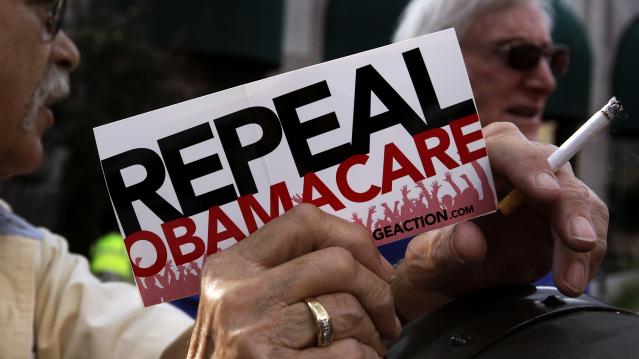
Sen. Bill Cassidy (R-LA) told reporters on Friday that he’s getting close to securing enough votes to pass the last-ditch ACA repeal and replacement bill he’s put forth with Sens. Lindsey Graham (R-SC), Dean Heller (R-NV) and Ron Johnson (R-WI).
“I am pretty confident we’ll get there on the Republican side,” Cassidy said. “We’re probably at 48-49 [votes] and talking to two or three more.” And Senate Majority Leader Mitch McConnell has asked the Congressional Budget Office to estimate the effects of the Cassidy-Graham bill, which would speed up the scoring process.
Of course, those last two or three votes have been the challenge for the GOP all along, and they may not be any easier to round up this time. Sen. Rand Paul (R-KY), who voted for a prior repeal bill, said Friday that he won't support this one. Plus, opponents are already stepping up their criticisms about the effects of the bill. And time is running out: Cassidy and his colleagues only have until September 30 to pass the bill this year under a process that would require only 50 supporters in the Senate. So while the Obamacare repeal may still have life, it remains a longshot.
Orrin Hatch Signals Just How Complicated Tax Reform Will Be
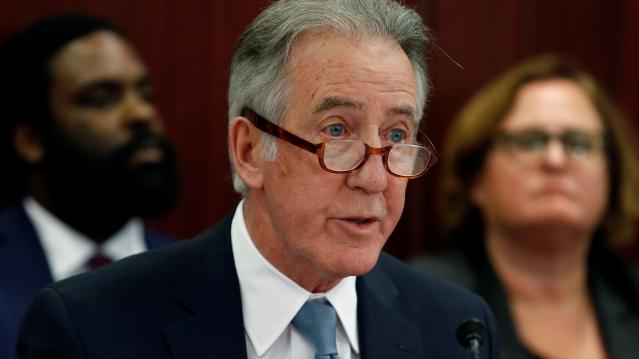
GOP leaders said Wednesday that they'd issue a more detailed framework of their tax overhaul the week of September 25. But while lawmakers are eager to get more details about the outline being hashed out by the so-called Big Six team of negotiators, Republicans are still divided on key elements of the plan — going from blueprint to bill is bound to be a contentious process.
In his opening remarks at a Senate Finance Committee hearing today on individual tax reform, Sen. Orrin Hatch (R-UT) said the plan from the Big Six — of which he is one — "will not dictate the direction" the tax-writing committee takes. "Anyone with any experience with the Senate Finance Committee knows that we are not anyone’s rubber stamp," he said. "If a bill – particularly on something as consequential as tax reform – is going to pass in this committee, the members of the committee will have to be involved in putting it together."
Oh, and remember: Republicans also need to agree on a budget before they can push through tax reform without Democratic votes.
Aging Baby Boomers Drive Down the Uninsured Rate
About 10,000 boomers turn 65 every day, becoming eligible for Medicare on their birthdays. The Census Bureau says that the sheer number of boomers entering Medicare is affecting the uninsured rate for the whole population. That rate fell to 8.8 percent in 2016, down from 9.1 percent a year earlier, with most of the decline driven by the aging of the post-war generation. (Wall Street Journal)
Social Security Kept 26.1 Million Out of Poverty Last Year
Social Security kept more than 26 million people out of poverty last year, according to a new report from the Census Bureau. Refundable tax credits such as the one for earned income kept 8.2 million people out of poverty, while food stamps lifted 3.6 million above the line, housing subsidies reduced the number of poor people by 3.1 million and unemployment insurance kept 680,000 out of poverty. Overall, the Census Bureau reported, the poverty rate was 12.7 percent, while a more sophisticated alternative measure that factors in government programs for low-income families put the rate at 13.9 percent, down from 14.5 percent in 2015.
Read more about the new Census Bureau numbers here.
Tax Reform on Menu for Trump's Dinner with Dems
President Trump is set to host three moderate Democratic senators for dinner on Tuesday as part of his push for tax reform, Politico reports. The Democrats on the guest list: Sens. Joe Manchin of West Virginia, Heidi Heitkamp of North Dakota and Joe Donnelly of Indiana, all of whom are up for reelection in 2018 in states Trump won last November. Vice President Mike Pence and GOP Sens. Orrin Hatch of Utah, John Thune of South Dakota and Pat Toomey of Pennsylvania are also slated to attend.