
Tequila’s Stunning Rise: How It Shot Up in U.S. Popularity
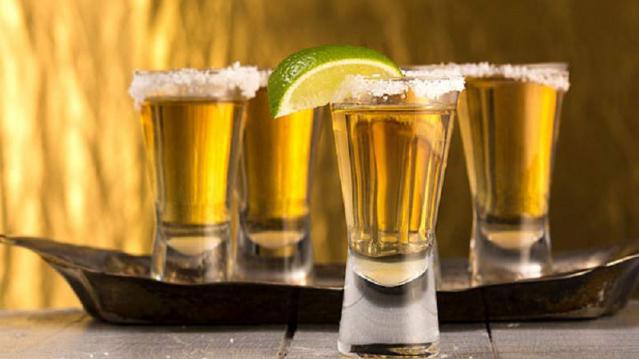
Americans are drinking more and better-quality tequila, and not only in margaritas on Cinco de Mayo.
Tequila sales have been growing at an average rate of 5.6 percent a year since 2002, according to February figures from the Distilled Spirits Council of the United States. In 2014 alone, 13.8 million nine-liter cases were sold.
Related: U.S. Surpasses France As Biggest Wine Market
The U.S. represents tequila’s largest market, with about 52 percent of global sales. America’s renewed thirst for mixed cocktails has been a boon for spirits overall, but especially for tequila. Meanwhile, sales in Mexico have remained flat largely because the market there is mature, with little room for growth.
The Distilled Spirits Council said that one of the keys to tequila’s U.S. growth has been distillers’ ability to offer a product for every budget and occasion, but the fastest growth has been in high-end and super-premium brands.
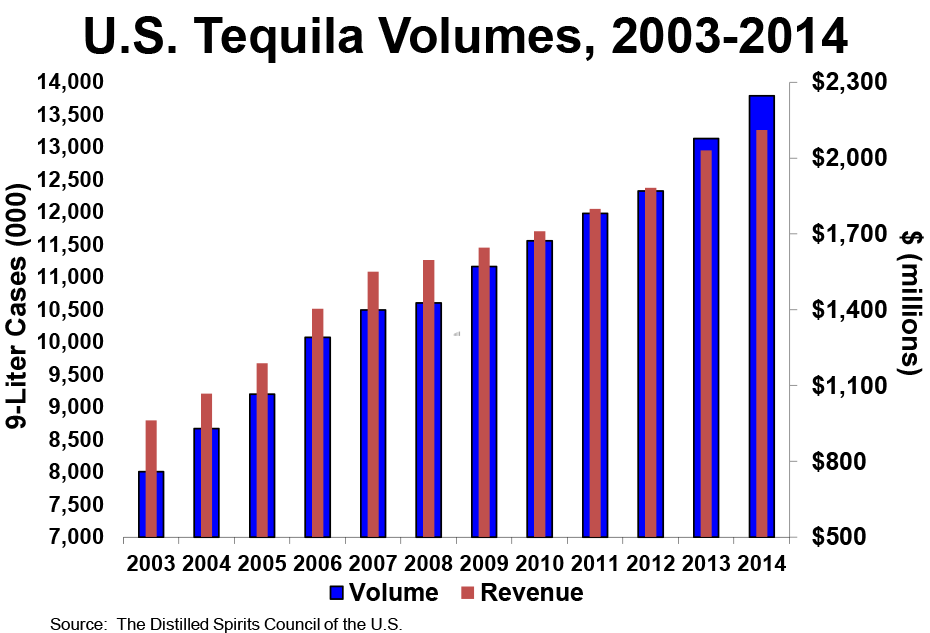
“High-end brands have grown 189 percent in volume since 2002,” it noted. “Virtually unknown in 2002, super-premium tequila volumes have skyrocketed 568 percent and today account for 2.4 million 9-liter cases.”
Celebrity endorsements may have also raised the status of tequila. George Clooney, Sean Combs and Justin Timberlake have all promoted tequila brands.
In addition, distillers are trying to boost the popularity of high-end tequilas further by offering tastings and tours — at least one of which is aimed at the super-wealthy.
Tequila Avion, an ultra-premium tequila maker, is offering a $500,000, three-day trip for 10 to Jalisco, Mexico, to taste its spirits and partake of luxury accommodations, butler service and a private dinner among other amenities.
Related: Kentucky’s McConnell and Paul Offer Tax Breaks for Bourbon
If that seems a tad pricey, Experience Tequila in Portland, Ore., offers four-day tours to Mexico for just under $1,500, and you can find tequila-tasting classes in many cities for about $100.


The 10 Worst States to Have a Baby
The birth rate in the U.S. is finally seeing an uptick after falling during the recession. Births tend to fall during hard economic times because having a baby and raising a child are expensive propositions.
Costs are not the same everywhere, though. Some states are better than others for family budgets, and health care quality varies widely from place to place.
A new report from WalletHub looks at the cost of delivering a baby in the 50 states and the District of Columbia, as well as overall health care quality and the general “baby-friendliness” of each state – a mix of variables including average birth weights, pollution levels and the availability of child care.
Mississippi ranks as the worst state to have a baby, despite having the lowest average infant-care costs in the nation. Unfortunately, the Magnolia State also has the highest rate of infant deaths and one of lowest numbers of pediatricians per capita.
Related: Which States Have the Most Unwanted Babies?
On the other end of the scale, Vermont ranks as the best state for having a baby. Vermont has both the highest number of pediatricians and the highest number of child centers per capita. But before packing your bags, it’s worth considering the frigid winters in the Green Mountain State and the amount of money you’ll need to spend on winter clothing and heat.
Here are the 10 worst and 10 best states for having a baby:
Top 10 Worst States to Have a Baby
1. Mississippi
- Budget Rank: 18
- Health Care Rank: 51
- Baby Friendly Environment Rank: 29
2. Pennsylvania
- Budget Rank: 37
- Health Care Rank: 36
- Baby Friendly Environment Rank: 51
3. West Virginia
- Budget Rank: 13
- Health Care Rank: 48
- Baby Friendly Environment Rank: 50
4. South Carolina
- Budget Rank: 22
- Health Care Rank: 43
- Baby Friendly Environment Rank: 49
5. Nevada
- Budget Rank: 39
- Health Care Rank: 35
- Baby Friendly Environment Rank: 46
6. New York
- Budget Rank: 46
- Health Care Rank: 12
- Baby Friendly Environment Rank: 47
7. Louisiana
- Budget Rank: 8
- Health Care Rank: 50
- Baby Friendly Environment Rank: 26
8. Georgia
- Budget Rank: 6
- Health Care Rank: 46
- Baby Friendly Environment Rank: 43
9. Alabama
- Budget Rank: 3
- Health Care Rank: 47
- Baby Friendly Environment Rank: 44
10. Arkansas
- Budget Rank: 12
- Health Care Rank: 49
- Baby Friendly Environment Rank: 37
Top 10 Best States to Have a Baby
1. Vermont
- Budget Ranks: 17
- Health Care Rank: 1
- Baby Friendly Environment Rank: 5
2. North Dakota
- Budget Rank: 10
- Health Care Rank: 14
- Baby Friendly Environment Rank: 10
3. Oregon
- Budget Rank: 38
- Health Care Rank: 2
- Baby Friendly Environment Rank: 14
4. Hawaii
- Budget Rank: 31
- Health Care Rank: 25
- Baby Friendly Environment Rank: 1
5. Minnesota
- Budget Rank: 32
- Health Care Rank: 5
- Baby Friendly Environment Rank: 12
6. Kentucky
- Budget Rank: 1
- Health Care Rank: 33
- Baby Friendly Environment Rank: 20
7. Maine
- Budget Rank: 25
- Health Care Rank: 10
- Baby Friendly Environment Rank: 15
8. Wyoming
- Budget Rank: 22
- Health Care Rank: 17
- Baby Friendly Environment Rank: 7
9. Iowa
- Budget Rank: 14
- Health Care Rank: 25
- Baby Friendly Environment Rank: 9
10. Alaska
- Budget Rank: 50
- Health Care Rank: 6
- Baby Friendly Environment Rank: 2
Top Reads From The Fiscal Times
- The 10 Worst States for Property Taxes
- Americans Are About to Get a Nice Fat Pay Raise
- You’re Richer Than You Think. Really.
Worried About a Recession? Here’s When the Next Slump Will Hit
The next recession may be coming sooner than you think.
Eleven of the 31 economists recently surveyed by Bloomberg believed the American recession would hit in 2018, and all but two of them expected the recession to begin within the next five years.
If the recession begins in 2018, the expansion would have lasted nine years, making it the second-longest period of growth in U.S. history after the decade-long expansion that ended when the tech bubble burst in 2001. This average postwar expansion averages about five years.
The recent turmoil in the stock market and the slowdown in China has more investors and analysts using the “R-word,” but the economists surveyed by Bloomberg think we have a bit of time. They pegged the chance of recession over the next 12 months to just 10 percent.
Related: Stocks Are Sending a Recession Warning
While economists talk about the next official recession, many average Americans feel like they’re still climbing out of the last one. In a data brief released last week, the National Employment Law Project found that wages have declined since 2009 for most U.S. workers, when factoring in cost of living increases.
A full jobs recovery is at least two years away, according to an analysis by economist Elise Gould with the Economic Policy Institute. “Wage growth needs to be stronger—and consistently strong for a solid spell—before we can call this a healthy economy,” she wrote in a recent blog post.
Top Reads from The Fiscal Times:
- This CEO Makes 1,951 Times More Than Most of His Workers
- Seven Reasons Why the Fed Won’t Hike Interest Rates
- $42 Million for 54 Recruits: U.S. Program to Train Syrian Rebels Is a Disaster