
Most Americans Think Our Morals Are Going To Hell
Ask anyone about the state of moral values in the U.S. and you’re likely to get a response along the lines of, “we’re going to hell.”
Most Americans — 72 percent — are convinced that moral values in the U.S. are decaying, according to a new Gallup poll, and most people believe the current state of moral values isn’t all that great to begin with. Nearly half of those polled, 45 percent, called the state of moral values in the U.S. “poor,” while 34 percent said they are “only fair.”
Just 19 percent rated American morals as either “excellent” or “good,” and only 22 percent say the state of moral values is getting better.
Unsurprisingly perhaps, social conservatives have consistently been most likely to tell pollsters that the nation’s moral values are deteriorating, but the latest Gallup findings showed an uptick from 2014 to 2015 among social moderates and social liberals who believe moral values are regressing.
Related: How U.S. Morals Stack Up Against the World
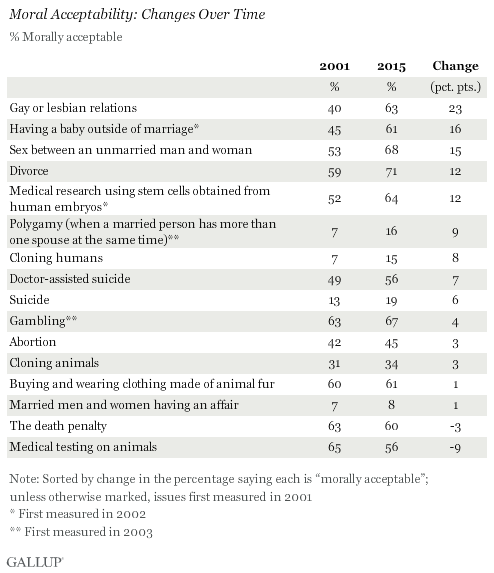
Gallup also found that Americans’ views of the moral acceptability of a number of key issues has been shifting to the left since 2001. The largest shift was on gay or lesbian relations, with a 23 percentage point increase in the share of people who say that behavior is morally acceptable. The change coincides with a sharp increase in support for same-sex marriage.
Sex between unmarried people has also become more acceptable, as has having babies outside of marriage. Polygamy and divorce are also now acceptable to a greater portion of the population than in 2001. On the other hand, the views of married men and women having an affair haven’t changed much, with just 8 percent of Americans saying it’s morally tolerable.
However, respondents to the poll about the current and future state of moral values weren’t necessarily responding with those charged social and political issues in mind. In many cases, Gallup suggests, their views of the moral direction of the country were rooted in something much more basic: “That is, their views have less to do with greater acceptance of same-sex marriage or having babies out of wedlock and other hot-button issues, and more to do with matters of basic civility and respect for each other,” Gallup’s Justin McCarthy wrote.
Clearly, the Golden Rule is still the bedrock of our moral code: Love thy neighbor as thyself.
Why U.S. Productivity May Be Worse Than We Think

The new economy may be making it easier for people to work from home and in other non-office settings, but it isn’t necessarily making us more productive.
This week, the Bureau of Labor statistics released new data, which showed that Americans spent more time working last year than at any time in the survey’s 12-year history. However, employers aren’t paying workers for those additional hours worked, according to a new research note from Michael Feroli, Chief Economist at J.P. Morgan
That’s bad news for workers, who are doing additional work without earning any additional compensation, but it’s also bad news for the economy. The BLS measures productivity growth (output divided by hours worked) based on the number of hours reported by the employer.
Related: The Do’s and Don’t’s of Boosting Your Productivity
Even by that measure, productivity expanded just 0.6 percent per year from 2010 to 2014, compared to 2.1 percent per year from 2003 to 2009. But when looking at productivity growth based on hours worked from an employees’ perspective, productivity has remained totally flat since 2010, according to Feroli.
What’s behind the discrepancy? Feroli writes that it may have to do with the way we work in today’s economy. “Technology can tether one to the office every minute of the day and in every place, regardless of whether the employer pays for that degree of connectedness.”
How Snapchat Wants to Win the 2016 Election
Snapchat is getting a lot of attention for its presidential ambitions.
In an effort to both appeal to the youth vote and bolster its events coverage built on a growing volume of video posted by its users, the app recently posted a job opening for a Content Analyst in Politics & News.
The new hire will curate photos and videos for the app’s “Our Story” curated events coverage of the presidential race and other news events. That stories feature has already proven to be a massive success. On average, Snapchat’s Our Stories draws around 20 million people in a 24-hour window, director of partnerships at Snapchat, Ben Schwerin, told Re/code. The three-day story in April about Coachella, the music festival, generated 40 million unique visitors.
Political events might not be draws on that same scale, but Snapchat apparently believes its massive influence with younger Americans could attract millions millennials to engage in the political process at a time when voter turnout is at its lowest levels since World War II. In the 2012 mid-term election, the national turnout rate was 35.9 percent. Of that, only 13 percent were between the ages of 18 and 29.
Related: Can ‘Project Lightning’ Give Twitter a Fresh Jolt?
Boasting more than 100 million daily users, Snapchat is valued at $16 billion — giving it the reach and the financial clout to become a force in 2016 campaign coverage. About 60 percent of U.S. smartphone users aged between 13 and 24 have used the app, according to The Financial Times. The largest demographic of users is between the ages of 18 and 24 (45 percent), followed by those between 25 and 34 (26 percent).
To capitalize on that user base, Snapchat recently hired former CNN political reporter Peter Hamby to oversee its expanding news team. Snapchat wants to promote content from debates, rallies, appearances and other election events and allow users to follow along. But this isn’t purely an experiment in civic participation. Candidates can pay for political ads to appear on the social media app.
The social media app has an ace up its sleeve to incentivize candidates to purchase ads. The app already has age-gating technology and a form of geographic targeting. Originally put into place to make sure underage kids wouldn’t see alcohol ads, the age gate could be used to reach only voting-age users. The geographic targeting allows Our Stories to only be viewable by people in the same city or area, so politicians could target specific areas, especially ones in a tight race.
Snapchat, best known as the service that allows users to send disappearing photos, claims that ads inserted into “Our Stories” have an advantage over other social media advertisements because they leave more lasting impressions.
If campaigns buy into that and turn to Snapchat as a way to connect with a hard-to-reach demographic, the social media company could be the big winner in the 2016 election.
Coming Soon: Free Wi-Fi From Google’s Sidewalk Labs
Google’s latest startup wants to use technology to improve city life.
Google is about to hit the streets with Sidewalk Labs, a Google startup that will focus on developing new technologies to improve urban life. Billing itself as an “urban innovation company,” Sidewalk Labs was founded to tackle urban problems such as housing, pollution, energy consumption, and transportation with the goal of making cities “more efficient, responsive, flexible and resilient.”
The first project? In New York City, LinkNYC will replace aging pay phones with slim, aluminum pillars that provide free high-speed Wi-Fi. The hubs also will allow people to charge their mobile devices and look up directions on touch screens. Qualcomm will be the wireless provider
Related: Why Google’s Internet Balloons May Be a $10 Billion Business
According to the Federal Communications Commission, 17 percent of the population, or 55 million people, in the United States don’t have access to high-speed broadband. Sidewalk Labs hopes that projects like LinkNYC can help bridge that gap.
For the LinkNYC initiative, Google acquired and merged two companies -- Control Group and Titan -- into a new venture called Intersection, which aims to provide free, public Wi-Fi in cities around the world using such familiar urban infrastructure as bus stops and pay phones.
Related: Google Spends More Than Any Other Tech Giant to Influence Congress
Daniel L. Doctoroff, a former Bloomberg CEO and deputy mayor for New York City, has been tapped to head Sidewalk Labs. Doctoroff, who conceived the idea for Sidewalk Labs with a Google team headed by CEO Larry Page, told Wired, “The vision really is to make cities connected places where you can walk down any street and have access to free ultra high speed Wi-Fi. The possibilities from there are just endless.”
Just don’t give us any automated, self-driving taxis, please.
Presidential Candidates Respond to SCOTUS Obamacare Ruling
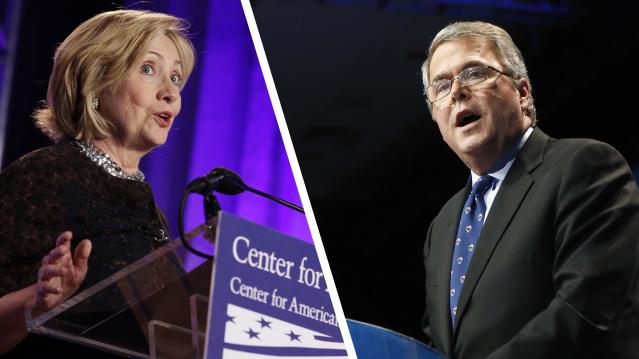
The Supreme Court’s 6-3 ruling Thursday may have kept the health care law and its insurance subsidies in place, but that doesn’t mean Republican efforts to “repeal and replace” the law are done. Major GOP presidential candidates took to Twitter following the Supreme Court’s announcement to blast the high court’s decision. Here are their responses and those from the Democratic candidates.
I am disappointed in the Burwell decision, but this is not the end of the fight against ObamaCare. http://t.co/3yaEVF1TaW
— Jeb Bush (@JebBush) June 25, 2015
Yes! SCOTUS affirms what we know is true in our hearts & under the law: Health insurance should be affordable & available to all. -H
— Hillary Clinton (@HillaryClinton) June 25, 2015
Despite the Court’s decision, ObamaCare is still a bad law that is having a negative impact on our country and on millions of Americans.
— Marco Rubio (@marcorubio) June 25, 2015
Justice Scalia got it right! "Words no longer have meaning if an Exchange that is not established by a State is "established by the State."
— Dr. Rand Paul (@RandPaul) June 25, 2015
I remain fully committed to the repeal of Obamacare—every single word of it. And, in 2017, we will do exactly that https://t.co/6i4WzLFzKR
— Ted Cruz (@tedcruz) June 25, 2015
#ObamaCare ruling is judicial tyranny. http://t.co/Di6WjxOc3y
— Gov. Mike Huckabee (@GovMikeHuckabee) June 25, 2015
Now that this ideological attempt to stop #ACA failed, we must redouble our efforts to bring health care to every person in this nation.
— Martin O'Malley (@MartinOMalley) June 25, 2015
Americans deserve better than what we’re getting with Obamacare. It’s time we repealed and replaced it! http://t.co/1EHfbVKBMa
— Rick Perry (@GovernorPerry) June 25, 2015
It is outrageous that the Supreme Court once again rewrote ObamaCare to save this deeply flawed law https://t.co/NBAnohFTW7
— Carly Fiorina (@CarlyFiorina) June 25, 2015
RT If you agree. We need real leadership in Washington, and Congress needs to repeal and replace #ObamaCare. #SCOTUScare - SKW
— Scott Walker (@ScottWalker) June 25, 2015
NEWS: Sen. Bernie Sanders' statement on Supreme Court decision upholding #ACA http://t.co/AUQgEHqUsi pic.twitter.com/PjyEillVBa
— Bernie Sanders (@SenSanders) June 25, 2015
Deeply disappointed by #SCOTUS ruling. Fundamental increase of govt control. I'm working to ensure next Pres repeals and replaces #Obamacare
— Dr. Ben Carson (@RealBenCarson) June 25, 2015
Today's Supreme Court ruling is another reminder that if we want to get rid of #Obamacare, we must elect a conservative President #RICK2016
— Rick Santorum (@RickSantorum) June 25, 2015This Is America’s Biggest Financial Fear

More than 60 percent of Americans are losing sleep at night because of financial concerns, and the biggest concern is that they’re not saving enough for retirement, according to a new report from CreditCards.com.
The second-biggest worry is about the cost of education, with half of those between the ages of 18 and 29 saying that concern keeps them up at night.
The percentage of Americans worried about education costs has been growing for the past eight years and is the only category that has become a bigger problem since the Great Recession. “Unless something slows the rapid rise in college costs, this could soon be Americans’ biggest financial fear,” CreditCards.com senior analyst Matt Schultz said in a statement.
Related: 12 Smart Money Moves Millennials Should Make Right Now
That echoes a Gallup poll released in April, which found that 73 percent of parents with kids under age 18 ranked paying for college as a financial worry, more than were concerned about saving for retirement or covering medical expenses.
Nearly one in three Americans are losing sleep because of medical bills, 27 percent are worried about their mortgage or rent payment, and 21 percent fret over credit card debt.
Older Americans and those with higher incomes seem to have fewer financial anxieties than younger generations. Less than half of those age 65 or older are losing sleep over their finances, versus more than two thirds of adults 64 or younger. Of those making less than $75,000 per year, 69 percent had financial worries, compared to just 51 percent of those making more than $75,000.