
Commerce IG Accused of Whistleblower Retaliation Suddenly Quits
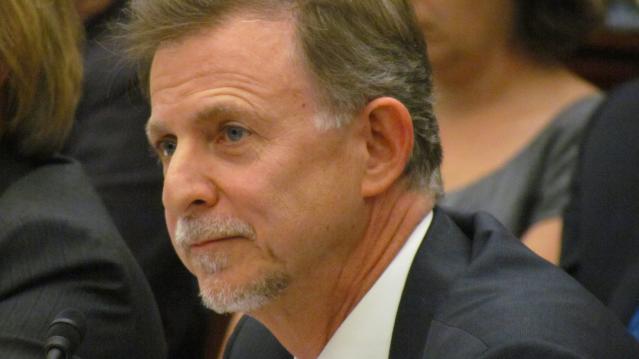
Embattled Commerce Department Inspector General Todd Zinser, who has been accused of misconduct and retaliation against whistleblowers, just announced that he is stepping down after seven years at the agency.
In an internal email to his staff, Zinser said he would be leaving his watchdog post to “pursue opportunities outside of government service,” GovExec first reported.
Zinser, the top watchdog in charge of keeping tabs on the Commerce Department, has been under intense scrutiny for nearly a year amid allegations of whistleblower retaliation and improperly hiring a woman with whom he was said to be romantically involved.
Related: Corruption in Commerce Dept? Lawmakers Want Him Out
For months, Rep. Eddie Bernice Johnson (D-TX) and two independent watchdog groups, have been calling on President Obama to fire Zinser over the alleged misconduct, which has been the subject of at least one federal probe by the White House Office of Special Council.
The White House has not responded to comment on whether Zinser was asked to leave.
A bipartisan group of lawmakers have been probing into multiple allegations brought by whistleblowers against Zinser for the better part of a year.
“The Committee has uncovered evidence questioning whether the Commerce IG’s office is functioning with integrity. We must determine if these allegations are true and if so, they are the result of systemic issues that may require legislative action,” the lawmakers wrote in a letter published last year.
Related: Why This Government Watchdog Needs Watching
In one instance, the IG reportedly failed to discipline two employees in his office who intimidated potential whistleblowers.
Another whistleblower told the committee that the IG improperly hired his “girlfriend” for a senior role in the office, which had an annual salary of $150,000 plus bonuses. Zinser maintained that he and the woman were not romantically involved and defended her employment.
He told the Council of Inspectors General for Integrity and Efficiency (CIGIE) that she was hired solely “on business necessity.”
There is currently a Government Accountability Office investigation into Zinser’s office conduct that is expected to be published in the coming months.
Zinser previously served as the Transportation Department’s acting inspector general and deputy inspector general.
Your Airplane Carry-on Bag Is About to Shrink
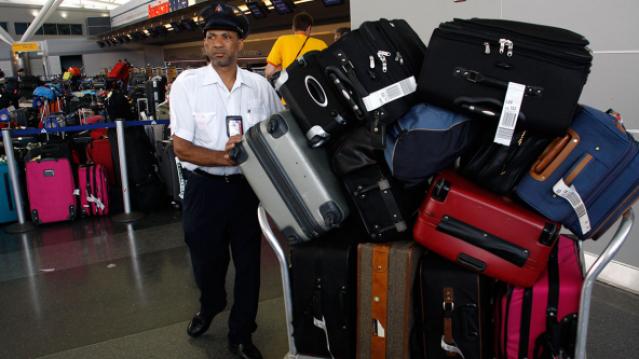
Are you one of those people who likes to brag about how you can fit a week’s worth of stuff into your carry-on suitcase? If so, your job is about to get harder.
The International Air Transport Association, a trade group representing some 250 airlines, has introduced a proposal to reduce the maximum allowable carry-on suitcase size. Under the proposed rule change, carry-on bags would have to be less than 21.5 x 13.5 x 7.5 inches. Current rules for carry-on size vary by airline, but they’re generally larger than that.
The organization claims that this would allow all passengers on a plane to store their bags in the cabin. “The development of an agreed optimal cabin bag size will bring common sense and order to the problem of differing sizes for carry-on bags,” IATA Senior Vice President for Airport, Passenger and Cargo Security said in a statement. “We know the current situation can be frustrating for passengers.
Related: 6 Sneaky Fees That Are Making Airlines a Bundle
Several major airlines have signaled interest in introducing the guidelines, according to IATA. Luggage manufacturers will start labeling bags that meet the new criteria as “IATA Cabin OK.”
The rule change may force more consumers to check luggage and pay the checked-bag fees many airlines have introduced in the past few years. Airlines typically charge $25 for the first bag, $35 for the second, and more than $100 for a third bag.
Some airlines, including Spirit, Allegiant and Frontier, also charge passengers for carry-on bags.
The $20 million ‘Boondoggle That Won’t Die’ Finally Gets Zapped
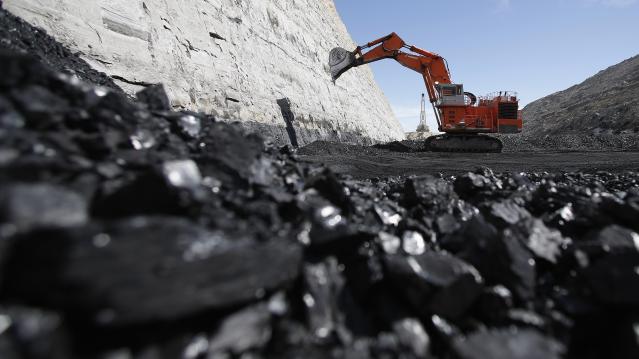
The House on Wednesday night voted 252 to 179 to wipe out a $20 million-a-year sop to Pennsylvania’s struggling anthracite coal industry that critics had tagged “the boondoggle that just won’t die.
As The Fiscal Times reported earlier this week, the Defense Department has been required every year to ship 5,000 to 9,000 tons of coal mined from the rugged hills of Tamaqua in northeast Pennsylvania to the small town of Kaiserslauntern in southwestern Germany to be used by a local utility to heat a large U.S. military maintenance and repair installation.
The provision, for decades tucked away in the massive defense appropriations bill, was the remnant of a half-century old taxpayer rip-off that the Defense Department has been trying to get rid of for years.
Related: The $20 Million Political Boondoggle That Just Won’t Die
“For decades, the Department of Defense has urged Congress to remove this earmark and allow the use of cheaper fuel to power its military bases. Today we finally achieve that … saving taxpayers millions of dollars each year,” said Rep. Jared Huffman (D-CA), who co-sponsored an amendment with Rep. Tom McClintock (R-CA) to eliminate the benefit to the Pennsylvania coal industry.
“The passage of this amendment is proof-positive that Republicans and Democrats can work together to cut wasteful spending while protecting the environment,” he added. “It’s about time we stopped burning dirty coal—and taxpayer dollars—to power this military base.”
End Game for the $20 Million 'Boondoggle That Won't Die'?
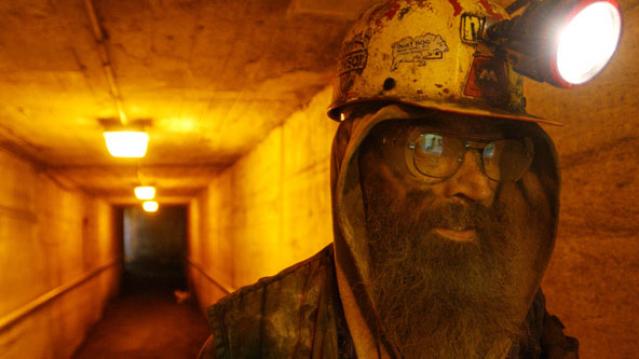
It has been called “the boondoggle that won’t die,” a decades’ old provision within the massive defense appropriations bill that requires a large U.S. Air Force and Army base 4,000 miles away in Germany to heat its facilities with anthracite coal mined in northeast Pennsylvania.
Although the utility at the military base in the small town of Kaiserslauntern in southwest Germany could readily purchase cheaper domestic coal or natural gas to fire its boilers, a legislative mandate dating back to the post-World War II era requires it to use 5,000 to 9,000 tons of Pennsylvania coal shipped overseas. Since 1972 each Department of Defense Appropriations Act has included an earmark requiring the Pentagon to purchase this coal.
Related: The $20 Million Political Boondoggle That Just Won’t Die
Taxpayers for Common Sense and about a half dozen other government watchdog groups have railed against the provision, which costs about $20 million a year, as one of the worst examples of waste in the budget. And late on Wednesday the House was scheduled to consider an amendment to the fiscal 2016 defense appropriations bill to finally knock it out.
Two Californians -- Democratic Rep. Jared Huffman and Republican Rep. Tom McClintock – have co-sponsored an amendment that would finally eliminate the resilient sop to Pennsylvania’s long-withering coal industry.
“It’s about time we stopped burning dirty coal – and taxpayer dollars – to power this military base,” Huffman said in a statement.
4 Signs It’s a Sellers’ Market in Real Estate Right Now

It’s a great time to be a home seller.
After years of dealing with hesitant buyers and disappointing home values, those with homes on the market are enjoying the benefits of a true sellers’ market in most regions of the country.
Home prices in April increased nearly 7 percent from the previous year, according to CoreLogic. And a survey from Coldwell Banker released today list four reasons sellers are sitting prettier:
1. Homes are selling even faster than in the pre-recession years. More than a quarter (28 percent) of today’s sellers were able to sell their home in less than two weeks. By comparison, only 19 percent of homes sold in that time frame in 2006-2007.
Related: 9 Real Estate Trends to Watch in 2015
2. The bidding war is back. Nearly half (47 percent) of today’s sellers are reporting receiving multiple offers on their home, up from just 40 percent from 2010-2013.
3. Homes are selling for more than the list price. Those bidding wars are pushing the sales price of home past the asking price. Of today’s sellers surveyed, 27 percent said they had sold their home for more than the list price. During the recession, just 14 percent of sellers reported doing so.
4. Sellers no longer feel pressure to take the first offer received. Less than half of today’s sellers take the first offer they receive, down from nearly 60 percent during the recession and in the early years of the recovery.
Sick, Uninsured and Charged 10 Times the Cost of Hospital Care
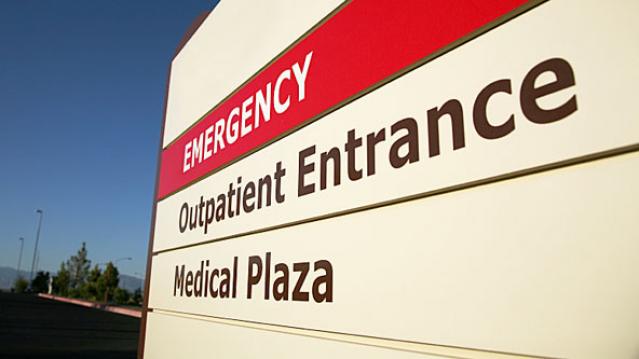
A pack of for-profit hospitals are taking too many liberties with their for-profit names. A new study by Health Affairs found 50 hospitals in the U.S. have markups over 10 times the actual cost of care. The data was found using 2012 Medicare cost reports.
At the top of the list is North Okaloosa Medical Center, located about an hour outside of Pensacola, Fla. The hospital was found to charge uninsured patients 12.6 times the actual cost of patient care. A typical hospital charges 3.4 times the cost of patient care.
The largest numbers of the hospitals on the list – 20 – are in Florida. Of the 50, 49 are for-profit and 46 are owned by for-profit hospital systems. One for-profit hospital system, Community Health Systems, owns and operates 25 of the hospitals on the list. Hospital Corporation of America operates 14 others.
Related: If SCOTUS Rule Against Obamacare, Health Care Costs Will Soar
Uninsured individuals are commonly asked to pay the full amount, unaware they are being scammed. The markups can lead to personal bankruptcy or the avoidance of necessary medical attention.
"The main causes of these extremely high markups are a lack of price transparency and negotiating power by uninsured patients, out-of network patients, casualty and workers' compensation insurers and even in-network insurers," the study reads. "Federal and state policymakers need to recognize the extent of hospital markups and consider policy solutions to contain them."
Most astounding of all, these markups are not illegal. Maryland and West Virginia are the only states with laws limiting hospital fees.
Researchers offered solutions in the study, including limitations on the charge-to-cost ratio, mandated price disclosure to regulate the markups or some form of all-payer rate setting.