
The Rapidly Rising Death Toll of the Heroin Epidemic
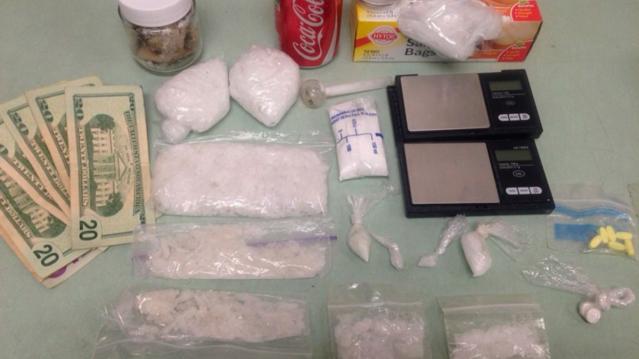
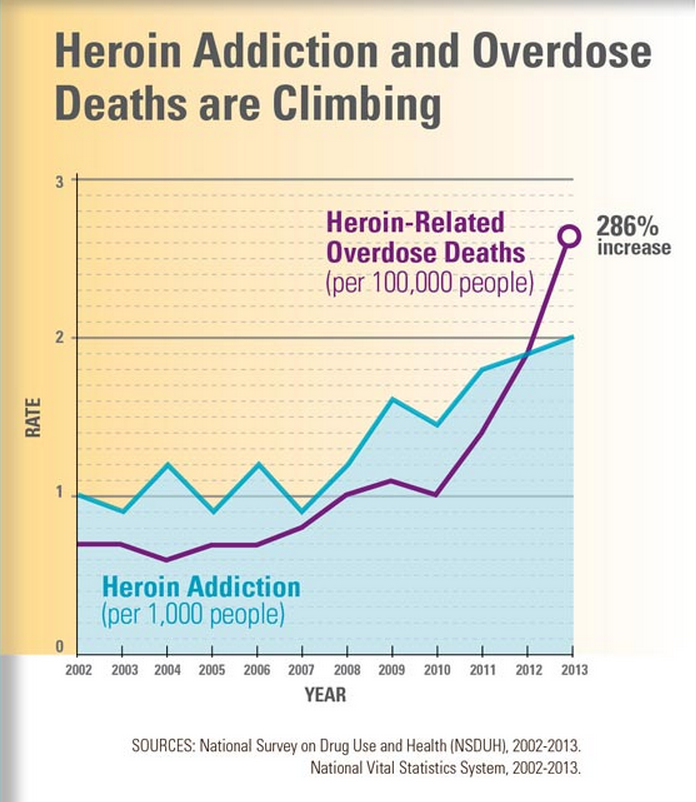
The death toll from the heroin epidemic has been climbing dramatically in recent years — and the annual rate of overdose deaths nearly doubled between 2011 and 2013, according to a new CDC study.
From 2002 through 2013, heroin use in the United States rose by 63 percent, and the rate of abuse or dependence climbed a staggering 90 percent. Deaths from heroin-related overdoses nearly quadrupled, with more than 8,200 people dying in 2013 alone.
The CDC report says that heroin use has increased across most demographic groups — men and women, most age groups, and across all income levels. Rates of heroin use are still highest among men, those ages 18 to 25, people with income less than $20,000 a year, people in urban areas, and those who do not have health insurance or are on Medicaid. But other groups are turning to the drug, too. “Some of the greatest increases occurred in demographic groups with historically low rates of heroin use: women, the privately insured and people with higher incomes,” the CDC says.
The heroin trend isn’t happening in isolation, the CDC study says. Almost all heroin users — 96 percent — also took at least one other drug, and 61 percent used at least three other drugs. Abuse or dependence on opioid painkillers is the strongest risk-factor for heroin use or addiction, the report says, with cocaine addiction also high on the list. People who are addicted to prescription opioid painkillers are 40 times more likely to use or be addicted to heroin, and 45 percent of people who used heroin were also addicted to painkillers.
Another key reason is that heroin is becoming cheaper and more widely available. According to the DEA, the increase in heroin seizures in the U.S. from 2010 and 2014 rose 81 percent, from 2,763 kilograms to 5,014 kilograms. More and more law enforcement agencies are identifying heroin as their primary drug threat, but the CDC report suggests that health care workers focus on reducing the abuse of painkillers by improving prescribing practices.
The study also recommends that states increase access to “medication-assisted treatment” programs that use methadone, buprenorphine and naltrexone along with behavioral counseling. And it says the rapid rise in heroin-related deaths highlights an “urgent need” to broaden access to naloxone, a drug that can reverse the effects of heroin and opioid overdose.

Small Business Owners Say They’re Raising Worker Pay
A record percentage of small business owners say they are raising pay for their workers, according to the latest monthly jobs report from the National Federation of Independent Business, based on a survey of 10,000 of the group’s members. A seasonally adjusted net 35 percent of small businesses say they are increasing compensation. “They are increasing compensation at record levels and are continuing to hire,” NFIB President and CEO Juanita Duggan said in a statement accompanying the report. “Post tax reform, concerns about taxes and regulations are taking a backseat to their worries over filling open positions and finding qualified candidates.”

The US Is Running Short on More Than 200 Drugs

The U.S. is officially running short on 202 drugs, including some medical staples like epinephrine, morphine and saline solution. “The medications most vulnerable to running short have a few things in common: They are generic, high-volume, and low-margin for their makers—not the cutting-edge specialty drugs that pad pharmaceutical companies’ bottom lines,” Fortune’s Erika Fry reports. “Companies have little incentive to make the workhorse drugs we use most.” And much of the problem — “The situation is an emergency waiting to be a disaster,” one pharmacist says — can be tied to one company: Pfizer. Read the full story here.
Chart of the Day: Could You Handle a Sudden $400 Expense?

More Americans say they are living comfortably or at least “doing okay” financially, according to the Federal Reserve’s Report on the Economic Well-Being of U.S. Households in 2017. At the same time, four in 10 adults say that, if faced with an unexpected expense of $400, they would not be able to cover it or would cover it by selling something or borrowing money. That represents an improvement from 2013, when half of all adults said they would have trouble handling such an expense, but suggests that many Americans are still close to the edge when it comes to their personal finances.

Kevin Brady Introduces Welfare Reform Bill
The Tax Policy Center’s Daily Deduction reports that Rep. Kevin Brady (R-TX), chair of the House Ways and Means Committee on Friday introduced The Jobs and Opportunity with Benefits and Services (JOBS) for Success Act (H.R. 5861). “The bill would rename the Temporary Assistance for Needy Families (TANF) program and target benefits to the lowest-income households. Although the House GOP leadership promised to include an expansion of the Earned Income Tax Credit as part of an upcoming welfare reform bill, this measure does not appear to include any EITC provisions.” The committee will mark up the bill on Wednesday.