
The Rapidly Rising Death Toll of the Heroin Epidemic
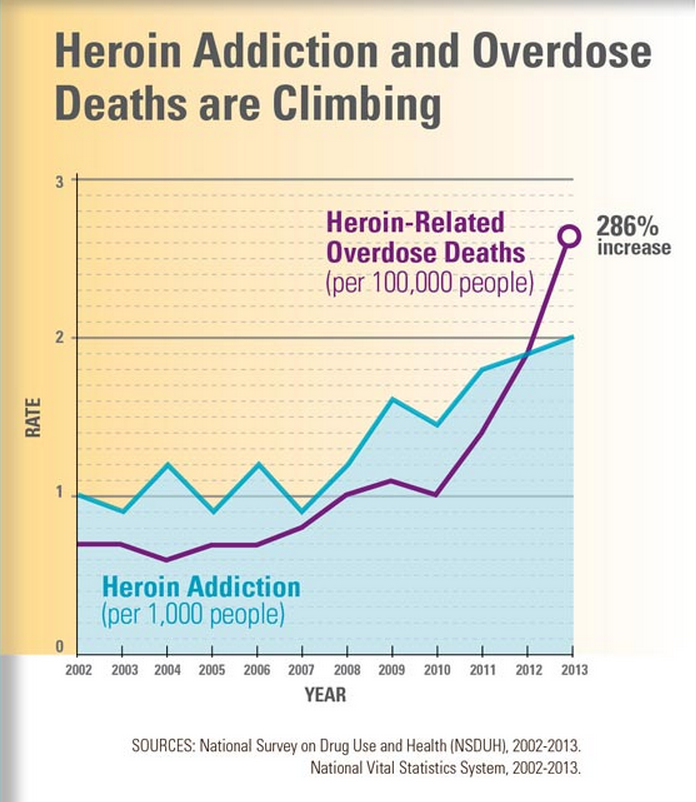
The death toll from the heroin epidemic has been climbing dramatically in recent years — and the annual rate of overdose deaths nearly doubled between 2011 and 2013, according to a new CDC study.
From 2002 through 2013, heroin use in the United States rose by 63 percent, and the rate of abuse or dependence climbed a staggering 90 percent. Deaths from heroin-related overdoses nearly quadrupled, with more than 8,200 people dying in 2013 alone.
The CDC report says that heroin use has increased across most demographic groups — men and women, most age groups, and across all income levels. Rates of heroin use are still highest among men, those ages 18 to 25, people with income less than $20,000 a year, people in urban areas, and those who do not have health insurance or are on Medicaid. But other groups are turning to the drug, too. “Some of the greatest increases occurred in demographic groups with historically low rates of heroin use: women, the privately insured and people with higher incomes,” the CDC says.
The heroin trend isn’t happening in isolation, the CDC study says. Almost all heroin users — 96 percent — also took at least one other drug, and 61 percent used at least three other drugs. Abuse or dependence on opioid painkillers is the strongest risk-factor for heroin use or addiction, the report says, with cocaine addiction also high on the list. People who are addicted to prescription opioid painkillers are 40 times more likely to use or be addicted to heroin, and 45 percent of people who used heroin were also addicted to painkillers.
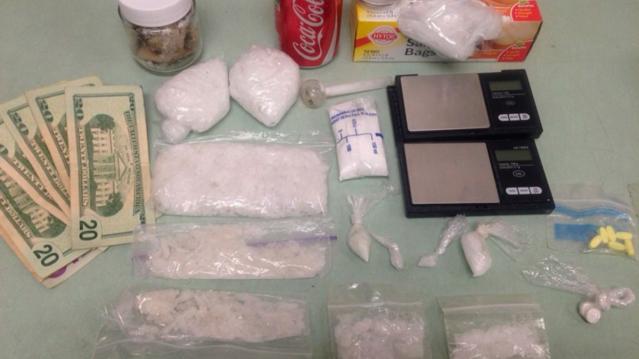
Another key reason is that heroin is becoming cheaper and more widely available. According to the DEA, the increase in heroin seizures in the U.S. from 2010 and 2014 rose 81 percent, from 2,763 kilograms to 5,014 kilograms. More and more law enforcement agencies are identifying heroin as their primary drug threat, but the CDC report suggests that health care workers focus on reducing the abuse of painkillers by improving prescribing practices.
The study also recommends that states increase access to “medication-assisted treatment” programs that use methadone, buprenorphine and naltrexone along with behavioral counseling. And it says the rapid rise in heroin-related deaths highlights an “urgent need” to broaden access to naloxone, a drug that can reverse the effects of heroin and opioid overdose.
Maybe Don’t Count Out Obamacare Repeal Just Yet
Sen. Bill Cassidy (R-LA) told reporters on Friday that he’s getting close to securing enough votes to pass the last-ditch ACA repeal and replacement bill he’s put forth with Sens. Lindsey Graham (R-SC), Dean Heller (R-NV) and Ron Johnson (R-WI).
“I am pretty confident we’ll get there on the Republican side,” Cassidy said. “We’re probably at 48-49 [votes] and talking to two or three more.” And Senate Majority Leader Mitch McConnell has asked the Congressional Budget Office to estimate the effects of the Cassidy-Graham bill, which would speed up the scoring process.
Of course, those last two or three votes have been the challenge for the GOP all along, and they may not be any easier to round up this time. Sen. Rand Paul (R-KY), who voted for a prior repeal bill, said Friday that he won't support this one. Plus, opponents are already stepping up their criticisms about the effects of the bill. And time is running out: Cassidy and his colleagues only have until September 30 to pass the bill this year under a process that would require only 50 supporters in the Senate. So while the Obamacare repeal may still have life, it remains a longshot.
Orrin Hatch Signals Just How Complicated Tax Reform Will Be
GOP leaders said Wednesday that they'd issue a more detailed framework of their tax overhaul the week of September 25. But while lawmakers are eager to get more details about the outline being hashed out by the so-called Big Six team of negotiators, Republicans are still divided on key elements of the plan — going from blueprint to bill is bound to be a contentious process.
In his opening remarks at a Senate Finance Committee hearing today on individual tax reform, Sen. Orrin Hatch (R-UT) said the plan from the Big Six — of which he is one — "will not dictate the direction" the tax-writing committee takes. "Anyone with any experience with the Senate Finance Committee knows that we are not anyone’s rubber stamp," he said. "If a bill – particularly on something as consequential as tax reform – is going to pass in this committee, the members of the committee will have to be involved in putting it together."
Oh, and remember: Republicans also need to agree on a budget before they can push through tax reform without Democratic votes.
Aging Baby Boomers Drive Down the Uninsured Rate
About 10,000 boomers turn 65 every day, becoming eligible for Medicare on their birthdays. The Census Bureau says that the sheer number of boomers entering Medicare is affecting the uninsured rate for the whole population. That rate fell to 8.8 percent in 2016, down from 9.1 percent a year earlier, with most of the decline driven by the aging of the post-war generation. (Wall Street Journal)
Social Security Kept 26.1 Million Out of Poverty Last Year
Social Security kept more than 26 million people out of poverty last year, according to a new report from the Census Bureau. Refundable tax credits such as the one for earned income kept 8.2 million people out of poverty, while food stamps lifted 3.6 million above the line, housing subsidies reduced the number of poor people by 3.1 million and unemployment insurance kept 680,000 out of poverty. Overall, the Census Bureau reported, the poverty rate was 12.7 percent, while a more sophisticated alternative measure that factors in government programs for low-income families put the rate at 13.9 percent, down from 14.5 percent in 2015.
Read more about the new Census Bureau numbers here.
Tax Reform on Menu for Trump's Dinner with Dems
President Trump is set to host three moderate Democratic senators for dinner on Tuesday as part of his push for tax reform, Politico reports. The Democrats on the guest list: Sens. Joe Manchin of West Virginia, Heidi Heitkamp of North Dakota and Joe Donnelly of Indiana, all of whom are up for reelection in 2018 in states Trump won last November. Vice President Mike Pence and GOP Sens. Orrin Hatch of Utah, John Thune of South Dakota and Pat Toomey of Pennsylvania are also slated to attend.