
Get Ready for Your 'Daily Glitch'—The NYSE, WSJ and United Were Just the Beginning
“Glitch” is clearly the word of the moment, after a series of pesky little technical problems forced United Airlines to ground flights, halted New York Stock Exchange trading and took down The Wall Street Journal website homepage all on the same day. If that wasn’t enough technical trouble, Seattle’s 911 system went down briefly. And a couple of NASA spacecraft also suffered “glitches” in recent days.
We deal routinely with glitches these days — a Wi-Fi connection goes down, an app freezes, a plug-in (usually Shockwave) stops responding, an email doesn’t load properly — which may help explain why, aside from lots of grumbling from delayed airline passengers, the reaction to Wednesday’s glitches was rather muted. The NYSE problems were reportedly caused by a “configuration issue” after a software update and United blamed its problem on “degraded network connectivity.” We see those issues every day, just not on as large a scale.
But that’s the problem.
At the risk of sounding like a high school term paper, let us note that the Merriam-Webster definition of glitch is “an unexpected and usually minor problem; especially: a minor problem with a machine or device (such as a computer).” The full definition describes it as a minor problem that causes a temporary setback.
Sure, Wednesday’s setbacks were all temporary. The Wall Street Journal site came back up quickly. Seattle’s 911 service was restored. Action on the NYSE itself was stopped for nearly four hours, but even then traders were still able to buy and sell NYSE-listed stocks on other exchanges. United grounded about 3,500 flights, which meant some people missed a wedding or a crucial business meeting. That will take time to sort out, but it will get sorted out.
In aggregate, though, the problems add up — and the word “glitch” only minimizes what can be much bigger, more serious issues..
Stock exchanges have suffered from a series of stoppage-causing glitches in recent years, pointing to the value of having trading spread across numerous exchanges. United’s tech breakdown “marked the latest in a series of airline delays and cancellations in the last few years that experts blame on massive, interconnected computer systems that lack sufficient staff and financial backing,” the Los Angeles Times reports. Just ask any of the roughly 400,000 United passengers whose travel plans were messed up if this was a little glitch. Or maybe check with the engineers who had to troubleshoot and rebuild the HealthCare.gov site after its glitch-laden launch.
It may be some relief that these latest outages weren’t the result of external attacks, but as sociologist Zeynep Tufecki, an assistant professor at the School of Information at the University of North Carolina, writes at The Message, “The big problem we face isn’t coordinated cyber-terrorism, it’s that software sucks. Software sucks for many reasons, all of which go deep, are entangled, and expensive to fix.”
These foul-ups are now mundane, and to some extent they may be inevitable as we rely more and more on complicated computer systems in every aspect of our lives. That’s the real issue, and it’s a lot bigger than a glitch.
It’s Not Just in Your Head, the Web Is Slowing Down
It’s not your imagination, and it’s not because AT&T — and possibly others — is purposefully cutting speeds to unlimited data plan users. The Internet is slowing down. The reason: Websites are growing in size, causing slower load times.
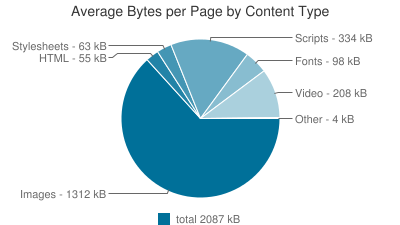
The average website is now 2.1 MB in size, compared to 1.5 MB two years ago, according to HTTP Archive, an Internet data measurement company. Multiple reasons can explain this increase in size.
Sites have been adding more content in an effort to drum up traffic, such as videos, engaging images, interactive plug-ins (comments and feeds) and other code and script-heavy features. Websites are becoming more and more technically advanced, and other sites have to keep adding features to stay competitive.
To keep up with the rapidly increasing number of users accessing sites on various platforms, developers are offering more versions of websites as well as apps to accommodate all devices, including smartphones, watches, tablets, and other gadgets. All of these versions require additional code, ultimately adding to the weight of a given website.
Then there are the advertisers who want to get the user’s attention by creating dramatic displays for their products that consume even more bandwidth.
Websites also want to know who is visiting their pages, both welcome and unwelcome visitors. New tools that track and analyze visitors have increased in popularity, as well as stronger encryption technology to add more security. These security measures and trackers require more code, again slowing load times.
Unfortunately for websites trying to keep up with the times, Google has just introduced a new ‘Slow to Load’ warning sign in mobile search results. Since mobile searches account for more than half of the total Google searches in 10 countries, Google wants to enhance user experience for those on their mobile platform.
Although the weight of a website isn’t all that contributes to slow loading, it’s a major factor. Other reasons include users overusing data, a poor connection, or a high level of traffic in the mobile network.
Google also changed its algorithm in April, so now ‘mobile friendly’ sites are ranked higher on search results, while those that fail to meet its criteria are ranked lower.
Although the internet is only slowing by a matter of seconds, it’s still slowing down. All the more reason for a user to become frustrated with a page that’s taking a couple extra seconds to load and go to a competitor’s site.
Taylor Swift Gets Apple Music to Pay Up
On Sunday morning, Taylor Swift took Apple to task for the royalty agreement on its news music streaming service. Her open letter on Tumblr, titled “To Apple, Love Taylor,” said, “I’m sure you are aware that Apple Music will be offering a free 3 month trial to anyone who signs up for the service. I’m not sure you know that Apple Music will not be paying writers, producers, or artists for those three months. I find it to be shocking, disappointing and completely unlike this historically progressive and generous company.”
Related Link: How the Video Game Industry Is Failing Its Fans
“Three months is a long time to go unpaid, and it is unfair to ask anyone to work for nothing,” the pop singer argued on the behalf of music-makers everywhere, many of whom had voiced their discontent with the royalty policy. She concluded her letter saying, “We don’t ask you for free iPhones. Please don’t ask us to provide you with our music for no compensation.”
It was a sentiment shared by many independent music artists and producers. Just a few weeks earlier, the American Association for Independent Music had chimed in, “Since a sizable percentage of Apple’s most voracious music consumers are likely to initiate their free trials at launch, we are struggling to understand why rights holders would authorize their content on the service before October 1st.”
It took less than 24 hours for the “historically progressive and generous company” to respond via Twitter, and it didn’t wait until morning to make its announcement. Eddy Cue, Apple’s senior vice president of Internet Software and Services, personally called Swift to deliver the news before tweeting at 11:29 p.m., “#AppleMusic will pay artists for streaming, even during customers’ free trial period.”
Cue followed up with a feel-good response a minute later: “We hear you @taylorswift13 and indie artists. Love, Apple.” Later, Cue said that the company will pay artists on a per stream basis during the free trial period, although Cue declined to say what the rate would be. Once the free introductory period is over, Apple Music will pay music owners 71.5 percent of Apple Music’s overall subscription revenue in the United States.
Swift tweeted her response and addressed it to her fans and supporters: “I am elated and relieved. Thank you for your words of support today. They listened to us.”
Related Link: Apple Muscles Into Streaming Music Market
Swift’s crusade on social media showed the increasing weight that collective opinions on Twitter, Instagram and Facebook can have to force a change in corporate policy and direction. In a comic echo of that power, BuzzFeed promptly put together a list of 18 more issues Swift could fix through the power of social media, ranging from the battery life of iPhones to the size of Pringles cans.
Apple Music is launching on June 30, offering users a free, three-month subscription period. After that, the service will charge $9.99 a month for individuals and $14.99 a month for families with up to six members.
Most Americans Wouldn’t Vote for a Socialist President
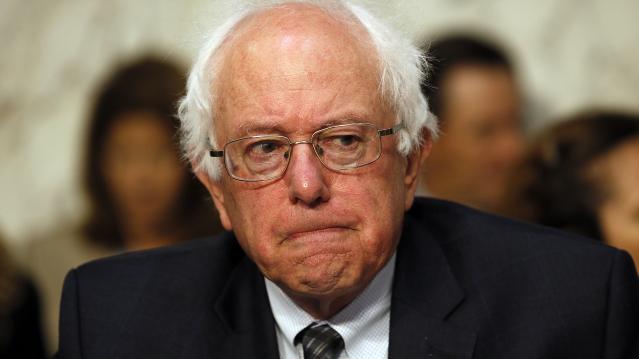
Memo to Sen. Bernie Sanders:
Americans by overwhelming numbers say they would vote for a qualified presidential candidate nominated by their party who is Catholic, a woman, black, Hispanic or Jewish.
They say they would be somewhat less inclined to support a Mormon, a gay or lesbian, an evangelical Christian or Muslim for president, according to a new Gallup Poll released Monday. Yet more than half of those Americans surveyed said they would be accepting of anyone from this group who managed to garner their party’s presidential nomination. Even a qualified atheist would be acceptable to 58 percent of those questioned.
But only 47 percent said they could vote for a socialist for president. Fifty percent said they would absolutely not.
Related: Where Hillary Clinton, Bernie Sanders and Martin O’Malley Stand on the Issues
Sanders, 73, an independent who is challenging Hillary Clinton for the Democratic nomination, is the only Jewish candidate in the race. And while many wrote him off early on as a fringe candidate with limited appeal, Sanders has subsequently generated considerable buzz among liberals and progressives, and has made respectable showings in some of the early polling, including in New Hampshire.
With his ringing anti-Wall Street populist message, Sanders is tapping into the Democratic Party’s progressive wing – including some who had hoped at one time that Sen. Elizabeth Warren (D-MA) might change her mind and enter the race. However, the former University of Chicago student radical and self-described democratic socialist, supports proposals similar to those of mainstream social democratic governments in Europe, particularly those of Scandinavia.
Five of the declared candidates for president are Catholics – including Republicans Jeb Bush, George Pataki, Marco Rubio and Rick Santorum, and Democrat Martin O'Malley. Two are women -- Clinton and Republican Carly Fiorina. Republican Ben Carson is the only black candidate in the race, while two candidates are Hispanic -- Republicans Rubio and Ted Cruz.
Here are Gallup’s findings:

The Hidden Costs of Home Ownership: $6,000 a Year

Most new homeowners are prepared to pay their mortgages, but they may not be ready for other unavoidable costs that can amount to thousands of dollars every year.
The average homeowner shelled out $6,042 last year in homeowners insurance, property taxes, and utilities, according to a new report from Zillow. The average costs varied by location, with Boston homeowners spending the most ($9,413) and homeowners in Phoenix spending the least ($4,513).
“Home buyers too often fixate on the sticker price or monthly mortgage payment on a house, and don’t budget for the other expenses associated with ownership -- which can add up quickly,” Zillow spokeswoman Amy Bohutinsky said in a statement.
Related: How to Decide if You Should Rent or Buy a Home
The maintenance costs included in the report included things like lawn care and carpet cleaning.
The country’s homeownership rate fell to 63.7 percent in the first quarter, the lowest level since 1989. The rate peaked at 69.2 percent in the fourth quarter of 2004, right before the housing bubble burst.
As rents in many cities continue to skyrocket, however, homeownership may be becoming more appealing. However, in addition to hidden homeownership costs, new buyers should also consider the opportunity costs of potential earnings if buyers had invested their down payment. The New York Times has a handy calculator that incorporates these and other factors to help weigh whether it makes more sense to rent or buy.
Nearly two-thirds of consumers say that home ownership is a “dream come true” and an accomplishment to be proud of, according to a survey released last week by Wells Fargo.
Here’s How Much Boomers Are Giving Their Kids
Money has always tended to flow from parents or grandparents to children and grandchildren, whether it’s as outright gifts, help with living expenses or paying for things like school. But the pace of that inter-generational transfer of wealth has picked up in recent years — and it could be threatening the retirement prospects of some baby boomers, according to a new report from the Employee Benefit Research Institute.
The report finds that the number of cash transfers going from older households to younger family members increased from 1998 to 2010. High-income households are more likely to provide support to their adult children, but middle- and low-income families are also providing cash to younger family members. Overall, from 2008 to 2010, households of adults aged 50 to 64 gave an average of $8,350 to younger family members, and households age 85 and older gave $4,787 to younger family members.
“For older households, cash transfers can reduce their retirement assets, raising concerns about retirement security, particularly for low-income groups,” EBRI research associate Sudipto Banerjee said in a statement.
Related: Sandwich Generation Squeezed Once Again
In just 5 percent of families, wealth is passed from the younger generation to the older, and the amounts are far smaller. During the same period, households age 85 and older received an average of $359 from those in younger generations.
The EBRI numbers confirm a trend highlighted in other recent reports. A 2013 Pew study found that about half of adults ages 40 to 59 have provided some financial support to at least one grown child in the past year, with more than a quarter of them providing the primary support.
Obviously, the economic climate of recent years may be a big reason for the increased cash flowing from parents to their grown children. More than half of parents of millennials think that it is harder for today’s young adults to live within their means than it was for them, according to an April Bank of America survey.