
What Your Smartphone Knows That Your Mother Doesn’t
Can Your Smartphone Be Used to Detect Depression?

It’s always there, in your pocket or purse or on your desk, quietly collecting information. And apparently, when it comes to depression, there’s quite a lot your smartphone knows about you.
According to a small study from Northwestern Medicine, that data from your smartphone can predict with eerie 87 percent accuracy whether you’re suffering from depression or not.
The telling signs: You spend more time on your smartphone and less time leaving the house, and you visit very few places each day.
Related: Smartphone Notifications Are Killing Our Concentration
The researchers used Craigslist to find 40 test subjects between the ages of 19 and 58, and outfitted their smartphones with an app to monitor their location and usage. The individuals took a questionnaire that measured signs of depression; half of the subjects had troubling symptoms and half did not. Using GPS, the phones tracked the subjects’ movements and locations every five minutes. The subjects also were asked questions about their mood at different points during the day.
These factors were then correlated with the test subjects’ original depression test scores. And the results were uncanny. Depressed people used their phones more often and for longer periods of time —an average of 68 minutes a day. By comparison, the individuals who didn’t show signs of depression spent only 17 minutes on theirs. Researchers attributed the increased use of the phone to task avoidance, another symptom of depressed people.
Perhaps more significant than the findings of this small study — only 28 of the 40 subjects had enough data to be studied — is the potential the researchers felt that smartphones could play in future medical diagnosis.
When loaded up with the correct sensors, the smartphone can be used to detect a person’s emotional states, and monitor moods, without the user having to utter a word. It also has the ability to offer suggestions to reinforce positive behaviors when depression is detected. The results of the study were published in the Journal of Medical Internet Research yesterday, but one conclusion was becoming increasingly evident even before the report came out: Smartphones — and the sensors they now contain — just keep getting smarter.
Wrist Slap for CEO Who Defrauded USAID out of Hundreds of Millions

Former CEO Derish Wolff of Louis Berger Group, one of the country’s largest engineer contracting firms will be confined to his home for a year and have to pay a $4.5 million fine for helping to defraud the federal government out of hundreds of millions of dollars over 20 years. The fine represents a tiny fraction of the amount the company collected from the government.
Wolff, 70, was sentenced by U.S. District Court Judge Anne Thompson for leading a “conspiracy to defraud USAID by billing the agency on so-called ‘cost-reimbursable’ contracts—including hundreds of millions of dollars of contracts for reconstructive work in Iraq and Afghanistan” and for inflating overhead costs.
Related: U.S. Blew $500k on Melting Afghan Buildings
Federal prosecutors said the company, tasked with building roads and bridges in Afghanistan and Iraq, charged the government 140 percent of the actual cost for every project it did. That means that for every one dollar of work the contractor did, it received $1.40 extra. Louis Berger was paid more than $2 billon by the U.S. government for its infrastructure work in war zones.
Prosecutors said that between 1990 and 2009, Wolff and his colleagues inflated the costs of their work for USAID by telling accountants to “pad time sheets with hours ostensibly devoted to federal government projects when it had not actually worked on such projects.”
Related: Pentagon Won’t Verify $300 Million a Year in Afghanistan is Spent Properly
Beyond logging false work hours, the prosecutor said Wolff routinely instructed his subordinates to bill USAID for all of their overhead expenses—like rent at Louis Berger’s Washington office even though the D.C. office worked on other projects that had nothing to do with the federal government.
After two other company executives pleaded guilty to conspiring to defraud the federal government in 2010, Louis Berger Group agreed to make full restitution to USAID. It settled civil and criminal charges and had to pay $18.7 million in criminal fines and an additional $50.6 million to resolve allegations that it violated the False Claims Act by significantly overbilling USAID.
After the Amtrak Crash: Finding the Money to Fix Our Infrastructure

The Amtrak derailment in Philadelphia that left six people dead and dozens more injured has already prompted calls for increased infrastructure spending. "This one is a wake-up call," New York City Mayor Bill de Blasio said Wednesday on MSNBC’s Morning Joe. "We have got to get serious about investing in infrastructure."
There have been other wake-up calls before, and the dire need for infrastructure renewal isn’t news. Yet, as Politico’s Kathryn A. Wolfe reported, the deadly crash occurred just as a House panel was set to mark up a bill that would cut Amtrak’s funding for 2016 to $1.13 billion, or about $250 million less than the railroad service typically gets. (To be fair, it’s also not clear at this point what caused the horrific Amtrak derailment and whether infrastructure problems played a part or not — and the number of rail accidents each year has actually fallen significantly since 2006, according to Federal Railroad Administration data.)
Related: At Least 6 Die in Philadelphia Train Derailment, Scores Hurt
Even before the Amtrak tragedy, though, de Blasio and Oklahoma City Mayor Mick Cornett, a Republican, along with some two dozen other mayors were scheduled to travel to Washington, D.C. today to press Congress for a long-term renewal of the federal transportation authorization bill. The current funding law is set to expire May 31.
Pretty much everyone agrees that it’s well past time for the country to repair and rebuild its dangerously dated bridges, roads, railways, water mains and other critical infrastructure. The hold-up has always been over how to fund it.
Here’s one suggestion: The U.S. has spent some $110 billion on rebuilding Afghanistan, including billions that can’t be accounted for or that the inspector general has found have been wasted. That’s a drop in the bucket compared to the trillions in domestic infrastructure spending that some have called for. Still, clamping down on that waste in Afghanistan, and on other money being frittered away, might allow for some spending to be redirected to other necessary and more productive needs, like domestic infrastructure.
That’s not to suggest we must entirely abandon nation building abroad in order to rebuild this country. It’s just to point out that Congress should be able to find the money to address our national priorities, something it has miserably failed to do of late.
A $180 Million Picasso: What’s Making the Art Market Sizzle
The art market is hotter than a hoisted Rembrandt.
Last night at Christie’s in New York, Picasso’s “Les Femmes d’Alger (Version O)” sold for almost $180 million – the highest price ever paid at auction for a piece of art. There were said to be five bidders, and the winner remains anonymous.
At the same sale, a Giacometti sculpture, “L’homme au doigt,” went for a total of more than $141 million.
On May 5, at the first major auction of the spring selling season, Sotheby’s pulled in $368 million. It was the second-highest sale of Impressionist and modern art in the history of the auction house, according to The New York Times. The top seller was van Gogh’s “L’allée Des Alyscamps,” which fetched $66.3 million.
Related: 6 Traits of an Emerging Millionaire. Are you one?
The haul represented a 67 percent increase over Sotheby’s spring sale a year earlier, according to Bloomberg, which noted that many of the buyers were Asian.
The May 5 auction was only the second-highest because Sotheby’s held a sale last November that took in $422 million.
And tonight at a Sotheby’s auction of contemporary art, a painting entitled “The Ring (Engagement)” by the Pop artist Roy Lichtenstein could sell for as much as $50 million, the Times said.
What’s behind all those staggering numbers?
About a year and a half ago, the columnist Felix Salmon (then at Reuters, now at Fusion) ruminated about whether there was a bubble, which he defined as often driven by FOMO (fear of missing out), or a speculative bubble, one fueled by flippers, in the art market. His conclusion: the art market bubble was definitely not speculative.
“The people spending millions of dollars on trophy art aren’t buying to flip…,” he wrote.
Related: Get Ready for Another Real Estate Bubble
Still, Salmon said he was seeing signs that the market could be turning speculative. But they may have been false signals.
Recently, The Wall Street Journal wrote: “Spurred by the momentum of several successful sale seasons and an influx of newly wealthy global bidders, the major auction houses…say demand for status art is at historic levels and shows no signs of tapering off.”
But why?
In an April 17 article, the global news website Worldcrunch asked Financial Times journalist Georgina Adam, who wrote the 2014 book Big Bucks—The Explosion of the Art Market in the 21st Century, why so much money is rolling around the art market and driving up prices.
“Rich people used to be rich in terms of estate or assets, but not so much in terms of cash, like they are today,” she said.
“This growing billionaire population from developed or developing economies has money to spend and invest,” said the Worldcrunch article by Catherine Cochard. “For many of them, art — in the same way as luxury cars or prêt-à-porter — is an entry pass to a globalized way of life accessible through their wealth.”
That is a development that the keen eyes at the auction houses haven’t missed.
Why Google Needs to Build a Better Bumper
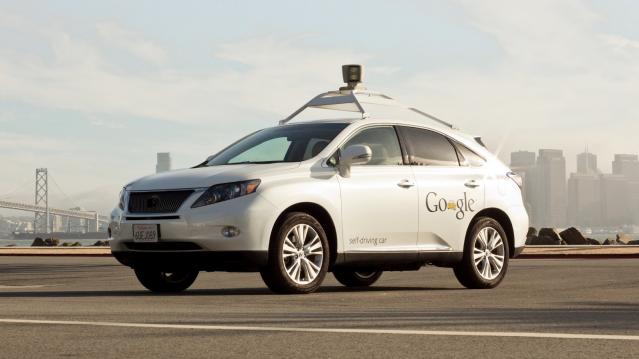
Google unleased its self-driving fleet in real traffic and let the cars cruise a total of a million miles with back-up drivers ready to hit the brakes or take the wheel. The humans didn’t take control.
As it turned out, there were 11 minor accidents and no injuries, according to Google’s Chris Umson, who claimed that none of the fender benders was Google’s fault. He told the Associated Press that all the self-driving cars behaved well (not bad, considering the cars just got their learners’ permits). He also said most were hit from behind.
Not so fast, Google. Delphi, which automated the Audi SQ5, claims its car was broadsided by a Google car. Hmmm. Lexus vs. Audi, Google vs. Delphi—sounds like bumper cars!
Related: Driverless Self-driving Truck of the Future Will Crash Into Labor Laws of the Past
Other companies have permits to test their driverless cars including Daimler/Mercedes, Honda, and Nissan with Volkswagen and a host of others on tap.
This is not going away—and in the case of Daimler, they’ve extended the technology to trucks.
For older people and the disabled, who need a little help driving and parking, an autonomous car could be the difference between independence and a shut-in life.
If, on the other hand, these cars decide to “think,” we could all be in trouble.
Attention Autobots! Start Your Engines!
This Computer Only Costs $9
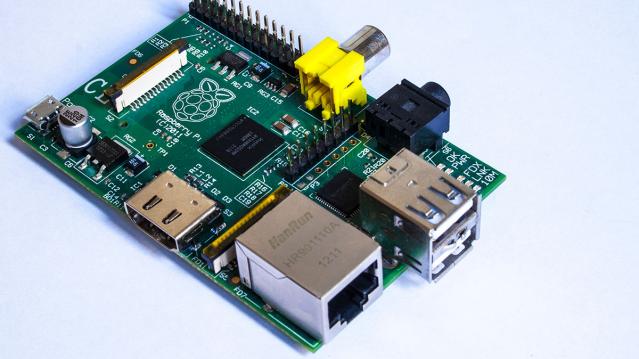
It's smaller than a credit card yet powerful enough to act like a super cheap PC. How cheap? It costs less than $10.
C.H.I.P. is a micro-computer that allows you to surf the Web, check email over Wi-Fi and play games with a Bluetooth controller. The minicomputer—basically a chip that hooks up to an external monitor—has a 1 GHz processor, 4GBs of storage and 512MB of RAM, according to its Kickstarter page.
The Next Thing Co., a company based in Oakland, Calif., began a Kickstarter campaign for the C.H.I.P. computer in May with a funding goal of $50,000.
Related: 10 Biggest Tech Flops of the Century
It has since blown past that goal, and by a large factor. The campaign has brought in just under $690,000 and counting as of Monday morning. The fundraising campaign ends June 6.
The small computer is designed for a mass audience, including students, teachers, grandparents, children, artists, makers, hackers and inventors, according to its Kickstarter page.
Raspberry Pi is another full-functioning, no-frills computer. Like C.H.I.P., the Raspberry Pi is basically a computer chip that plugs into a computer monitor or TV. It costs $35 and uses a standard keyboard and mouse.
Raspberry Pi teaches users how to program in languages like Scratch and Python.
This article originally appeared on CNBC.
Read more from CNBC:
Reward checking accounts offer savers up to 5% APY
Has Krugman been proved wrong on austerity?
How the 2014 CNBC Disruptors cashed in