
Don’t Feel Like a Chump When You Close on Your New Mortgage

Mortgage closing costs dropped 7 percent over the past year, falling to $1,847 on a $200,000 loan, according to a new analysis by Bankrate.
Typical closing costs varied by state, ranging from $2,163 in Hawaii to $1,613 in Ohio. You can find the average rate for your state in the table below.
Lenders compete for business, so shopping around with at least three mortgage providers can help you reduce the fees associated with your loan. “Homebuyers have more say over closing costs than they think,” Bankrate Senior Mortgage Analyst Holden Lewis said in a statement.
Even as banks lower their mortgage fees, they’re increasing fees in most other categories, according to MoneyRates.com.
While lower mortgage fees are good news for homebuyers and those refinancing their loans, the average saving amount to just $140. That’s not much relative to the total costs associated with buying a house. The average down payment for homebuyers in the first quarter of 2015 was $57,710, for example.
Related: Want Your Own Home? Here’s How to Do the Math
The costs don’t stop once the buyers move in. On top of mortgage payments, homeowners face an average of more than $6,000 in additional costs related to their house, including homeowners insurance, property taxes and utilities.
The National Association of Realtors expects home prices to increase 6.5 percent this year to a median $221,900, which would put them at the same level as their 2006 record high.
For buyers, better news than the lower mortgage fees is that rates remain relatively low, falling to 3.98 percent last week, per Freddie Mac.
Closing costs | |||
|---|---|---|---|
| State | Average origination fees | Average third-party fees | Average origination plus third-party fees |
| Alabama | $1,066 | $776 | $1,842 |
| Alaska | $935 | $922 | $1,857 |
| Arizona | $1,208 | $761 | $1,969 |
| Arkansas | $1,057 | $760 | $1,817 |
| California | $937 | $896 | $1,834 |
| Colorado | $1,192 | $719 | $1,910 |
| Connecticut | $1,074 | $960 | $2,033 |
| Delaware | $904 | $924 | $1,828 |
| District of Columbia | $1,077 | $718 | $1,794 |
| Florida | $1,028 | $778 | $1,806 |
| Georgia | $1,058 | $821 | $1,879 |
| Hawaii | $1,033 | $1,130 | $2,163 |
| Idaho | $894 | $788 | $1,682 |
| Illinois | $1,080 | $767 | $1,847 |
| Indiana | $1,067 | $770 | $1,837 |
| Iowa | $1,161 | $762 | $1,923 |
| Kansas | $1,047 | $753 | $1,800 |
| Kentucky | $1,060 | $737 | $1,797 |
| Louisiana | $1,060 | $817 | $1,877 |
| Maine | $897 | $830 | $1,727 |
| Maryland | $1,093 | $742 | $1,835 |
| Massachusetts | $905 | $851 | $1,756 |
| Michigan | $1,072 | $746 | $1,818 |
| Minnesota | $1,067 | $689 | $1,757 |
| Mississippi | $1,046 | $837 | $1,884 |
| Missouri | $1,040 | $792 | $1,833 |
| Montana | $1,062 | $855 | $1,917 |
| Nebraska | $1,047 | $770 | $1,817 |
| Nevada | $1,002 | $848 | $1,850 |
| New Hampshire | $1,084 | $750 | $1,835 |
| New Jersey | $1,181 | $913 | $2,094 |
| New Mexico | $1,076 | $876 | $1,952 |
| New York | $1,032 | $879 | $1,911 |
| North Carolina | $1,036 | $875 | $1,911 |
| North Dakota | $1,045 | $791 | $1,836 |
| Ohio | $933 | $681 | $1,613 |
| Oklahoma | $1,027 | $734 | $1,761 |
| Oregon | $1,080 | $785 | $1,864 |
| Pennsylvania | $1,055 | $678 | $1,733 |
| Rhode Island | $1,093 | $802 | $1,896 |
| South Carolina | $1,058 | $837 | $1,895 |
| South Dakota | $1,055 | $704 | $1,759 |
| Tennessee | $1,033 | $773 | $1,806 |
| Texas | $1,031 | $833 | $1,864 |
| Utah | $909 | $788 | $1,697 |
| Vermont | $1,074 | $862 | $1,936 |
| Virginia | $1,050 | $787 | $1,837 |
| Washington | $1,077 | $824 | $1,901 |
| West Virginia | $1,067 | $904 | $1,971 |
| Wisconsin | $1,047 | $723 | $1,770 |
| Wyoming | $874 | $814 | $1,689 |
| Average | $1,041 | $807 | $1,847 |
Bankrate.com surveyed up to 10 lenders in each state in June 2015 and obtained online Good Faith Estimates for a $200,000 mortgage to buy a single-family home with a 20 percent down payment in a prominent city. Costs include fees charged by lenders, as well as third-party fees for services such as appraisals and credit reports. The survey excludes title insurance, title search, taxes, property insurance, association fees, interest and other prepaid items.
Top Reads from The Fiscal Times:
- You’re Richer Than You Think. Really.
- The 10 Fastest-Growing Jobs Right Now
- The 5 Worst Cities to Raise a Family
How to Defuse Exploding Consumer Credit Debt

The average household had a credit card balance of $7,177 in the first quarter, the highest level in six years, according to a new report by CardHub.
Total consumer credit card debt in the U.S. amounted to more than $57 billion for the quarter, despite paying off $34.7 billion in the quarter.
There was some good news in the report: Credit card defaults for the quarter declined more than $350 million to the lowest rate since 1995, and first quarter debt reduction was 7 percent large than those of the past two years.
About a third of households with credit card debt carries a balance from month to month claims a separate study by the National Foundation for Credit Counseling.
Meanwhile, the number of credit card accounts is increasing. In the first quarter, TransUnion says there were 359.64 million credit card accounts, up 4 percent from the first quarter of 2014.
CardHub estimates that net credit card debt for the year will be $55.8 billion, roughly the same level as last year.
Consumers with high levels of credit card debt could benefit from taking advantage of some of credit card transfers, which are among the sweetest they’ve been in years, with many issuers offering zero-percent transfers for a year or more.
Look for a deal that includes no transfer fees or annual fees. Rolling over debt only makes sense if you can pay it off before or immediately after the introductory rate expires.
The Biggest Apple Hit You've Never Heard Of
Even some of the most diehard Apple fanatics missed one of the company’s biggest rollouts. About a year ago, Apple launched a new computer language, Swift, that is rapidly becoming one of the most popular software languages among programmers, according to Bloomberg.
In rankings of programming languages by developer industry analysts at a firm called RedMonk, Swift placed 22nd early this year, up from 68th in the third quarter of last year.
Apple’s new language now finds itself just one spot behind Coffeescript and one spot ahead of Lua, which might not mean much to you but apparently has developers quite excited.
“The growth that Swift experienced is essentially unprecedented in the history of these rankings,” the RedMonk analysis explains.
Previously, Apple developers could only use Objective C, a language built in the 1980s. Responding to complaints that the language was old fashioned and slow, Apple unveiled Swift, which it had been working on since 2010. Developers have responded to Swift’s safety, modernity and "expressiveness," meaning fewer lines of code are required to get the computer to do specific things.
The ride-hailing service Lyft reportedly rewrote its entire app about six months ago using Swift after finding that updates to the code took much less time. Another early user of the code is SlideShare, a document-sharing service owned by LinkedIn.
Still, as Swift is still undergoing rapid evolution, most developers are choosing to wait before adopting it. As of now, Objective C is still Apple developer’s number one choice, but a fully developed Swift could swiftly change that.
Home Buying Gets Easier as Down Payments Dip
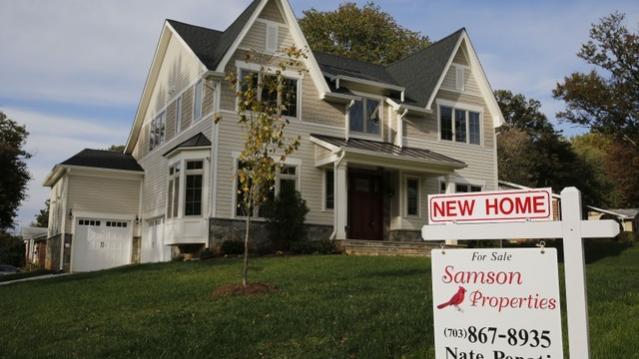
One hurdle to first-time homebuyers is starting to get a little lower: The average down payment for a home fell to less than 15 percent in the first quarter of 2015 to its lowest level since early 2012. The average down payment for the quarter was $57,710, according to RealtyTrac.
The lower down payments reflect new loan programs recently introduced by Fannie Mae and Freddie Mac, and lower insurance premiums for Federal Housing Authority Loans. The market is also adjusting as large, institutional investors who had been buying starter homes as rental investments dial back.
Related: U.S. Homeownership Dips, But Household Formation Rises
“Down payment trends in the first quarter indicate that first-time homebuyers are finally starting to come out of the woodwork, albeit gradually,” RealtyTrac vice president Daren Blomquist said in a statement.
Broken down by type of loan, the average down payment for conventional loans was 18.4 percent ($72,590), and the average down payment for FHA loans was just 2.9 percent ($7,609). FHA loans as a share of all mortgages increased from 21 percent in January to 25 percent in March.
Among the country’s largest counties, Wayne County in Detroit, Mich., had the lowest average down payment (12 percent), and New York had the highest (37 percent).
While lower down payments are good news for first-time homebuyers, they also are a reminder of practices that led to the housing bubble that began to burst in late 2006 and contributed to the financial crisis. During the height of the boom, buyers were able to purchase homes that they couldn’t really afford by putting little or no money down on the property.
House Democrat Calls Congress ‘The Poster Child for Cowardice” on ISIS

Amid growing signs that the U.S. faces nothing but bad choices in its war against ISIS, Rep. Jim McGovern, a liberal Democrat from Massachusetts, today denounced Congress as “the poster child for cowardice” for refusing to debate a new war powers resolution to set parameters for the Obama administration’s efforts to “degrade and defeat” the jihadist terrorists in Iraq and Syria.
At the behest of Republican and Democratic leaders, Obama sent a proposed war powers resolution to Congress in February outlining his core objectives of systematically destroying the jihadist terror group through a sustained campaign of airstrikes, supporting and training allied forces on the ground and humanitarian assistance – but without committing a large number of U.S. combat troops to the effort.
Related: U.S. Shoots Itself in the Foot By Accidentally Arming ISIS
The administration proposal would give the military “flexibility” to confront unforeseen circumstances, potentially by deploying Special Forces in the region. But it would limit the mission to three years and would not authorize “enduring offensive ground combat operations.”
But rather than roll up their sleeves and debate and vote on the president’s request for new military authorization, Republican leaders have effectively shelved the issue and moved on to other things, such as rewriting the rules for NSA spying on Americans’ phone calls and providing Obama with fast track authority to negotiate a new trade pact with Asian countries.
With many conservative Republicans including Sens. John McCain of Arizona and Lindsey Graham of South Carolina complaining that the president’s strategy for defeating ISIS woefully inadequate and some Democrats worried that it goes too far in committing U.S. troops and resources to a no-win situation in the Middle East, Senate Foreign Relations Committee Chair Bob Corker (R-TN) said recently he had no incentive to take up the issue in his committee.
Related: Why Congress Should Simply Bag the War Powers Debate
Frankly speaking, this is unacceptable,” McGovern, a member of the House Rules Committee, said on the House floor today, adding that if the Congress “doesn’t have the stomach” to authorize the war it should vote to bring U.S. forces home, according to Politico. McGovern introduced a bipartisan resolution that would require full debate within 15 days on whether U.S. troops should withdraw from Iraq and Syria. His bipartisan resolution is co-sponsored by Reps. Walter Jones (R-NC) and Barbara Lee (D-CA).
“This House appears to have no problem sending our uniformed men and women into harm’s way,” McGovern said in prepared remarks. “It appears to have no problem spending billions of dollars for the arms, equipment and airpower to carry out these wars. But it just can’t bring itself to step up to the plate and take responsibility for these wars.”
The Phantom Billionaire Who’s Richer Than Warren Buffett
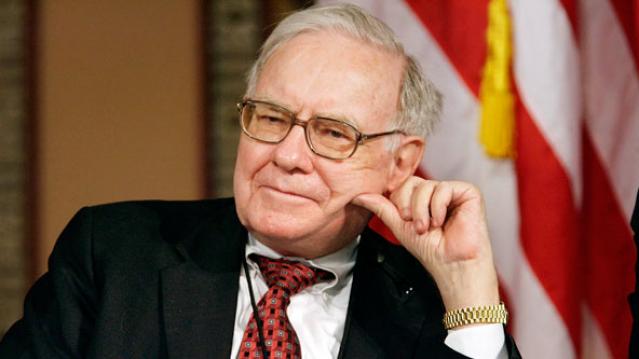
A practically unheard-of billionaire, Amancio Ortega, just blew past household name Warren Buffett to be the second-richest man in the world, according to Bloomberg. Microsoft founder Bill Gates, who is worth $85.5 billion, remains first.
Oretega, who has amassed a net worth of $71.5 billion, is the founding chairman of the Inditex fashion group, the world’s largest apparel retailer. Inditex is best known for its chain of Zara clothing and accessories shops, which had sales of $19.7 billion in fiscal 2014.
Related: Bill Gates Is the World’s Richest Man Again. Or Is He?
Worth noting is that Warren Buffett, whose net worth of $70.2 billion puts him at third place, would be in second-place if not for his philanthropic giving.
A native of Spain, Ortega refuses almost all interview requests and until 1999, no photograph of him had ever been published. However, Zara is not so low-profile. The world’s biggest fashion retailer operates over 6,600 stores in more than 88 countries.
Inditex has shown strong growth year over year. In March, it reported net profit up 5 percent from the previous fiscal year. In addition, the company said it planned to open up 480 more stores this year.
Related: America’s Highest Paid CEO Is Not Who You Think
Key to Ortega’s success has been keeping Zara’s manufacturing close to its home base in the ancient port city of La Coruña, rather than outsourcing production to China to cut costs. This allows Zara to act quickly on new trends and put new products into stories right away. Zara shops receive new shipments of clothing twice a week, virtually unheard of among retail stores.
If Inditex brands continue to grow and Zara’s popularity extends to millennials and beyond, the mysterious billionaire’s wealth could eventually push him to number one on the list.