
Did Kasich Just Do an About-Face on Climate Change?
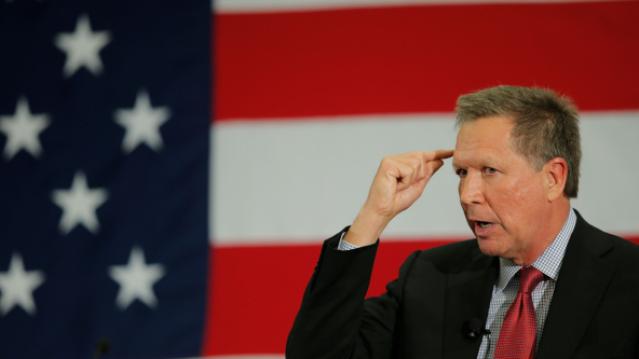
Maybe it’s because he is still feeling his way as a late entrant into the GOP presidential campaign, but Ohio Gov. John Kasich did a fairly dramatic about-face over the weekend on the politically charged issue of climate change.
Kasich, a former House Budget Committee chair and Wall Street business executive, has positioned himself as a “kinder, gentler” conservative than Jeb Bush, Ted Cruz and the dozen other Republicans running for the 2016 presidential nomination. So it wasn’t surprising that he would take a more moderate stand on global warming during the first nationally televised GOP presidential debate Thursday evening.
Related: 10 Things You Need to Know About John Kasich
Kasich, a devout Christian, declared during the two-hour debate sponsored by Fox News that climate change is a real problem requiring government and society to protect the “creation that the Lord has given us.”
While the vast majority of Republicans on Capitol Hill and the campaign trail are highly skeptical of President Obama’s campaign to curb industrial carbon emissions to prevent the disastrous long term effects of global warming on the environment and economy, Kasich appeared to be one of the few who took the threat seriously.
He emphasized the importance of unity and cooperation, saying at one point that “we’ve got to unite our country again, because we’re stronger when we are united and we are weaker when we are divided.”
Just a few days later, though, after winning plaudits for his Thursday night performance – with some even favorably comparing his views on environmental threats to those of Pope Francis – Kasich sounded much like a climate-change doubter.
Related: Does Kasich Have a Chance? How He Can Catch Up to the GOP
During an appearance on NBC News’ “Meet the Press,” Kasich told moderator Chuck Todd that “I think man absolutely affects the environment, but as to whether, you know, what the impact is, the overall impact, I think that’s a legitimate debate.”
Kasich went on to say that in Ohio, “we preciously take care of Lake Erie, and we’ve reduced emissions by 30 percent over the last ten years.”
“We believe in alternative energy,” he added. “So of course we have to be sensitive to it, but we don’t want to destroy people’s jobs, based on some theory that’s not proven.”
According to National Journal, the Kasich 2016 campaign attempted to clarify his remarks following his appearance on “Meet the Press.” "The governor has long believed climate change is real and we need to do something about it,” according to the statement. “The debate over exact percentages of why it is happening is less important than what can be done about it. We know it is real, we know man has an impact, and we know we need to do something."
A number of prominent presidential candidates -- including former Florida governor Jeb Bush and Sens. Ted Cruz, Marco Rubio, and Rand Paul -- are climate change doubters or deniers. Sen. Lindsey Graham of South Carolina is one of the few who unquestionably accepts scientific evidence that man-made greenhouse gas emissions are a principal cause of global warming, and has sharply criticized his party for lacking a comprehensive environmental platform.
Top Reads From The Fiscal Times:
- How GOP Candidates Would Steer U.S. Foreign Policy
- Fiorina Takes on Trump in a Brave Battle of the Sexes
- As Politicians Bicker Over Funding, Military Families Cut Back on Vacations
Taylor Swift’s Still Got Bad Blood with Streaming Services — Even Apple’s
When Apple’s new streaming service launches at the end of the month, Taylor Swift’s 1989 will not be on it.
The superstar’s latest release was the best-selling album of 2014, and has sold close to 5 million copies since it first came out in November. It’s not currently available on any subscription streaming service, and it’ll stay that way even after Apple’s new service launches, according to BuzzFeed. Apple Music will just carry the singer’s back catalog, which can already be accessed on competitive streaming services like Rhapsody and Tidal.
Related: Apple Muscles Into Streaming Music Market
For a time, it looked like Taylor Swift was never, ever, ever getting back together with streaming music services again. Last July, Swift wrote passionately on the state of the music business in an op-ed for The Wall Street Journal, saying “Valuable things should be paid for.”
The singer then removed her entire catalogue from Spotify in November, telling TIME, “I think there should be an inherent value placed on art. I didn’t see that happening, perception-wise, when I put my music on Spotify. Everybody’s complaining about how music sales are shrinking, but nobody’s changing the way they’re doing things. They keep running towards streaming, which is, for the most part, what has been shrinking the numbers of paid album sales.”
The Waldorf’s Presidential Suite Isn’t Very Presidential Anymore
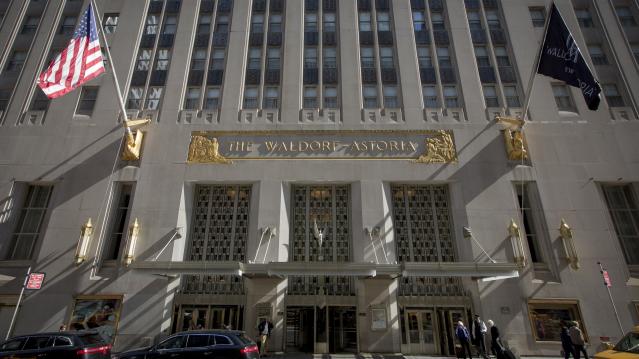
Months after the Waldorf Astoria was sold to a Chinese company, the State Department is abandoning a decades-long tradition of putting up U.S. diplomats at the storied hotel on New York’s Park Avenue.
This fall President Obama and state department officials will not be staying at the Waldorf for the opening of the U.N. General Assembly and will check into the New York Palace Hotel instead.
According to the New York Post, “every U.S. president since Herbert Hoover” has stayed in the presidential suite at the Waldorf when visiting New York, including President Obama. Presidential artifacts in the suite include President Jimmy Carter’s eagle desk set, one of President John F. Kennedy’s rocking chairs, a gold oval mirror from Ronald Reagan, and the personal desk of General Douglas MacArthur. The hotel is the site of Chinese history as well. On his first historic trip to the U.S. in 1974, Chinese leader Deng Xiaoping stayed at the Waldorf and attended a banquet given in his honor by then Secretary of State Henry Kissinger.
Related: U.S. Reviews Waldorf Astoria Sale to Chinese Firm
The $1.95 billion sale of the 47-story tower to the Beijing-based Anbang Insurance Group first raised eyebrows in Washington last October. Even though the previous owner, Hilton Worldwide Holdings, will continue to manage the hotel for the next 100 years, news of a “major renovation” sparked fears of possible Chinese cyber-espionage and surveillance.
Those fears were further heightened earlier this month when U.S. officials blamed Chinese hackers for a massive cyberattack targeting the U.S. Office of Personnel Management, exposing sensitive information about 4 million current and former federal workers. China has denied any involvement.
Can ‘Project Lightning’ Give Twitter a Fresh Jolt?
The ubiquitous blue bird associated with Twitter (TWTR) has been incessantly chirping out new announcements this month as the social media phenom tries to pick itself back up after being slammed for weak earnings growth and the underperformance of its stock.
Projections from data firm eMarketer call for the Twitter monthly user base to grow at a measly 14.1 percent this year, compared with more than 30 percent growth two years ago, according to Reuters.
While the news last week that CEO Dick Costolo was relinquishing the corner office was not a shock since he has offered to resign in the past, the appointment of co-founder and former chief executive Jack Dorsey as provisional CEO caused a stir in the business and tech worlds. Not only is Dorsey the CEO of his own mobile payments startup, Square, but he was reportedly removed from his role as CEO of Twitter in 2008.
The shakeup caused a brief spike in the company’s shares, but the stock is now back to where it had been before the announcement — and if it’s going to climb higher, investors may to need to see some other changes, too.
That’s where the slew of product announcements comes in. The latest, revealed yesterday on Buzzfeed, is called Project Lightning. Essentially, if there’s a hot topic that people are tweeting about — either prescheduled events, breaking news or ongoing events — Twitter has created an easy way for users to view the most popular and relevant tweets, images and videos, without having to sift through every tedious comment and retweet. Twitter will have a team of editors select the tweets they think will be most popular on the stories they see as the biggest of the moment.
The goal is to make Twitter easier to use and more engaging for an audience that isn’t necessarily interested in actively tweeting. (Twitter’s stock jumped more than 4 percent Friday in response to the new product announcement, its best day in months.) Similarly, Twitter is trying to bring down other obstacles to using its service. The same day the news was released about Costolo, Twitter also announced the removal of the 140-character limit on the direct messages feature. Getting rid of the limit is a step by the company to keep up with rival social networks and messaging apps, like Facebook and WhatsApp.
Related: Instagram Takes Steps to Open Platform to Advertisers
At the same time it tries to draw in users, Twitter executives know they must do more to attract advertisers. Six ad executives surveyed recently by Reuters said they spend more money on rival platforms because they have more users, better data to target consumers and create more effective ad content. To combat that perception, Twitter this week announced a push to bring in advertisers by rolling out video ads that will automatically play in a user’s timeline. Though initially muted, if a user clicks on the video it will switch to full-screen mode with sound. Advertisers will only be charged when a user has watched at least three seconds of the video on a full screen.
Both Facebook and Instagram offer an almost identical ad feature.
Nailed a Job Interview? Prepare to Wait for an Offer

The improving job market may have more people looking for jobs, but the experience of doing so has gotten rougher.
Job seekers last year had to wait an average of 23 days after an initial interview to find out whether they gotten the job or not. That’s nearly twice the 13 days the interview process took in 2010, according to a new report from Glassdoor.com.
It’s also far longer than the global average of just under four days. Part of the reason for the extended process in the United States is an increase in the use of background checks, skills tests, and drug tests.
Related: The Top 10 Hiring Myths
Police officers faced the longest hiring process (128 days), followed by patent examiners (88 days), and assistant professors (58.7) days.
“Right now hiring delays can represent money left on the table both for workers and employers,” Glassdoor Chief Economist Andrew Chamberlain said in a statement.
When employers can’t find the right worker, vacancies stay open for an average of two months, according to a separate report last spring by CareerBuilder. A fifth of employers said those vacancies stay open for more than six months, on average.
Those employers said the extended vacancies led to lower morale, a reduction in productivity, and declines in customer service.
Lower-skilled jobs tended to get filled most quickly. Entry-level marketing jobs were filled most quickly (four days), followed by entry-level sales (five days), and servers and bartenders (six days), according to the GlassDoor report.
Science Confirms: Watching Online Cat Videos Is Good for You
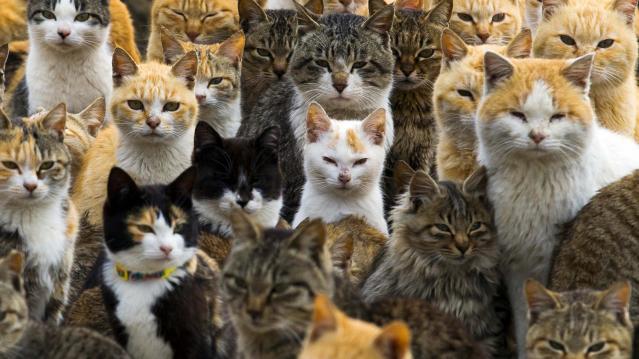
Looking at Grumpy Cat’s underbite and feline dwarfism just might just make you feel better about your bratty kid, your nagging spouse or your demanding boss. That’s right, according to a new study published in the journal Computers in Human Behavior, watching cat videos online reduces our negative feelings while raising our sense of well-being and boosting our energy levels.
Grumpy Cat, whose real pet name is Tardar Sauce, shares a manager with fellow YouTube stars Keyboard Cat and Nyan Cat. Last we checked, the famous feline had 7.7 million Likes on Facebook. In all, more than 2 million cat videos were posted on YouTube last year, gathering nearly 26 billion views. Cat videos had more views per video than any other category of YouTube content. That makes kittens more valuable eye candy than, say, Maxim’s Hot 100. (Taylor Swift topped the list this year, just in case you were wondering.)
Related: The Internet Power of Kim Kardashian’s Butt
For the new study, Jessica Gall Myrick, an assistant professor at the Indiana University Media School, surveyed nearly 7,000 Internet users about how watching cat videos affects their moods. She got a little help from Bloomington, Indiana resident Mike Bridavsky — the owner of Internet celebrity cat Lil Bub — who used social media to recruit participants for the survey.
The results should make you feel a bit less guilty about clicking through one cat video after another: “Even if they are watching cat videos on YouTube to procrastinate or while they should be working, the emotional pay-off may actually help people take on tough tasks afterward,” Myrick says.
Don’t think watching cat videos online is a pop culture phenomenon worthy of academic research? Myrick disagrees: “If we want to better understand the effects the Internet may have on us as individuals and on society, then researchers can’t ignore Internet cat videos anymore.”
Read the original paper on emotion regulation procrastination, and watching cat videos online here.