
Did Kasich Just Do an About-Face on Climate Change?
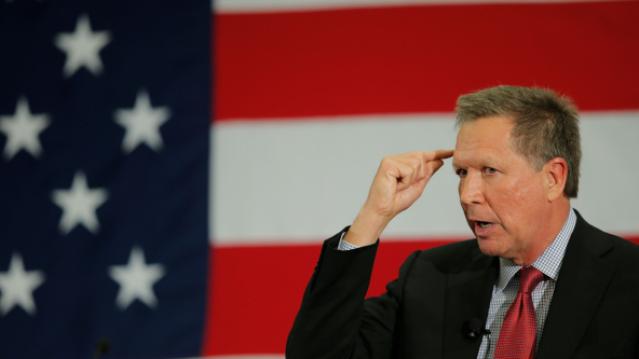
Maybe it’s because he is still feeling his way as a late entrant into the GOP presidential campaign, but Ohio Gov. John Kasich did a fairly dramatic about-face over the weekend on the politically charged issue of climate change.
Kasich, a former House Budget Committee chair and Wall Street business executive, has positioned himself as a “kinder, gentler” conservative than Jeb Bush, Ted Cruz and the dozen other Republicans running for the 2016 presidential nomination. So it wasn’t surprising that he would take a more moderate stand on global warming during the first nationally televised GOP presidential debate Thursday evening.
Related: 10 Things You Need to Know About John Kasich
Kasich, a devout Christian, declared during the two-hour debate sponsored by Fox News that climate change is a real problem requiring government and society to protect the “creation that the Lord has given us.”
While the vast majority of Republicans on Capitol Hill and the campaign trail are highly skeptical of President Obama’s campaign to curb industrial carbon emissions to prevent the disastrous long term effects of global warming on the environment and economy, Kasich appeared to be one of the few who took the threat seriously.
He emphasized the importance of unity and cooperation, saying at one point that “we’ve got to unite our country again, because we’re stronger when we are united and we are weaker when we are divided.”
Just a few days later, though, after winning plaudits for his Thursday night performance – with some even favorably comparing his views on environmental threats to those of Pope Francis – Kasich sounded much like a climate-change doubter.
Related: Does Kasich Have a Chance? How He Can Catch Up to the GOP
During an appearance on NBC News’ “Meet the Press,” Kasich told moderator Chuck Todd that “I think man absolutely affects the environment, but as to whether, you know, what the impact is, the overall impact, I think that’s a legitimate debate.”
Kasich went on to say that in Ohio, “we preciously take care of Lake Erie, and we’ve reduced emissions by 30 percent over the last ten years.”
“We believe in alternative energy,” he added. “So of course we have to be sensitive to it, but we don’t want to destroy people’s jobs, based on some theory that’s not proven.”
According to National Journal, the Kasich 2016 campaign attempted to clarify his remarks following his appearance on “Meet the Press.” "The governor has long believed climate change is real and we need to do something about it,” according to the statement. “The debate over exact percentages of why it is happening is less important than what can be done about it. We know it is real, we know man has an impact, and we know we need to do something."
A number of prominent presidential candidates -- including former Florida governor Jeb Bush and Sens. Ted Cruz, Marco Rubio, and Rand Paul -- are climate change doubters or deniers. Sen. Lindsey Graham of South Carolina is one of the few who unquestionably accepts scientific evidence that man-made greenhouse gas emissions are a principal cause of global warming, and has sharply criticized his party for lacking a comprehensive environmental platform.
Top Reads From The Fiscal Times:
- How GOP Candidates Would Steer U.S. Foreign Policy
- Fiorina Takes on Trump in a Brave Battle of the Sexes
- As Politicians Bicker Over Funding, Military Families Cut Back on Vacations
The $20 million ‘Boondoggle That Won’t Die’ Finally Gets Zapped
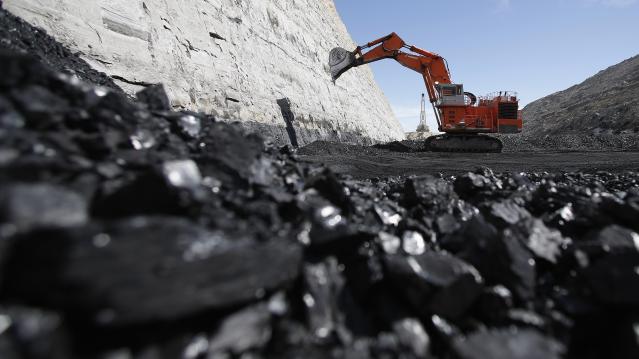
The House on Wednesday night voted 252 to 179 to wipe out a $20 million-a-year sop to Pennsylvania’s struggling anthracite coal industry that critics had tagged “the boondoggle that just won’t die.
As The Fiscal Times reported earlier this week, the Defense Department has been required every year to ship 5,000 to 9,000 tons of coal mined from the rugged hills of Tamaqua in northeast Pennsylvania to the small town of Kaiserslauntern in southwestern Germany to be used by a local utility to heat a large U.S. military maintenance and repair installation.
The provision, for decades tucked away in the massive defense appropriations bill, was the remnant of a half-century old taxpayer rip-off that the Defense Department has been trying to get rid of for years.
Related: The $20 Million Political Boondoggle That Just Won’t Die
“For decades, the Department of Defense has urged Congress to remove this earmark and allow the use of cheaper fuel to power its military bases. Today we finally achieve that … saving taxpayers millions of dollars each year,” said Rep. Jared Huffman (D-CA), who co-sponsored an amendment with Rep. Tom McClintock (R-CA) to eliminate the benefit to the Pennsylvania coal industry.
“The passage of this amendment is proof-positive that Republicans and Democrats can work together to cut wasteful spending while protecting the environment,” he added. “It’s about time we stopped burning dirty coal—and taxpayer dollars—to power this military base.”
End Game for the $20 Million 'Boondoggle That Won't Die'?
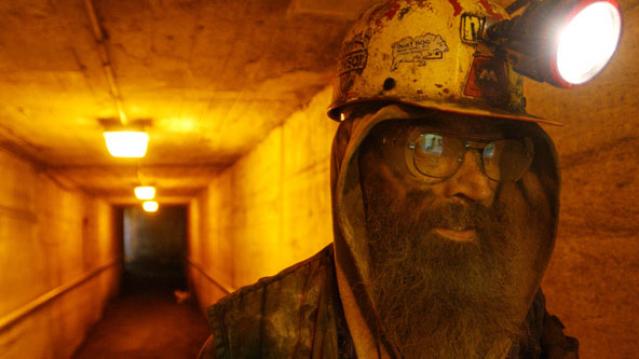
It has been called “the boondoggle that won’t die,” a decades’ old provision within the massive defense appropriations bill that requires a large U.S. Air Force and Army base 4,000 miles away in Germany to heat its facilities with anthracite coal mined in northeast Pennsylvania.
Although the utility at the military base in the small town of Kaiserslauntern in southwest Germany could readily purchase cheaper domestic coal or natural gas to fire its boilers, a legislative mandate dating back to the post-World War II era requires it to use 5,000 to 9,000 tons of Pennsylvania coal shipped overseas. Since 1972 each Department of Defense Appropriations Act has included an earmark requiring the Pentagon to purchase this coal.
Related: The $20 Million Political Boondoggle That Just Won’t Die
Taxpayers for Common Sense and about a half dozen other government watchdog groups have railed against the provision, which costs about $20 million a year, as one of the worst examples of waste in the budget. And late on Wednesday the House was scheduled to consider an amendment to the fiscal 2016 defense appropriations bill to finally knock it out.
Two Californians -- Democratic Rep. Jared Huffman and Republican Rep. Tom McClintock – have co-sponsored an amendment that would finally eliminate the resilient sop to Pennsylvania’s long-withering coal industry.
“It’s about time we stopped burning dirty coal – and taxpayer dollars – to power this military base,” Huffman said in a statement.
4 Signs It’s a Sellers’ Market in Real Estate Right Now
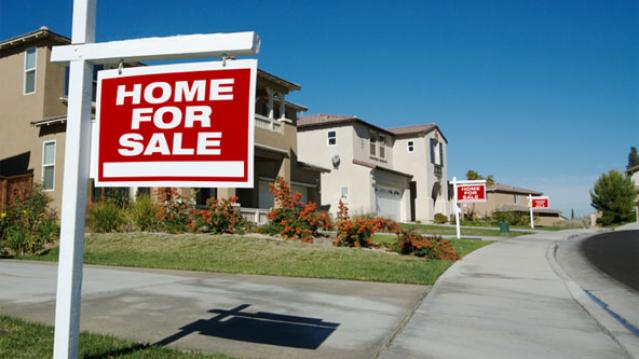
It’s a great time to be a home seller.
After years of dealing with hesitant buyers and disappointing home values, those with homes on the market are enjoying the benefits of a true sellers’ market in most regions of the country.
Home prices in April increased nearly 7 percent from the previous year, according to CoreLogic. And a survey from Coldwell Banker released today list four reasons sellers are sitting prettier:
1. Homes are selling even faster than in the pre-recession years. More than a quarter (28 percent) of today’s sellers were able to sell their home in less than two weeks. By comparison, only 19 percent of homes sold in that time frame in 2006-2007.
Related: 9 Real Estate Trends to Watch in 2015
2. The bidding war is back. Nearly half (47 percent) of today’s sellers are reporting receiving multiple offers on their home, up from just 40 percent from 2010-2013.
3. Homes are selling for more than the list price. Those bidding wars are pushing the sales price of home past the asking price. Of today’s sellers surveyed, 27 percent said they had sold their home for more than the list price. During the recession, just 14 percent of sellers reported doing so.
4. Sellers no longer feel pressure to take the first offer received. Less than half of today’s sellers take the first offer they receive, down from nearly 60 percent during the recession and in the early years of the recovery.
Sick, Uninsured and Charged 10 Times the Cost of Hospital Care
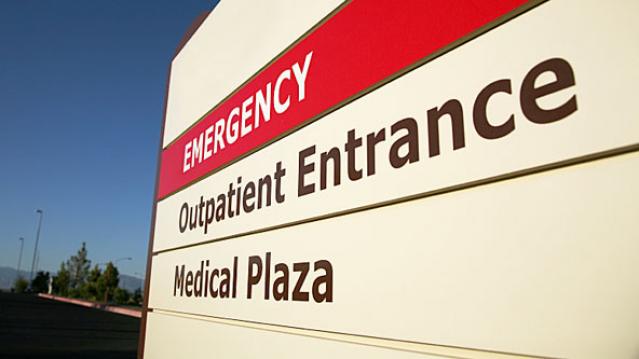
A pack of for-profit hospitals are taking too many liberties with their for-profit names. A new study by Health Affairs found 50 hospitals in the U.S. have markups over 10 times the actual cost of care. The data was found using 2012 Medicare cost reports.
At the top of the list is North Okaloosa Medical Center, located about an hour outside of Pensacola, Fla. The hospital was found to charge uninsured patients 12.6 times the actual cost of patient care. A typical hospital charges 3.4 times the cost of patient care.
The largest numbers of the hospitals on the list – 20 – are in Florida. Of the 50, 49 are for-profit and 46 are owned by for-profit hospital systems. One for-profit hospital system, Community Health Systems, owns and operates 25 of the hospitals on the list. Hospital Corporation of America operates 14 others.
Related: If SCOTUS Rule Against Obamacare, Health Care Costs Will Soar
Uninsured individuals are commonly asked to pay the full amount, unaware they are being scammed. The markups can lead to personal bankruptcy or the avoidance of necessary medical attention.
"The main causes of these extremely high markups are a lack of price transparency and negotiating power by uninsured patients, out-of network patients, casualty and workers' compensation insurers and even in-network insurers," the study reads. "Federal and state policymakers need to recognize the extent of hospital markups and consider policy solutions to contain them."
Most astounding of all, these markups are not illegal. Maryland and West Virginia are the only states with laws limiting hospital fees.
Researchers offered solutions in the study, including limitations on the charge-to-cost ratio, mandated price disclosure to regulate the markups or some form of all-payer rate setting.
Those Record Job Openings Weren’t All for Burger Flippers
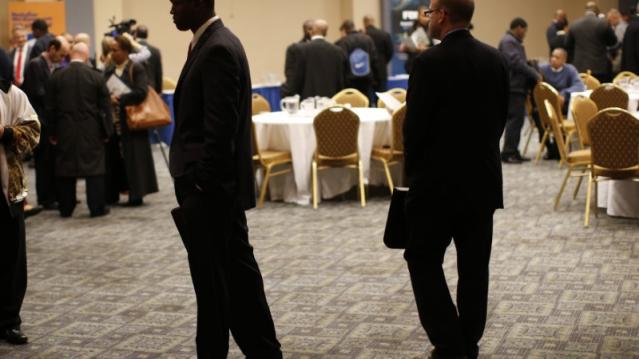
Not only did job openings increase to 5.4 million in April, the highest number from the Labor department in 15 years, but the quality of the jobs was impressive, too. The openings included positions in finance (+13,000) and in architectural and engineering services (+5,000).
Overall, service-sector job growth outpaced gains made last year. The majority of jobs were in professional business services (+63,000), leisure and hospitality (+57,000) and health care (+47,000). Employment in retail also edged up (+32,000), as well as in construction (+17,000). The biggest increase in vacancies was in the West, but businesses across the nation are looking for new hires.
Related: 10 Best Cities for Job Seekers
Mining, logging and oil and gas drilling all posted decreases. Employment in those industries increased by 41,000 in 2014, but the striking decline in prices for oil and other commodities has taken a toll, with employment dropping by 68,000 thus far.
In another reassuring sign, unemployment has fallen to 5.5% from 6.3% at this time last year.