
GOP Governor Asks Voters to Raise Their Own Taxes
Michigan voters go to the polls today to vote on Proposal 1, a referendum that would hike the state sales and gasoline taxes. An unexpected twist in the story, though, is who is backing the plan and why. Support for the proposal speaks to the declining state of infrastructure in the U.S. and the increasing urgency with which states are taking matters into their own hands.
Proposal 1 is a complex mix of policy changes that would raise more than a billion dollars to fund road construction and repair, plus hundreds of millions for education and other purposes. It would do so by hiking the Michigan state sales tax from 6 percent to 7 percent. That represents a 17 percent increase in total sales taxes Michiganders will face on taxable items.
Related: America’s Energy Infrastructure in Desperate Shape
However, the bill also abolishes the sales tax on gasoline – Michigan is one of the few states in which gas is not exempt from state sales tax – and would dramatically increase the wholesale gasoline tax. The net effect, according to the Detroit Free Press, would be an increase of between 7 and 9 cents per gallon in what consumers pay at the pump. The proposal would net about $1.9 billion per year for the state’s coffers, the majority of it coming out of the pockets of Michigan’s taxpayers. (A small percentage would come from out-of-state visitors paying taxes on items purchased in Michigan.)
Normally, a $2 billion tax hike – the biggest in the state in a generation – would be the sort of thing Republican politicians would attack mercilessly, but in Michigan, Republican Governor Rick Snyder is a strong proponent of the deal. And Snyder isn’t alone. Prominent Republican and Democratic lawmakers have thrown their support behind the measure.
Related: Get Ready to Pay More Tolls If Infrastructure Isn’t Funded
The move also has significant support from the business community. Unsurprisingly, the biggest backers of the deal are the construction companies and related industries. But there is also support in the general business community, even among some companies whose products would be more expensive.
Even with substantial support from legislative leaders and businesses, though, the prospects for Proposal 1 looked poor heading into the vote today Public opinion remains generally against the proposition despite a multimillion-dollar advertising campaign by supporters that has dwarfed efforts by the opposition.
Should the vote fail, though, the state’s pothole-pocked roads and crumbling bridges won’t fix themselves, so legislators will have to find the revenue somewhere, either by increasing taxes via a different route, or cutting spending from an already tight state budget.
Can Trump Bring Democrats Along on Taxes?
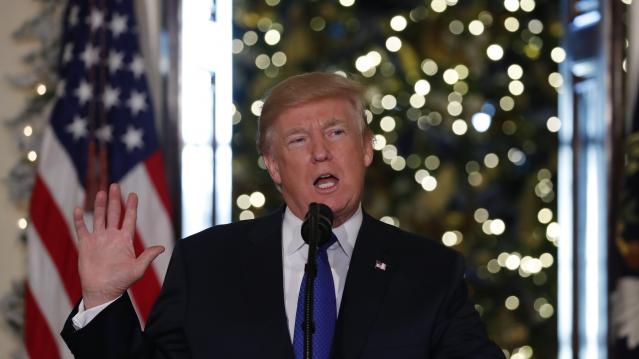
Although Republicans are prepared to go it alone on tax reform, President Trump suggested creating a bipartisan working group on the topic during a Wednesday meeting with senators from both parties. Some senators were open to the idea, but it doesn’t look like Republicans have much interest in slowing down the process with in-depth negotiations. “I don’t really personally see the benefit of creating additional structure. I think we’ve got all the tools we need,” said Sen. John Cornyn (R-TX), who attended the meeting, according to Politico. Democrats appear skeptical, too. Sen. Ron Wyden (D-OR) said he told Trump that the distance between what Republicans were saying about their plan and what it actually does is a serious problem.
Where Trump Will Compromise on Tax Reform
White House officials tell USA Today’s Heidi Przybyla that President Trump will include a number of compromises to limit his tax plan’s benefits for the wealthy when he promotes the blueprint next month:
“The compromises will include ending a 23.8% preferential tax rate for hedge-fund managers, or the so-called carried interest rate, White House legislative affairs director Marc Short told USA TODAY. … Retaining parts of a state and local tax deduction that benefits many middle-class families in blue states is also an area where Trump is expecting compromise.”
Trump campaigned on raising the carried interest rate, saying its beneficiaries are “getting away with murder.” But changes to the carried interest rate may run into opposition from House Republicans, and the tweaks appear unlikely to win any Democratic support.
Larry Summers Savages Trump Tax Plan Analysis
Former Treasury Secretary Larry Summers made his distaste for the Trump administration’s tax framework clear last week when he said Republicans were using “made-up” claims about the plan and its effects. Summers expanded his criticism on Tuesday in a blog post that took aim at the report released Monday by the Council of Economic Advisers and chair Kevin Hassett, which seeks to justify the administration’s claim that its tax plan will result in a $4,000 pay raise for the average American family.
Never one to mince words, Summers says the CEA analysis is “some combination of dishonest, incompetent and absurd.” The pay raise figure is indefensible, since “there is no peer-reviewed support for his central claim that cutting the corporate tax rate from 35 to 20 percent would raise wages by $4000 per worker.” In the end, Summers says that “if a Ph.D student submitted the CEA analysis as a term paper in public finance, I would be hard pressed to give it a passing grade.”
One of the authors cited in the CEA paper also has some concerns. Harvard Business School professor Mihir Desai tweeted Tuesday that the CEA analysis “misinterprets” a 2007 paper he co-wrote on the dynamics of the corporate tax burden. Desai’s research has found a connection between business tax cuts and wage growth, but not as large as the CEA paper claims. “Cutting corporate taxes will help wages but exaggeration only serves to undercut the reasonableness of the core argument,” Desai wrote.
For Tax Reform, It May Be 2017 or Bust
National Economic Council Director Gary Cohn said Monday that tax reform has to happen this year, even if it means Congress has to stay in session longer. "I think we have a unique window in time right now, but unfortunately we keep losing days to this window,” he said. “The opportunity is now." House Speaker Paul Ryan said last week he’d keep members over Christmas if that’s what it takes. And Ryan predicted Monday that tax reform would pass the House by early next month and then get through the Senate to reach the president’s desk by the end of the year. But there are plenty of skeptics out there, given the hurdles. Issac Boltansky, an analyst at the investment bank Compass Point, told Business Insider, "The idea of getting tax reform done this year is a farcical fantasy. Lawmakers have neither the time nor the capacity to formulate and clear a tax reform package in 2017."
Do Republicans Have the Votes for the Next Step Toward Tax Reform?
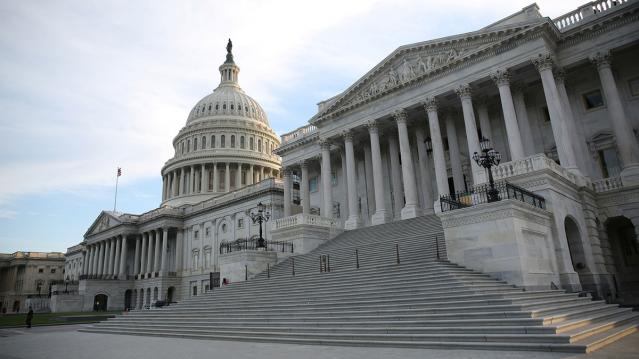
Passing a budget resolution for 2018 through the Senate will open a procedural door to a $1.5 trillion tax cut over 10 years. The resolution is expected to reach the Senate floor this week, although there are questions about whether Republicans have the 50 votes they need to pass it. Sens. Susan Collins (R-ME) said this weekend that she would vote for it and Lisa Murkowski (R-AK) is likely a “yes” as well, but Sen. Rand Paul (R-TN) is reportedly a likely “no” and John McCain (R-AZ) appears questionable. Now it looks like Sen. Thad Cochran (R-MI) won't be back in Washington this week to vote on the resolution due to health problems. The Hill says Cochran’s absence puts tax reform “on knife’s edge.”