
The Rapidly Rising Death Toll of the Heroin Epidemic

The death toll from the heroin epidemic has been climbing dramatically in recent years — and the annual rate of overdose deaths nearly doubled between 2011 and 2013, according to a new CDC study.
From 2002 through 2013, heroin use in the United States rose by 63 percent, and the rate of abuse or dependence climbed a staggering 90 percent. Deaths from heroin-related overdoses nearly quadrupled, with more than 8,200 people dying in 2013 alone.
The CDC report says that heroin use has increased across most demographic groups — men and women, most age groups, and across all income levels. Rates of heroin use are still highest among men, those ages 18 to 25, people with income less than $20,000 a year, people in urban areas, and those who do not have health insurance or are on Medicaid. But other groups are turning to the drug, too. “Some of the greatest increases occurred in demographic groups with historically low rates of heroin use: women, the privately insured and people with higher incomes,” the CDC says.
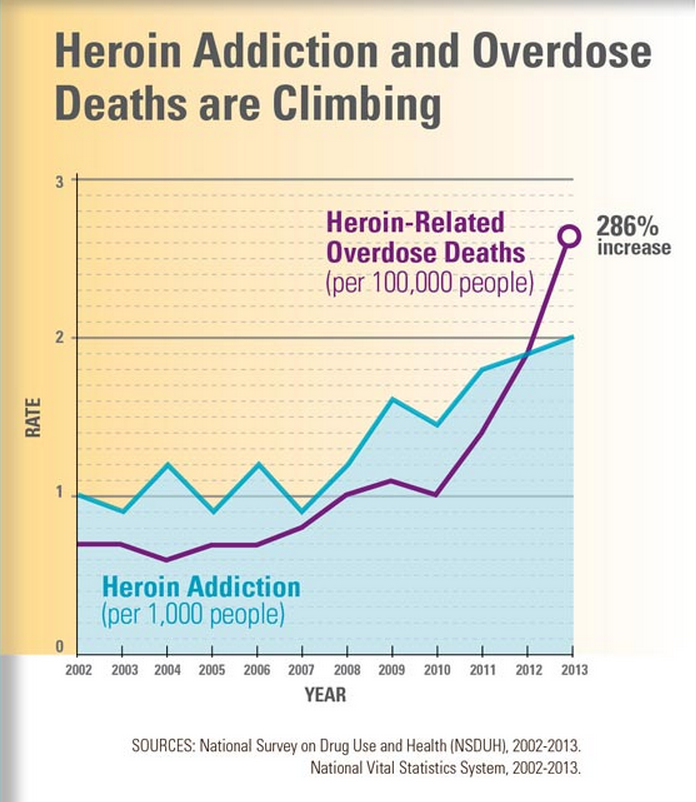
The heroin trend isn’t happening in isolation, the CDC study says. Almost all heroin users — 96 percent — also took at least one other drug, and 61 percent used at least three other drugs. Abuse or dependence on opioid painkillers is the strongest risk-factor for heroin use or addiction, the report says, with cocaine addiction also high on the list. People who are addicted to prescription opioid painkillers are 40 times more likely to use or be addicted to heroin, and 45 percent of people who used heroin were also addicted to painkillers.
Another key reason is that heroin is becoming cheaper and more widely available. According to the DEA, the increase in heroin seizures in the U.S. from 2010 and 2014 rose 81 percent, from 2,763 kilograms to 5,014 kilograms. More and more law enforcement agencies are identifying heroin as their primary drug threat, but the CDC report suggests that health care workers focus on reducing the abuse of painkillers by improving prescribing practices.
The study also recommends that states increase access to “medication-assisted treatment” programs that use methadone, buprenorphine and naltrexone along with behavioral counseling. And it says the rapid rise in heroin-related deaths highlights an “urgent need” to broaden access to naloxone, a drug that can reverse the effects of heroin and opioid overdose.
Can Trump Bring Democrats Along on Taxes?

Although Republicans are prepared to go it alone on tax reform, President Trump suggested creating a bipartisan working group on the topic during a Wednesday meeting with senators from both parties. Some senators were open to the idea, but it doesn’t look like Republicans have much interest in slowing down the process with in-depth negotiations. “I don’t really personally see the benefit of creating additional structure. I think we’ve got all the tools we need,” said Sen. John Cornyn (R-TX), who attended the meeting, according to Politico. Democrats appear skeptical, too. Sen. Ron Wyden (D-OR) said he told Trump that the distance between what Republicans were saying about their plan and what it actually does is a serious problem.
Where Trump Will Compromise on Tax Reform
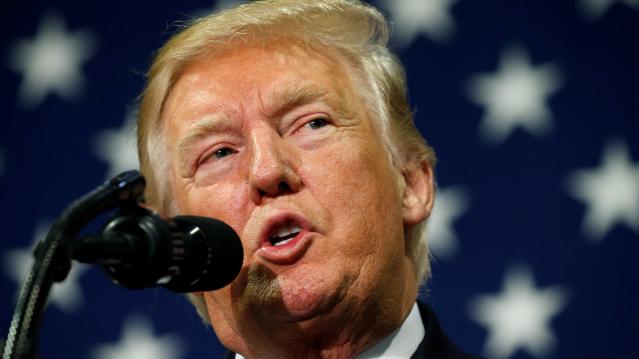
White House officials tell USA Today’s Heidi Przybyla that President Trump will include a number of compromises to limit his tax plan’s benefits for the wealthy when he promotes the blueprint next month:
“The compromises will include ending a 23.8% preferential tax rate for hedge-fund managers, or the so-called carried interest rate, White House legislative affairs director Marc Short told USA TODAY. … Retaining parts of a state and local tax deduction that benefits many middle-class families in blue states is also an area where Trump is expecting compromise.”
Trump campaigned on raising the carried interest rate, saying its beneficiaries are “getting away with murder.” But changes to the carried interest rate may run into opposition from House Republicans, and the tweaks appear unlikely to win any Democratic support.
Larry Summers Savages Trump Tax Plan Analysis
Former Treasury Secretary Larry Summers made his distaste for the Trump administration’s tax framework clear last week when he said Republicans were using “made-up” claims about the plan and its effects. Summers expanded his criticism on Tuesday in a blog post that took aim at the report released Monday by the Council of Economic Advisers and chair Kevin Hassett, which seeks to justify the administration’s claim that its tax plan will result in a $4,000 pay raise for the average American family.
Never one to mince words, Summers says the CEA analysis is “some combination of dishonest, incompetent and absurd.” The pay raise figure is indefensible, since “there is no peer-reviewed support for his central claim that cutting the corporate tax rate from 35 to 20 percent would raise wages by $4000 per worker.” In the end, Summers says that “if a Ph.D student submitted the CEA analysis as a term paper in public finance, I would be hard pressed to give it a passing grade.”
One of the authors cited in the CEA paper also has some concerns. Harvard Business School professor Mihir Desai tweeted Tuesday that the CEA analysis “misinterprets” a 2007 paper he co-wrote on the dynamics of the corporate tax burden. Desai’s research has found a connection between business tax cuts and wage growth, but not as large as the CEA paper claims. “Cutting corporate taxes will help wages but exaggeration only serves to undercut the reasonableness of the core argument,” Desai wrote.
For Tax Reform, It May Be 2017 or Bust
National Economic Council Director Gary Cohn said Monday that tax reform has to happen this year, even if it means Congress has to stay in session longer. "I think we have a unique window in time right now, but unfortunately we keep losing days to this window,” he said. “The opportunity is now." House Speaker Paul Ryan said last week he’d keep members over Christmas if that’s what it takes. And Ryan predicted Monday that tax reform would pass the House by early next month and then get through the Senate to reach the president’s desk by the end of the year. But there are plenty of skeptics out there, given the hurdles. Issac Boltansky, an analyst at the investment bank Compass Point, told Business Insider, "The idea of getting tax reform done this year is a farcical fantasy. Lawmakers have neither the time nor the capacity to formulate and clear a tax reform package in 2017."
Do Republicans Have the Votes for the Next Step Toward Tax Reform?
Passing a budget resolution for 2018 through the Senate will open a procedural door to a $1.5 trillion tax cut over 10 years. The resolution is expected to reach the Senate floor this week, although there are questions about whether Republicans have the 50 votes they need to pass it. Sens. Susan Collins (R-ME) said this weekend that she would vote for it and Lisa Murkowski (R-AK) is likely a “yes” as well, but Sen. Rand Paul (R-TN) is reportedly a likely “no” and John McCain (R-AZ) appears questionable. Now it looks like Sen. Thad Cochran (R-MI) won't be back in Washington this week to vote on the resolution due to health problems. The Hill says Cochran’s absence puts tax reform “on knife’s edge.”