
The Rapidly Rising Death Toll of the Heroin Epidemic
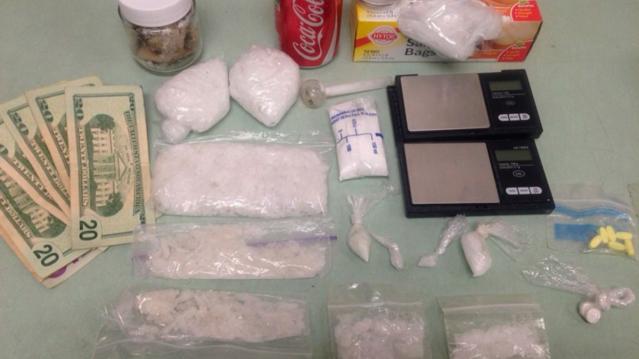
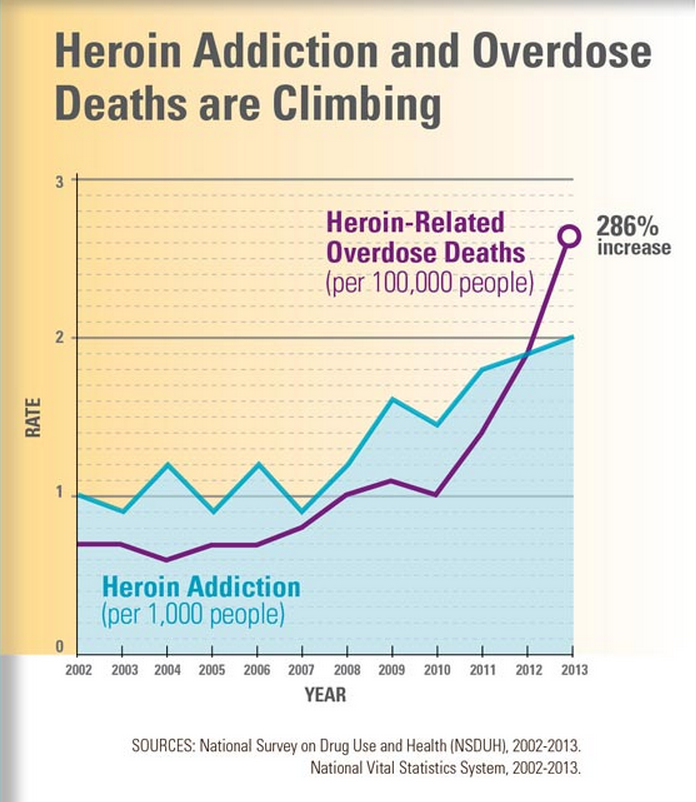
The death toll from the heroin epidemic has been climbing dramatically in recent years — and the annual rate of overdose deaths nearly doubled between 2011 and 2013, according to a new CDC study.
From 2002 through 2013, heroin use in the United States rose by 63 percent, and the rate of abuse or dependence climbed a staggering 90 percent. Deaths from heroin-related overdoses nearly quadrupled, with more than 8,200 people dying in 2013 alone.
The CDC report says that heroin use has increased across most demographic groups — men and women, most age groups, and across all income levels. Rates of heroin use are still highest among men, those ages 18 to 25, people with income less than $20,000 a year, people in urban areas, and those who do not have health insurance or are on Medicaid. But other groups are turning to the drug, too. “Some of the greatest increases occurred in demographic groups with historically low rates of heroin use: women, the privately insured and people with higher incomes,” the CDC says.
The heroin trend isn’t happening in isolation, the CDC study says. Almost all heroin users — 96 percent — also took at least one other drug, and 61 percent used at least three other drugs. Abuse or dependence on opioid painkillers is the strongest risk-factor for heroin use or addiction, the report says, with cocaine addiction also high on the list. People who are addicted to prescription opioid painkillers are 40 times more likely to use or be addicted to heroin, and 45 percent of people who used heroin were also addicted to painkillers.
Another key reason is that heroin is becoming cheaper and more widely available. According to the DEA, the increase in heroin seizures in the U.S. from 2010 and 2014 rose 81 percent, from 2,763 kilograms to 5,014 kilograms. More and more law enforcement agencies are identifying heroin as their primary drug threat, but the CDC report suggests that health care workers focus on reducing the abuse of painkillers by improving prescribing practices.
The study also recommends that states increase access to “medication-assisted treatment” programs that use methadone, buprenorphine and naltrexone along with behavioral counseling. And it says the rapid rise in heroin-related deaths highlights an “urgent need” to broaden access to naloxone, a drug that can reverse the effects of heroin and opioid overdose.
Cruz Won’t be Trumped—Watch Him Cook Bacon on a Machine Gun

Sen. Ted Cruz (TX) has shown an affinity for breakfast foods he did, after all, famously read "Green Eggs and Ham" on the Senate floor. Now, the Texas senator is the latest Republican presidential contender to ham it up in a stunt video released Monday—this time, he separates himself from the pack by cooking bacon with a machine gun.
“Few things I enjoy more than on weekends cooking breakfast with the family. Of course in Texas, we cook bacon a little differently than most folks," Cruz says in a video. Cruz walks the viewer through the rather unique cooking process, including wrapping strips of bacon around the gun’s nozzle and encasing it in aluminum foil to keep in the heat.
Cruz himself fires off several rounds at a gun range. After he’s finished, and gotten grease all over the cement floor, he uses a fork to pick a piece of still sizzling meat off the barrel and eats it.
“Mmm. Machine gun bacon,” the senator says with a smile before chuckling.
The 66-second clip comes roughly two weeks after Sen. Lindsey Graham (R-SC), another White House hopeful, shot his own video where he used a variety of methods to destroy cellphones after he had his phone number given out by GOP frontrunner Donald Trump.
The video is sure to bounce around the web and get people talking about Cruz’s candidacy just as the Republican field gets ready to take the stage for its inaugural debate.
An NBC/Wall Street Journal poll released on Sunday showed the Texas lawmaker taking fifth in the GOP primary race, with 9 percent support. That put him 10 points behind current polling leader Donald Trump. Cruz also trails Wisconsin Gov. Scott Walker, former Florida Gov. Jeb Bush and neurosurgeon Ben Carson, according to the survey, meaning that the bacon stunt can't hurt: His campaign could definitely use more sizzle.
Top Reads from The Fiscal Times:
- Joe Biden: The Looming Threat to a Republican Presidency
- Trump’s Net Worth Isn’t His Only Claim That’s Fake
- Why the Six Candidates Left Out of the GOP Debate Might Be Winners After All
Don’t Feel Like a Chump When You Close on Your New Mortgage

Mortgage closing costs dropped 7 percent over the past year, falling to $1,847 on a $200,000 loan, according to a new analysis by Bankrate.
Typical closing costs varied by state, ranging from $2,163 in Hawaii to $1,613 in Ohio. You can find the average rate for your state in the table below.
Lenders compete for business, so shopping around with at least three mortgage providers can help you reduce the fees associated with your loan. “Homebuyers have more say over closing costs than they think,” Bankrate Senior Mortgage Analyst Holden Lewis said in a statement.
Even as banks lower their mortgage fees, they’re increasing fees in most other categories, according to MoneyRates.com.
While lower mortgage fees are good news for homebuyers and those refinancing their loans, the average saving amount to just $140. That’s not much relative to the total costs associated with buying a house. The average down payment for homebuyers in the first quarter of 2015 was $57,710, for example.
Related: Want Your Own Home? Here’s How to Do the Math
The costs don’t stop once the buyers move in. On top of mortgage payments, homeowners face an average of more than $6,000 in additional costs related to their house, including homeowners insurance, property taxes and utilities.
The National Association of Realtors expects home prices to increase 6.5 percent this year to a median $221,900, which would put them at the same level as their 2006 record high.
For buyers, better news than the lower mortgage fees is that rates remain relatively low, falling to 3.98 percent last week, per Freddie Mac.
Closing costs | |||
|---|---|---|---|
| State | Average origination fees | Average third-party fees | Average origination plus third-party fees |
| Alabama | $1,066 | $776 | $1,842 |
| Alaska | $935 | $922 | $1,857 |
| Arizona | $1,208 | $761 | $1,969 |
| Arkansas | $1,057 | $760 | $1,817 |
| California | $937 | $896 | $1,834 |
| Colorado | $1,192 | $719 | $1,910 |
| Connecticut | $1,074 | $960 | $2,033 |
| Delaware | $904 | $924 | $1,828 |
| District of Columbia | $1,077 | $718 | $1,794 |
| Florida | $1,028 | $778 | $1,806 |
| Georgia | $1,058 | $821 | $1,879 |
| Hawaii | $1,033 | $1,130 | $2,163 |
| Idaho | $894 | $788 | $1,682 |
| Illinois | $1,080 | $767 | $1,847 |
| Indiana | $1,067 | $770 | $1,837 |
| Iowa | $1,161 | $762 | $1,923 |
| Kansas | $1,047 | $753 | $1,800 |
| Kentucky | $1,060 | $737 | $1,797 |
| Louisiana | $1,060 | $817 | $1,877 |
| Maine | $897 | $830 | $1,727 |
| Maryland | $1,093 | $742 | $1,835 |
| Massachusetts | $905 | $851 | $1,756 |
| Michigan | $1,072 | $746 | $1,818 |
| Minnesota | $1,067 | $689 | $1,757 |
| Mississippi | $1,046 | $837 | $1,884 |
| Missouri | $1,040 | $792 | $1,833 |
| Montana | $1,062 | $855 | $1,917 |
| Nebraska | $1,047 | $770 | $1,817 |
| Nevada | $1,002 | $848 | $1,850 |
| New Hampshire | $1,084 | $750 | $1,835 |
| New Jersey | $1,181 | $913 | $2,094 |
| New Mexico | $1,076 | $876 | $1,952 |
| New York | $1,032 | $879 | $1,911 |
| North Carolina | $1,036 | $875 | $1,911 |
| North Dakota | $1,045 | $791 | $1,836 |
| Ohio | $933 | $681 | $1,613 |
| Oklahoma | $1,027 | $734 | $1,761 |
| Oregon | $1,080 | $785 | $1,864 |
| Pennsylvania | $1,055 | $678 | $1,733 |
| Rhode Island | $1,093 | $802 | $1,896 |
| South Carolina | $1,058 | $837 | $1,895 |
| South Dakota | $1,055 | $704 | $1,759 |
| Tennessee | $1,033 | $773 | $1,806 |
| Texas | $1,031 | $833 | $1,864 |
| Utah | $909 | $788 | $1,697 |
| Vermont | $1,074 | $862 | $1,936 |
| Virginia | $1,050 | $787 | $1,837 |
| Washington | $1,077 | $824 | $1,901 |
| West Virginia | $1,067 | $904 | $1,971 |
| Wisconsin | $1,047 | $723 | $1,770 |
| Wyoming | $874 | $814 | $1,689 |
| Average | $1,041 | $807 | $1,847 |
Bankrate.com surveyed up to 10 lenders in each state in June 2015 and obtained online Good Faith Estimates for a $200,000 mortgage to buy a single-family home with a 20 percent down payment in a prominent city. Costs include fees charged by lenders, as well as third-party fees for services such as appraisals and credit reports. The survey excludes title insurance, title search, taxes, property insurance, association fees, interest and other prepaid items.
Top Reads from The Fiscal Times:
- You’re Richer Than You Think. Really.
- The 10 Fastest-Growing Jobs Right Now
- The 5 Worst Cities to Raise a Family
Why Are Nearly 40 Million American Adults Not Using the Internet?

For most of use, the Internet is inescapable. We use the Web for everything from paying bills and writing emails to signing up for health insurance and watching our favorite shows.
However, a surprisingly large number of adults in the U.S. have resisted the siren call of the digital life. According to new data from Pew Research, 15% of the adult U.S. population is not online.
Who makes up this group of Internet naysayers? Here are some highlights:
- Unsurprisingly, adults aged 65 and older make up the largest single age group (39 percent) most likely to say they never go online.
- The higher the level of educational achievement, the greater the likelihood of Internet usage. For adults with less than a high school education, a third do not use the Internet.
- Household income is also a significant factor. Adults in the most affluent households are eight times more likely to use the Internet than adults in households with an income of less than $30,000 per year. Nineteen percent of the non-users cite the high expense of Internet service or owning a computer.
- Americans living in rural areas are twice as likely as individuals in urban or suburban regions to not use the Internet.
- As for race and ethnicity, 20 percent of blacks and 18 percent of Hispanics do not use the Internet, compared with 14 percent of whites and 5 percent of English-speaking Asian-Americans.
- While 34 percent of people who do not use the Internet choose not to, for others it’s not a choice, according to an earlier Pew report.
- Thirty-two percent say the Internet is too complicated or difficult to use.
The Crazy Reason Treasury Department Officials Can’t Get Their Work Done
Treasury Department officials are being driven to distraction these days, but it’s not because of the expiring debt ceiling or other pressing financial controversies.
Instead, loud music from a New Orleans-style street band known as Spread Love has reportedly driven some officials and employees at the Treasury building to wear earphones to block out the noise and even move meetings to other parts of the building to find some peace and quiet.
Related: The Next Debt Crisis Could Be Much Worse than in 2013, GAO Warns
“We have to relocate our conference calls,” one Treasury employee told The Washington Post. “We can’t have meetings in that corner of the building anymore. It’s like they’re playing music in the building.”
Members of Spread Love have become fixtures of downtown Washington’s street scene and are collecting generous donations for playing their drums, trombone and other brass instruments. Tourists and other office workers out during their lunch hour appear to love the group, but not so the serious-minded economists and bean counters at the Treasury – especially when the band moves within easy shouting distance at the corner of 15th and G Streets NW.
Treasury Secretary Jack Lew’s staff members aren’t the only ones complaining about the jarring music. Partners and associates at the law firm of Skadden, Arps, Slate, Meagher & Flom find it hard to concentrate on their cases with daily interruptions. It got to the point that the firm dispatched a security guard to offer band members $200 a week if they would play somewhere else. Lonnie Shepard, one of the trombonists, told the newspaper that he laughed at the offer because “We can make that in an hour.”
Related: End of Sanctions Worth Hundreds of Billions to Iran
Rob Runyan, a spokesperson for the Treasury Department, said that employee complaints have made their way to the office of the assistant secretary for management, Brodi Fontenot, but there really wasn’t much that could be done.
“The band and other street noise are part of the distractions of working in downtown D.C.,” Runyan said in an interview Friday.
Cockroaches, Rats and Mice: These Are the Country’s Most Infested Cities

New York really is the most infested city in the country, at least according to a Bloomberg analysis of Census Bureau data on cockroach, mouse and rat sightings.
The Big Apple doesn’t lead in any of those individual categories. Homes in Tampa, Fla., have the most roaches, and those in Seattle may have the most rats. Philadelphia houses had the most mouse sightings in the country. But when Bloomberg combined all three categories, New York came out with the highest cumulative score.
Perhaps surprising given the economic state of the city, Detroit residents were the least likely to report seeing a mouse, rat or roach.
Related: The Top 9 Summer Insects to Avoid and How
The data covered only 25 metro areas, so some large cities like Dallas, Los Angeles and San Francisco don’t appear on the list.
Roaches appear to enjoy nice weather. Nearly 40 percent of homes in Tampa had evidence in roaches in the past year, followed by Houston and Austin. Cities with the fewest roach sightings were Seattle, Minneapolis and Detroit.
Mice, on the other, hand, seem to prefer the northeast. Nearly 20 percent of Philly homes had evidence of mice, followed by Baltimore and Boston. Tampa, Jacksonville, and Las Vegas had the lowest percentage of mouse sightings.
More than 20 percent of homes in Seattle and Austin had rats, with Miami rounding out the top three. Richmond, Va., Hartford, Conn., and Minneapolis had the lowest level of rat sightings.
All those vermin lead to big business. Last year, the U.S. pest control industry generated nearly $7.5 billion in revenue, a 3.5 percent increase year-over-year.
Bloomberg reported that the data also showed a difference in infestation levels of homes with families living below the poverty line and minority families, which were more likely to report evidence of rats and roaches.
Top Reads from The Fiscal Times:
- Cecil the Lion Gives Voice to a Growing List of Illegal Slaughters
- How the Media and You Are Misled by False Data
- America’s 10 Top Selling Medications