
What Your Smartphone Knows That Your Mother Doesn’t
Can Your Smartphone Be Used to Detect Depression?

It’s always there, in your pocket or purse or on your desk, quietly collecting information. And apparently, when it comes to depression, there’s quite a lot your smartphone knows about you.
According to a small study from Northwestern Medicine, that data from your smartphone can predict with eerie 87 percent accuracy whether you’re suffering from depression or not.
The telling signs: You spend more time on your smartphone and less time leaving the house, and you visit very few places each day.
Related: Smartphone Notifications Are Killing Our Concentration
The researchers used Craigslist to find 40 test subjects between the ages of 19 and 58, and outfitted their smartphones with an app to monitor their location and usage. The individuals took a questionnaire that measured signs of depression; half of the subjects had troubling symptoms and half did not. Using GPS, the phones tracked the subjects’ movements and locations every five minutes. The subjects also were asked questions about their mood at different points during the day.
These factors were then correlated with the test subjects’ original depression test scores. And the results were uncanny. Depressed people used their phones more often and for longer periods of time —an average of 68 minutes a day. By comparison, the individuals who didn’t show signs of depression spent only 17 minutes on theirs. Researchers attributed the increased use of the phone to task avoidance, another symptom of depressed people.
Perhaps more significant than the findings of this small study — only 28 of the 40 subjects had enough data to be studied — is the potential the researchers felt that smartphones could play in future medical diagnosis.
When loaded up with the correct sensors, the smartphone can be used to detect a person’s emotional states, and monitor moods, without the user having to utter a word. It also has the ability to offer suggestions to reinforce positive behaviors when depression is detected. The results of the study were published in the Journal of Medical Internet Research yesterday, but one conclusion was becoming increasingly evident even before the report came out: Smartphones — and the sensors they now contain — just keep getting smarter.
McDonald’s Aims for a Classier Crowd with Lobster Rolls
As sales continue to fall, McDonald’s is desperately trying to reinvent itself, and its latest efforts seem to be aimed at a slightly classier crowd.
New England-area McDonald’s are going to start selling lobster rolls again after a 10-year hiatus, according to a report on Fox CT. No word yet on whether the old name McLobster will be revived.
The new lobster roll is reportedly made from 100 percent North Atlantic lobster, and includes mayonnaise, a bed of lettuce, and a small, toasted roll.
The meal has 290 calories and sells for $7.99.
McDonald’s introduced lobster rolls nationwide for the first time in 1993. Although the launch was a commercial disappointment, the rolls were still available seasonably in New England until 2005. Select McDonald’s restaurants in Canada also offer them for a limited time each year.
There were several reasons for the 1993 McLobster’s failure. Not only were customers wary of a “quality” seafood item served at a fast food chain, but the roll cost $5.99 (about $7.50 in 2015 dollars), a high price relative to the rest of menu.
The new lobster roll will also be expensive and doubts about the quality of its fast food continue to haunt the house that Ronald built. Given those barriers and the company’s track record, it seems unlikely that this particular crustacean-based sandwich is going to be driving a meaningful revival for McDonald’s any time soon.
Most Americans Are Happy at Work, but Feeling Burnt Out
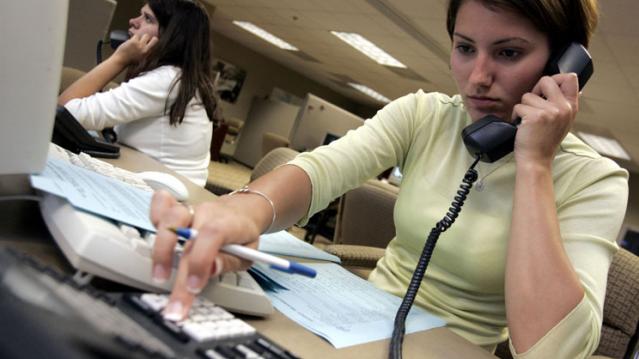
They’re working longer days and clocking weekend hours, but nearly nine in 10 employees are still happy at work and motivated to rise in their organizations, according to a new report from Staples Advantage, the business-to-business arm of Staples, Inc.
The study was not all positive, however. Twenty percent of all workers surveyed and 25 percent of millennials said they expected to change jobs in the next year. Many said they feel chained to their desks during the workday, and 53 percent say they are feeling burnt out.
About half of employees polled said that they feel they can’t get up for a break at all, and just under half eat lunch at their desk.
Related: The One Quick Way to Boost Worker Productivity
“While many are still happy at work, we have to ask whether it’s because they’re truly inspired and motivated, or simply conditioned to the new reality?” Dan Schwabel, founder of WorkplaceTrends.com said in a statement. “Either way, employers need to adjust to win the war for talent and optimize productivity, engagement, and loyalty with employees.”
A quarter of employees say they are working after the standard workday has ended, and about 40 percent work at least one weekend per month. More than a third of workers say they put in those extra hours in order to finish work they didn’t have time to get to, and 22 percent say it’s because they want to get ahead for the next day.
The survey also looked at factors that erode employee productivity, with workers citing email overload and inefficient meetings as top factors. One if five workers said that they spend more than two hours per day in meetings.
Navy Paying Microsoft Millions to Maintain Obsolete Windows XP

Microsoft first introduced Windows XP in 2001. Last April Microsoft discontinued official support for the software. However, one major customer just signed a $9.1 million contract with the company in exchange for ongoing support of the system. The customer? The U.S. Navy.
Although the Navy has begun transitioning away from XP, it has about 100,000 workstations still using the software, including computers on ships, submarines, and other vessels. The entire contract could wind up costing the Navy nearly $31 million if it lasts until the June 8, 2017 deadline, according to CNN Money.
The Navy didn’t acknowledge the termination of the software until Vice Admiral Ted Branch, deputy chief information officer for the Navy, issued a memo in July 2014 requiring all PCs to transition to Windows 7 by April 30, 2015.
While Windows XP no longer receives regular security updates, Microsoft will supply the United States Navy’s Space and Naval Warfare Systems Command (SPAWAR) with custom security fixes for its products. Without the updates, the Navy would be susceptible to security threats.
The Navy still operates numerous applications and programs that rely on older versions of Windows, according to Steven Davis, a spokesman for the Space and Naval Warfare Systems Command in San Diego.
The Navy isn’t the only Microsoft customer that’s a little behind on the times. The Army signed a support agreement with Microsoft in April, and the IRS is also paying for custom support. In the corporate world, a staggering 44 percent of corporations still have the software installed on at least one PC.
This Match Is Going Public
An IPO for Those Who Think Love and Money Is a Match

The Match Group, home of the hugely popular dating apps and sites Tinder, Match, Chemistry, OurTime, and OkCupid, will issue an IPO in the fourth quarter. Mashable is calling it “the world’s flirtiest IPO.” Barry Diller’s InterActive Corp. (IAC), which owns the Match Group and a slew of other Internet brands, also appointed Joey Levin, formerly the CEO of IAC’s Search & Applications, CEO of IAC.
Back in 1995 when Match.com first debuted, people were skeptical of online dating, but today, dating apps and sites are big business. According to IBISWorld, dating sites are expected to bring in $1.17 billion in revenue this year, with apps totaling another $628.8 million. Online dating accounts for 48.7 percent of the revenue from U.S. dating services, but mobile dating apps such as Tinder are on the rise with 26.2 percent of the market.
Related: The Startup That Turned Down $30 Million from Mark Cuban
The largest dating service companies are the Match Group, eHarmony, Zoosk, Plenty of Fish, and Spark Networks. The Match Group leads the category, with nearly 22 percent share of the market. The Wall Street Journal reported the Match Group accounted for nearly one-third, or 29 percent, of IAC’s overall revenue in 2014. In the most recent quarter, the Match Group’s revenue was $239.2 million, or 30 percent of IAC’s revenue of $772.5 million.
With their portfolio of dating sites in more than 200 countries the Match Group is well positioned to market to the large generation of millennials worldwide. More than 7 million people sign up for their products every month.
Related: Love at First Byte: The Magic of Online Dating
As for what the Match Group’s ticker symbol might be on the stock exchange, the company’s lips are sealed. Many of the good ones are already taken. LOV belongs to rival Spark Networks, owner of JDate.com, ChristianMingle.com, and BlackSingles.com. DATE is the ticker symbol for Jiayuan, China’s largest dating site. LUV is taken by Southwest Airlines. Arrythmia Research Technology has HRT.
Apparently KISS is still available—if the Match Group gets lucky.
Why U.S. Productivity May Be Worse Than We Think

The new economy may be making it easier for people to work from home and in other non-office settings, but it isn’t necessarily making us more productive.
This week, the Bureau of Labor statistics released new data, which showed that Americans spent more time working last year than at any time in the survey’s 12-year history. However, employers aren’t paying workers for those additional hours worked, according to a new research note from Michael Feroli, Chief Economist at J.P. Morgan
That’s bad news for workers, who are doing additional work without earning any additional compensation, but it’s also bad news for the economy. The BLS measures productivity growth (output divided by hours worked) based on the number of hours reported by the employer.
Related: The Do’s and Don’t’s of Boosting Your Productivity
Even by that measure, productivity expanded just 0.6 percent per year from 2010 to 2014, compared to 2.1 percent per year from 2003 to 2009. But when looking at productivity growth based on hours worked from an employees’ perspective, productivity has remained totally flat since 2010, according to Feroli.
What’s behind the discrepancy? Feroli writes that it may have to do with the way we work in today’s economy. “Technology can tether one to the office every minute of the day and in every place, regardless of whether the employer pays for that degree of connectedness.”