
After Hanging Back, Cameron Vows to Escalate Air Strikes Against ISIS
After losing a crucial 2013 parliamentary vote authorizing military force in Syria, Prime Minister David Cameron noticeably pulled Great Britain back from global affairs, effectively allowing other countries to address Russia’s invasion of Ukraine and the alarming growth in strength of ISIS.
Last January, President Obama reportedly told Cameron that Britain must adhere to its military spending commitment to NATO or set a damaging example to its European allies. Obama and other U.S. military officials have said that Britain’s failure to hit a military spending target of two percent of its Gross Domestic Product would be a serious blow to the military alliance.
Related: Britain Hangs Back As the U.S. Pays $2.2 Billion to Fight ISIS
In an about-face, Cameron on Sunday said he hopes to step up his country’s role in the allied air campaign against ISIS while also adopting new tough measures at home to try to stem the rise of jihadist activities.
In an interview with NBC’s Meet the Press, Cameron said talks were underway in Parliament about what more can be done to allow his country to take part in the U.S. led campaign against ISIS in Syria, as well as in Iraq.
Cameron’s Conservative Party won a surprisingly resounding reelection victory in May, and since then he has been talking about the need for Britain to step up to the plate more in helping the U.S. and other allies halt the spread of ISIS throughout the Middle East and North Africa. Although Parliament in 2013 rejected air strikes against ISIS in Syria, media reports last week revealed that British pilots embedded with coalition forces have been taking part in operations in Syria.
"In Syria we're helping not just with logistics, but surveillance and air-to-air refueling,” Cameron confirmed yesterday. “But we know we have to defeat ISIS, we have to destroy this caliphate whether it is in Iraq or in Syria--that is a key part of defeating this terrorist scourge that we face. I want Britain to do more. I'll always have to take my parliament with me," said Cameron.
Related: Why America’s War with ISIS Will Take Years
Cameron was expected to announce a five-year plan for fighting the terrorist group on Monday, according to The Sunday Times.
"I want to work very closely with President Obama, with other allies,” Cameron said. “Britain is now committed to its NATO two per cent defense spending target all the way through this decade. We've already carried out more air strikes in Iraq than anyone else other than the U.S., but I want us to step up and do more, what I call a full spectrum response,” he said on Meet the Press.”
Until recently, Cameron has sought to steer his country on a centrist path that included tough austerity measures and a dramatic scaling back of the United Kingdom’s military presence overseas. Those policies were only reinforced by Cameron’s strong showing at the polls.
Since the Great Recession, the British Army lost fully 20 percent of its troops--from 102,000 to 82,000 since 2010.
Related: How ISIS Could Drag the U.S. into a Ground Fight
British aircraft and unmanned drones have been used to attack ISIS emplacements in Iraq with more than 200 bombs and missiles, according to a recent report by The Guardian. ISIS targets included 20 buildings, at least two containers and 65 trucks. As the Guardian noted, British air operations are a small fraction of those carried out by U.S. aircraft and drones, which have struck more than 6,000 targets as part of Operation Inherent Resolve, according to recent Pentagon figures.
Watch Out, YouTube! Facebook Wants Your Video Action
It was only a matter of time before Facebook figured out a way to make money from the videos that are played on their platform. As Fortune points out, before now, video creators didn’t have a way to make money on the Facebook platform. That all changes today, with Facebook’s new plan to monetize videos and share the revenue with creators. The revenue arrangement is the same as YouTube’s: 55 percent of the money earned from ads goes to the creator, and 45 percent goes to Facebook. So far, the program has a couple of dozen partners who have signed up, including the NBA, Fox Sports, Hearst, and Funny or Die.
Related: Facebook gaining ground on YouTube in video ads, report says
Prior to the new plan, Feed videos would only play mutely until the user clicked on them. Now, when users play a video on mobile, they will get a feed of “Suggested Videos.” It’s not until a few of these videos play, that the user will see an actual ad. And these ads, unlike Facebook’s autoplay videos, will play with the sound turned on.
In the past few weeks, the social media giant has tested the “Suggested Videos” product with a small number of iOS users. Today the test goes wider, and will eventually expand to include Android and desktop users.
Unlike YouTube, which gives content creators 55 percent of the revenue from the ads it plays before videos, Facebook will divvy up the 55 percent in revenue among multiple creators or partners. For example, if you watched a three-minute video from the NBA, and a two-minute video from Funny or Die, the 55 percent in ad revenue would be split proportionately between the NBA and Funny or Die.
Related: Will Facebook Kill the News Media or Save It?
Industry experts fully expect video—especially mobile video—to be a major source of revenue for Facebook in the future since users already deliver four billion videos views daily. The company made $3.3 billion in ad revenue in the first quarter of 2015, 73 percent of it from mobile ads alone. For now, Facebook says it is focused on shorter video formats, not long-form video formats like TV shows and movies.
To date, YouTube has been the only major player in user-posted video, but Facebook is stepping up its game. It just announced to advertisers the option to pay for video ads only after a video has played for 10 seconds. It’s a response to announcements that Snapchat and Twitter are rolling out video divisions too. In May, Spotify added video-streaming to its music-streaming app. And Hulu, Yahoo, and AOL are also pushing their video strategies.
For content providers, it’s a new way to play—and pay.
Did Airlines Collude to Keep Air Fares High?
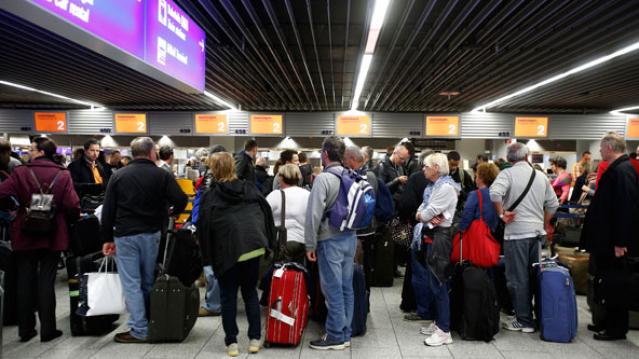
For months now, oil and gas prices have been dropping—and that includes jet fuel. So why haven’t airline ticket prices dropped as well? That’s one of the questions the Justice Department wants answered as it investigates the possibility of collusion among carriers to keep airfares high.
The DOJ also wants to know if companies conspired to limit the number of available seats in order to drive prices up. Yesterday, the Associated Press broke the news that major U.S. carriers had received a letter demanding copies of all communications the airlines had with each other, Wall Street analysts, and major shareholders about their plans for passenger-carrying capacity, going back to January 2010. The civil antitrust investigation is focusing on whether airlines illegally indicated to each other how quickly they would add new flights, routes, and extra seats in an effort to prop up ticket prices.
Related: 6 Sneaky Fees That Are Making Airlines a Bundle
Just minutes after the news broke, stocks of the major U.S. airlines fell four to five percent, with the S&P 500 airlines index off more than four percent. Until now, the U.S. airline industry had been enjoying record profits, due to increasing numbers of Americans flying and a huge drop in the price of jet fuel. In April, the price of jet fuel was $1.94 per gallon, a decrease of 34 percent from the previous year.
The investigation marks a notable shift for the Justice Department, which approved the merger of American Airlines and US Airways back in November 2013, despite previously blocking it over concerns that the airlines would collude on fares. The probe could signal a more aggressive approach on antitrust enforcement, under the strong leadership of Loretta Lynch, who was confirmed in April.
Justice Department spokesperson Emily Pierce confirmed that the department was investigating potential “unlawful coordination” among some airlines.
Just two weeks ago, U.S. Senator Richard Blumenthal (D-CT) urged the Justice Department to investigate what he called “anti-competitive, anti-consumer conduct and misuse of market power in the airline industry.”
Related: United Airlines Bullish on First Quarter from Lower Fuel Costs
Since 2008, various mergers have resulted in four major airlines (down from nine)—American, Delta, Southwest, and United—controlling about 80 percent of all domestic air travel. All four airlines have confirmed that they received the letter and that they were cooperating with the investigation.
According to Bureau of Transportation Statistics, the average domestic airfare rose 13 percent from 2009 to 2014 (adjusted for inflation). The average domestic flight last year cost $391. In the past year alone, airlines received an additional $3.6 billion from bag fees and another $3 billion from reservation-change fees. All of the major airlines—American Airlines, United Continental Holdings, Delta Air Lines, Southwest Airlines, JetBlue Airways, and Alaska Air Group—posted record profits with a consolidated net income of over $3 billion during the first quarter of 2015.
Here’s Why Whole Foods Is Apologizing to Customers
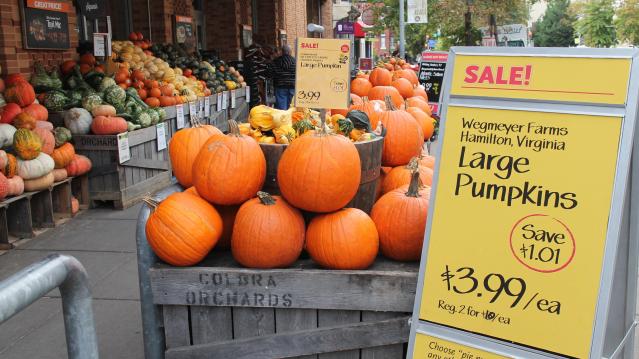
Stocking up at Whole Foods for a Fourth of July Bar-B-Q this weekend? Better double check the prices you’re paying.
Most customers expect to pay high prices at Whole Foods. The gourmet supermarket is often jokingly referred to as “Whole Paycheck.” But in its New York stores, the grocer may have gone too far.
The company’s co-CEOs admitted in a video shared online yesterday that workers in the stores had been mislabeling the weights of its prepared foods. “Straight up, we made some mistakes,” co-CEO Walter Robb said in the video.
Related: Born in the USA—24 Iconic American Foods
The executives never said the word “sorry,” but said that they would retrain their workers, implement a third-party auditing system, and give items for free to customers who found a mistake not in their favor.
The New York City Department of Consumer Affairs announced last week that an investigation had tested 80 types of prepackaged foods and found that all of them had mislabeled weights.
“It is unacceptable that New Yorkers shopping for a summer BBQ or who grab something to eat from the self-service aisles at New York City’s Whole Foods stores have a good chance of being overcharged,” DCA Commissioner Julie Menin said in a statement announcing the investigation last week. “Our inspectors tell me this is the worst case of mislabeling they have seen in their careers.”
Want to Boost the Value of Your House? Get High-Speed Internet
Having trouble selling your house? A slow Internet connection may be to blame.
Recently, The Wall Street Journal reported that “the availability of speedy Internet service is starting to affect Americans’ biggest purchase: their homes.”
In a study released earlier this week, researchers at the University of Colorado and Carnegie Mellon found that fiber-optic connections can add $5,437 to the price of a $175,000 home. A 2014 study by the University of Wisconsin at Whitewater showed similar results. It found that high-speed access could add $11,815 to the value of a $439,000 vacation house in Door County, Wisconsin.
Related: FCC Change Means Millions No Longer Have Broadband Internet
Some real estate agents are going so far as to tout high-speed Internet service in listings, along with the number of bathrooms and other desirable features.
For most Americans, adding a high-speed Internet line is relatively cheap and easy. And it sure beats renovating the kitchen.
The $2.6 Billion Gay Wedding Boom
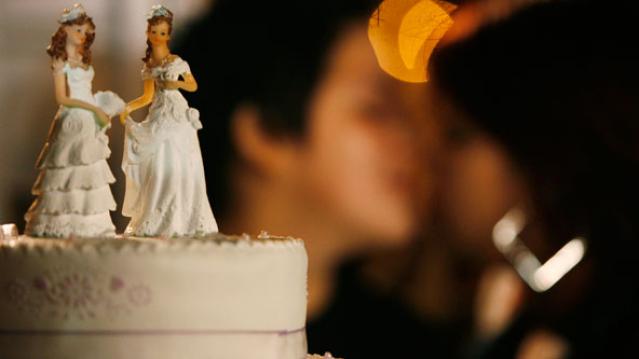
States in the Southeast that had banned gay marriage prior to last week’s Supreme Court decision legalizing it stand to gain the most from the ruling financially, according to a report compiled at the end of last year by the Williams Institute at UCLA and Credit Suisse.
The study found that states in the Southeast could see a total economic benefit of $733 million in the first three years after legalization of gay marriage, thanks to pent up demand and increased spending on weddings and tourism.
Researchers estimated that gay marriage spending nationwide could reach $2.6 billion over the next three years. Gay couples tend to have smaller weddings, with an average of less than 80 guests, according to TheKnot.
Related: How Gay Marriage Can Help Reduce the Deficit
Men spend an average of $15,992 on their wedding, while women spend an average of $13,055. More than 20 percent of gay couples spend more than $20,000 on their nuptials. The average opposite-sex marriage costs more than $31,000.
In addition to boosting consumer spending, which helps GDP, the ruling may also be a boon to federal coffers. While married couples now benefit from the financial protections of marriage, they also now have to pay the tax penalty.
The legalization of gay marriage in New York in 2011 led to an estimated $259 million in spending and $16 million in revenues for New York City, according to the mayor’s office.