
After Hanging Back, Cameron Vows to Escalate Air Strikes Against ISIS
After losing a crucial 2013 parliamentary vote authorizing military force in Syria, Prime Minister David Cameron noticeably pulled Great Britain back from global affairs, effectively allowing other countries to address Russia’s invasion of Ukraine and the alarming growth in strength of ISIS.
Last January, President Obama reportedly told Cameron that Britain must adhere to its military spending commitment to NATO or set a damaging example to its European allies. Obama and other U.S. military officials have said that Britain’s failure to hit a military spending target of two percent of its Gross Domestic Product would be a serious blow to the military alliance.
Related: Britain Hangs Back As the U.S. Pays $2.2 Billion to Fight ISIS
In an about-face, Cameron on Sunday said he hopes to step up his country’s role in the allied air campaign against ISIS while also adopting new tough measures at home to try to stem the rise of jihadist activities.
In an interview with NBC’s Meet the Press, Cameron said talks were underway in Parliament about what more can be done to allow his country to take part in the U.S. led campaign against ISIS in Syria, as well as in Iraq.
Cameron’s Conservative Party won a surprisingly resounding reelection victory in May, and since then he has been talking about the need for Britain to step up to the plate more in helping the U.S. and other allies halt the spread of ISIS throughout the Middle East and North Africa. Although Parliament in 2013 rejected air strikes against ISIS in Syria, media reports last week revealed that British pilots embedded with coalition forces have been taking part in operations in Syria.
"In Syria we're helping not just with logistics, but surveillance and air-to-air refueling,” Cameron confirmed yesterday. “But we know we have to defeat ISIS, we have to destroy this caliphate whether it is in Iraq or in Syria--that is a key part of defeating this terrorist scourge that we face. I want Britain to do more. I'll always have to take my parliament with me," said Cameron.
Related: Why America’s War with ISIS Will Take Years
Cameron was expected to announce a five-year plan for fighting the terrorist group on Monday, according to The Sunday Times.
"I want to work very closely with President Obama, with other allies,” Cameron said. “Britain is now committed to its NATO two per cent defense spending target all the way through this decade. We've already carried out more air strikes in Iraq than anyone else other than the U.S., but I want us to step up and do more, what I call a full spectrum response,” he said on Meet the Press.”
Until recently, Cameron has sought to steer his country on a centrist path that included tough austerity measures and a dramatic scaling back of the United Kingdom’s military presence overseas. Those policies were only reinforced by Cameron’s strong showing at the polls.
Since the Great Recession, the British Army lost fully 20 percent of its troops--from 102,000 to 82,000 since 2010.
Related: How ISIS Could Drag the U.S. into a Ground Fight
British aircraft and unmanned drones have been used to attack ISIS emplacements in Iraq with more than 200 bombs and missiles, according to a recent report by The Guardian. ISIS targets included 20 buildings, at least two containers and 65 trucks. As the Guardian noted, British air operations are a small fraction of those carried out by U.S. aircraft and drones, which have struck more than 6,000 targets as part of Operation Inherent Resolve, according to recent Pentagon figures.
The $20 million ‘Boondoggle That Won’t Die’ Finally Gets Zapped
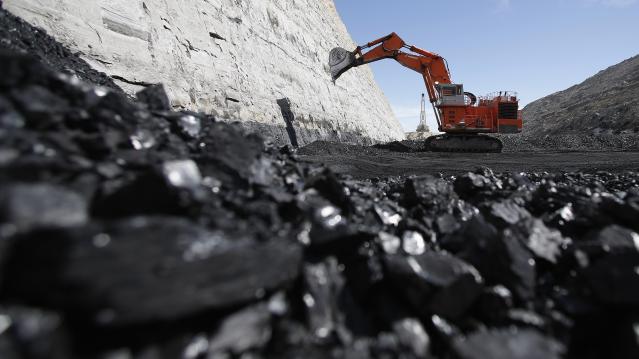
The House on Wednesday night voted 252 to 179 to wipe out a $20 million-a-year sop to Pennsylvania’s struggling anthracite coal industry that critics had tagged “the boondoggle that just won’t die.
As The Fiscal Times reported earlier this week, the Defense Department has been required every year to ship 5,000 to 9,000 tons of coal mined from the rugged hills of Tamaqua in northeast Pennsylvania to the small town of Kaiserslauntern in southwestern Germany to be used by a local utility to heat a large U.S. military maintenance and repair installation.
The provision, for decades tucked away in the massive defense appropriations bill, was the remnant of a half-century old taxpayer rip-off that the Defense Department has been trying to get rid of for years.
Related: The $20 Million Political Boondoggle That Just Won’t Die
“For decades, the Department of Defense has urged Congress to remove this earmark and allow the use of cheaper fuel to power its military bases. Today we finally achieve that … saving taxpayers millions of dollars each year,” said Rep. Jared Huffman (D-CA), who co-sponsored an amendment with Rep. Tom McClintock (R-CA) to eliminate the benefit to the Pennsylvania coal industry.
“The passage of this amendment is proof-positive that Republicans and Democrats can work together to cut wasteful spending while protecting the environment,” he added. “It’s about time we stopped burning dirty coal—and taxpayer dollars—to power this military base.”
End Game for the $20 Million 'Boondoggle That Won't Die'?
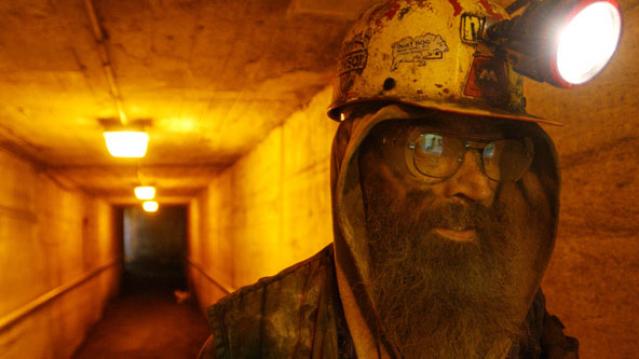
It has been called “the boondoggle that won’t die,” a decades’ old provision within the massive defense appropriations bill that requires a large U.S. Air Force and Army base 4,000 miles away in Germany to heat its facilities with anthracite coal mined in northeast Pennsylvania.
Although the utility at the military base in the small town of Kaiserslauntern in southwest Germany could readily purchase cheaper domestic coal or natural gas to fire its boilers, a legislative mandate dating back to the post-World War II era requires it to use 5,000 to 9,000 tons of Pennsylvania coal shipped overseas. Since 1972 each Department of Defense Appropriations Act has included an earmark requiring the Pentagon to purchase this coal.
Related: The $20 Million Political Boondoggle That Just Won’t Die
Taxpayers for Common Sense and about a half dozen other government watchdog groups have railed against the provision, which costs about $20 million a year, as one of the worst examples of waste in the budget. And late on Wednesday the House was scheduled to consider an amendment to the fiscal 2016 defense appropriations bill to finally knock it out.
Two Californians -- Democratic Rep. Jared Huffman and Republican Rep. Tom McClintock – have co-sponsored an amendment that would finally eliminate the resilient sop to Pennsylvania’s long-withering coal industry.
“It’s about time we stopped burning dirty coal – and taxpayer dollars – to power this military base,” Huffman said in a statement.
4 Signs It’s a Sellers’ Market in Real Estate Right Now

It’s a great time to be a home seller.
After years of dealing with hesitant buyers and disappointing home values, those with homes on the market are enjoying the benefits of a true sellers’ market in most regions of the country.
Home prices in April increased nearly 7 percent from the previous year, according to CoreLogic. And a survey from Coldwell Banker released today list four reasons sellers are sitting prettier:
1. Homes are selling even faster than in the pre-recession years. More than a quarter (28 percent) of today’s sellers were able to sell their home in less than two weeks. By comparison, only 19 percent of homes sold in that time frame in 2006-2007.
Related: 9 Real Estate Trends to Watch in 2015
2. The bidding war is back. Nearly half (47 percent) of today’s sellers are reporting receiving multiple offers on their home, up from just 40 percent from 2010-2013.
3. Homes are selling for more than the list price. Those bidding wars are pushing the sales price of home past the asking price. Of today’s sellers surveyed, 27 percent said they had sold their home for more than the list price. During the recession, just 14 percent of sellers reported doing so.
4. Sellers no longer feel pressure to take the first offer received. Less than half of today’s sellers take the first offer they receive, down from nearly 60 percent during the recession and in the early years of the recovery.
Sick, Uninsured and Charged 10 Times the Cost of Hospital Care
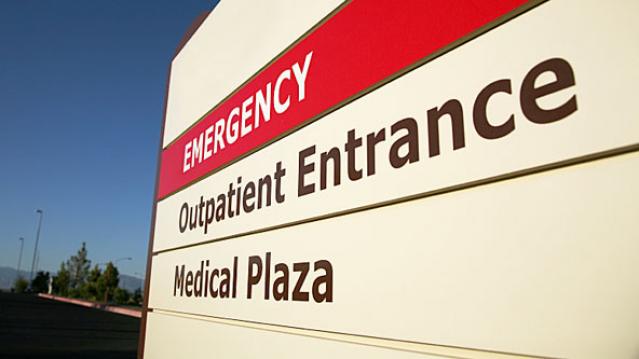
A pack of for-profit hospitals are taking too many liberties with their for-profit names. A new study by Health Affairs found 50 hospitals in the U.S. have markups over 10 times the actual cost of care. The data was found using 2012 Medicare cost reports.
At the top of the list is North Okaloosa Medical Center, located about an hour outside of Pensacola, Fla. The hospital was found to charge uninsured patients 12.6 times the actual cost of patient care. A typical hospital charges 3.4 times the cost of patient care.
The largest numbers of the hospitals on the list – 20 – are in Florida. Of the 50, 49 are for-profit and 46 are owned by for-profit hospital systems. One for-profit hospital system, Community Health Systems, owns and operates 25 of the hospitals on the list. Hospital Corporation of America operates 14 others.
Related: If SCOTUS Rule Against Obamacare, Health Care Costs Will Soar
Uninsured individuals are commonly asked to pay the full amount, unaware they are being scammed. The markups can lead to personal bankruptcy or the avoidance of necessary medical attention.
"The main causes of these extremely high markups are a lack of price transparency and negotiating power by uninsured patients, out-of network patients, casualty and workers' compensation insurers and even in-network insurers," the study reads. "Federal and state policymakers need to recognize the extent of hospital markups and consider policy solutions to contain them."
Most astounding of all, these markups are not illegal. Maryland and West Virginia are the only states with laws limiting hospital fees.
Researchers offered solutions in the study, including limitations on the charge-to-cost ratio, mandated price disclosure to regulate the markups or some form of all-payer rate setting.
Those Record Job Openings Weren’t All for Burger Flippers
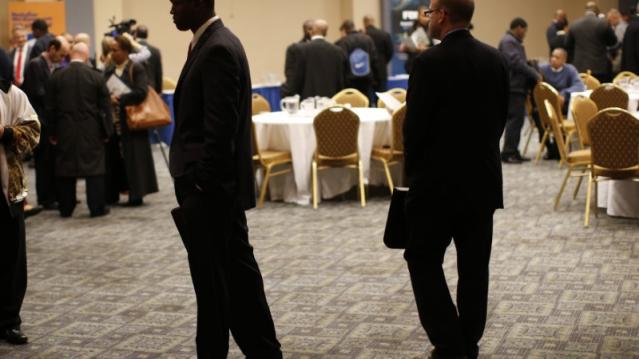
Not only did job openings increase to 5.4 million in April, the highest number from the Labor department in 15 years, but the quality of the jobs was impressive, too. The openings included positions in finance (+13,000) and in architectural and engineering services (+5,000).
Overall, service-sector job growth outpaced gains made last year. The majority of jobs were in professional business services (+63,000), leisure and hospitality (+57,000) and health care (+47,000). Employment in retail also edged up (+32,000), as well as in construction (+17,000). The biggest increase in vacancies was in the West, but businesses across the nation are looking for new hires.
Related: 10 Best Cities for Job Seekers
Mining, logging and oil and gas drilling all posted decreases. Employment in those industries increased by 41,000 in 2014, but the striking decline in prices for oil and other commodities has taken a toll, with employment dropping by 68,000 thus far.
In another reassuring sign, unemployment has fallen to 5.5% from 6.3% at this time last year.