
Don’t Feel Like a Chump When You Close on Your New Mortgage

Mortgage closing costs dropped 7 percent over the past year, falling to $1,847 on a $200,000 loan, according to a new analysis by Bankrate.
Typical closing costs varied by state, ranging from $2,163 in Hawaii to $1,613 in Ohio. You can find the average rate for your state in the table below.
Lenders compete for business, so shopping around with at least three mortgage providers can help you reduce the fees associated with your loan. “Homebuyers have more say over closing costs than they think,” Bankrate Senior Mortgage Analyst Holden Lewis said in a statement.
Even as banks lower their mortgage fees, they’re increasing fees in most other categories, according to MoneyRates.com.
While lower mortgage fees are good news for homebuyers and those refinancing their loans, the average saving amount to just $140. That’s not much relative to the total costs associated with buying a house. The average down payment for homebuyers in the first quarter of 2015 was $57,710, for example.
Related: Want Your Own Home? Here’s How to Do the Math
The costs don’t stop once the buyers move in. On top of mortgage payments, homeowners face an average of more than $6,000 in additional costs related to their house, including homeowners insurance, property taxes and utilities.
The National Association of Realtors expects home prices to increase 6.5 percent this year to a median $221,900, which would put them at the same level as their 2006 record high.
For buyers, better news than the lower mortgage fees is that rates remain relatively low, falling to 3.98 percent last week, per Freddie Mac.
Closing costs | |||
|---|---|---|---|
| State | Average origination fees | Average third-party fees | Average origination plus third-party fees |
| Alabama | $1,066 | $776 | $1,842 |
| Alaska | $935 | $922 | $1,857 |
| Arizona | $1,208 | $761 | $1,969 |
| Arkansas | $1,057 | $760 | $1,817 |
| California | $937 | $896 | $1,834 |
| Colorado | $1,192 | $719 | $1,910 |
| Connecticut | $1,074 | $960 | $2,033 |
| Delaware | $904 | $924 | $1,828 |
| District of Columbia | $1,077 | $718 | $1,794 |
| Florida | $1,028 | $778 | $1,806 |
| Georgia | $1,058 | $821 | $1,879 |
| Hawaii | $1,033 | $1,130 | $2,163 |
| Idaho | $894 | $788 | $1,682 |
| Illinois | $1,080 | $767 | $1,847 |
| Indiana | $1,067 | $770 | $1,837 |
| Iowa | $1,161 | $762 | $1,923 |
| Kansas | $1,047 | $753 | $1,800 |
| Kentucky | $1,060 | $737 | $1,797 |
| Louisiana | $1,060 | $817 | $1,877 |
| Maine | $897 | $830 | $1,727 |
| Maryland | $1,093 | $742 | $1,835 |
| Massachusetts | $905 | $851 | $1,756 |
| Michigan | $1,072 | $746 | $1,818 |
| Minnesota | $1,067 | $689 | $1,757 |
| Mississippi | $1,046 | $837 | $1,884 |
| Missouri | $1,040 | $792 | $1,833 |
| Montana | $1,062 | $855 | $1,917 |
| Nebraska | $1,047 | $770 | $1,817 |
| Nevada | $1,002 | $848 | $1,850 |
| New Hampshire | $1,084 | $750 | $1,835 |
| New Jersey | $1,181 | $913 | $2,094 |
| New Mexico | $1,076 | $876 | $1,952 |
| New York | $1,032 | $879 | $1,911 |
| North Carolina | $1,036 | $875 | $1,911 |
| North Dakota | $1,045 | $791 | $1,836 |
| Ohio | $933 | $681 | $1,613 |
| Oklahoma | $1,027 | $734 | $1,761 |
| Oregon | $1,080 | $785 | $1,864 |
| Pennsylvania | $1,055 | $678 | $1,733 |
| Rhode Island | $1,093 | $802 | $1,896 |
| South Carolina | $1,058 | $837 | $1,895 |
| South Dakota | $1,055 | $704 | $1,759 |
| Tennessee | $1,033 | $773 | $1,806 |
| Texas | $1,031 | $833 | $1,864 |
| Utah | $909 | $788 | $1,697 |
| Vermont | $1,074 | $862 | $1,936 |
| Virginia | $1,050 | $787 | $1,837 |
| Washington | $1,077 | $824 | $1,901 |
| West Virginia | $1,067 | $904 | $1,971 |
| Wisconsin | $1,047 | $723 | $1,770 |
| Wyoming | $874 | $814 | $1,689 |
| Average | $1,041 | $807 | $1,847 |
Bankrate.com surveyed up to 10 lenders in each state in June 2015 and obtained online Good Faith Estimates for a $200,000 mortgage to buy a single-family home with a 20 percent down payment in a prominent city. Costs include fees charged by lenders, as well as third-party fees for services such as appraisals and credit reports. The survey excludes title insurance, title search, taxes, property insurance, association fees, interest and other prepaid items.
Top Reads from The Fiscal Times:
- You’re Richer Than You Think. Really.
- The 10 Fastest-Growing Jobs Right Now
- The 5 Worst Cities to Raise a Family
The Top 10 Cities Where Small-Biz Jobs Are Growing
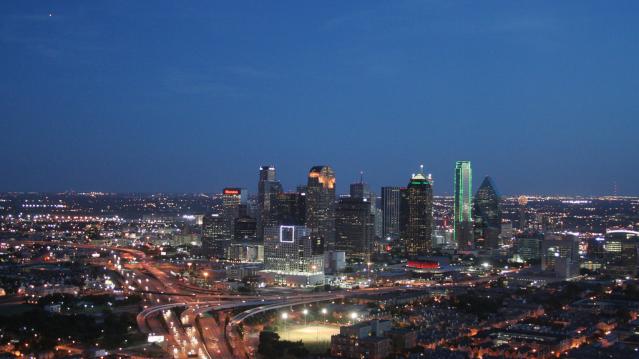
Small businesses have been hiring, though at a slower rate than this time last year, according to the Paychex|IHS job index.
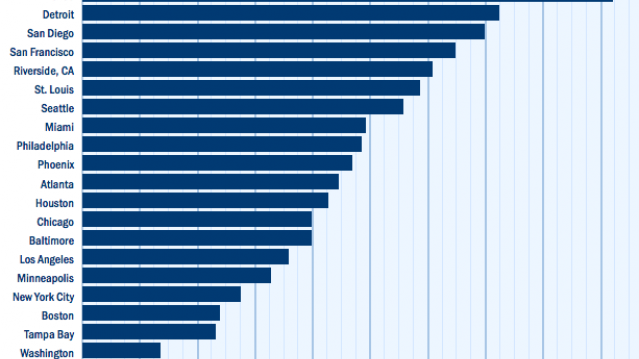
For the 11th month in a row, Dallas’s small businesses have shown the most employment gains. The city boasts the top 12-month growth rate at 1.38 percent. Detroit (1.35 percent), San Diego (1.27 percent), Baltimore and St. Louis (both 1.13 percent) round out the top five. Houston’s recent performance is also impressive, with a rebound in growth rates over the past three months compared with declines during the rest of the year.
Related: This Is the Best Time Since the Recession to Get a Small Business Loan
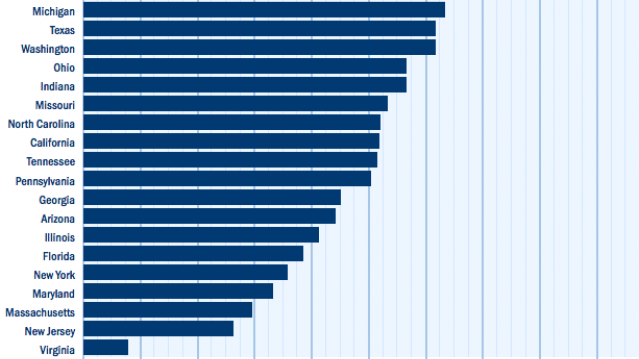
Only five states saw positive gains in employment rates over the past year, and none of them increased by a full statistical point. One notable state is Michigan, which ranks second behind Wisconsin, as the state with the highest employment gains in small businesses since 2004. It also came in second for highest gains in the past year.
The index numbers used by Paychex for cities and states is based on the current small business employment rate as compared with 2004. Paychex uses 2004 as the base period to compare current gains against because it was a year of expansion for small businesses. Below 100, and the rate is lower than in 2004. Above 100, and the rate is higher than in 2004.
The charts below rank the cities and states based on their index levels.
Top Reads from The Fiscal Times
- Why McDonald’s could Suddenly Be Responsible for Millions of New Employees
- The 10 Worst States for Property Taxes
- U.S. Companies Are Dying Faster than Ever
Jeb Bush Fires Back at Trump, but Is Anyone Listening?
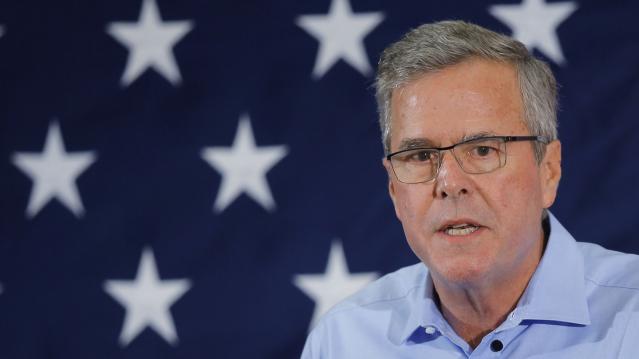
Despite the sizzling Summer of Trump, Jeb Bush and the rest of the Republican establishment still don’t get it.
Bush just released an 80-second video entitled “The Real Donald Trump”, as flagged by Mike Allen in his Politico Playbook note this morning, in a slick effort to attack Trump by using his own words against him. That’s a classic campaign tactic, of course, and the effort by the Bush campaign is aimed at painting the bombastic real estate mogul from New York as a fake conservative – someone whose core values and views are anathema to Republicans in Iowa, where the Real Clear Politics poll average puts Trump in the lead for the GOP Caucuses with 21.3 percent.
Related: Two New Polls Show Exactly Why Donald Trump Is Winning
Here’s a sampling from the video:
Talking to Tim Russert on Meet the Press, 1999:
- “I’ve lived in New York City and Manhattan all my life, so you know my views are a little bit different than if I lived in Iowa.”
- “I am very pro-choice. I am pro-choice in every respect.”
From a 1999 Fox News clip:
- “As far as single-payer [heathcare system], it works in Canada. It works incredibly well in Scotland.”
Talking to Wolf Blitzer on CNN:
- Who would you like representing the United States in a deal with Iran? “I think Hillary would do a good job.”
- Do you identify more as a Democrat or a Republican? “Well, you’d be shocked if I said that in many cases I probably identify more as a Democrat.”
From a 2001 Fox News clip:
- “Hillary Clinton is a terrific woman. I’m a little biased because I’ve known her for years.”
Some of the clips are 15 years old or older and show Trump for what he was: a New Yorker with unremarkable New York liberal/centrist positions on a lot of issues.
Related: Fiorina PAC: CNN and GOP Are Conspiring Against Carly
The big question for Bush and other Republican politicians in the race is: Does it matter that much where Trump once stood or even where he now stands? If it doesn’t, that is going to make taking him down even more difficult.
What Trump is selling is unvarnished authenticity to an electorate tired of politicians who try to be all things to all people. You’re not going to catch Trump courting the gun crowd by saying he likes to hunt small varmints, like the patrician Mitt Romney did. Or donning a Rocky the Squirrel hat and riding around in a tank like Mike Dukakis did in 1988 to try to show he could be a credible commander-in-chief.
Mad-as-hell voters are sick of phoniness and goofy photo ops. When will the career politicians get that?
The 5 Worst States for Drivers
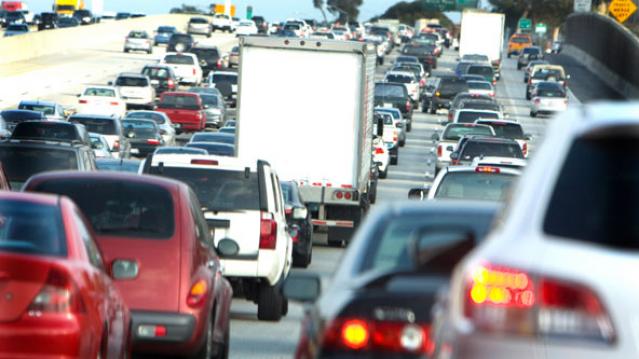
Folks in California and Washington might want to consider installing extra security devices on their cars. Bankrate says that California ranks as the worst state in the nation for car theft, with Washington not far behind. California has 431 car thefts per 100,000 people, while Washington has 407. The national average is 220.
Theft isn’t the only problem facing car owners. Bankrate also looked at data for other factors including fatal crashes, average commute times, gasoline and repair costs and insurance premiums to create a comprehensive ranking of the best and worst state for drivers.
Louisiana was named the worst state for drivers overall, mainly because of its above-average rate of fatal crashes. The Bayou State has 1.5 fatal crashes per 100 miles driven, while the national average is 1.1. Not surprisingly, it has the highest car insurance costs in the country. The state’s five-year average for a car insurance premium is $1,279, almost $300 more than the national average of $910.
Related: The Amazingly Stupid Things Smartphone Users Do While Driving
Thanks to its low gas and insurance costs, below-average theft and short commute times, Idaho ranks as the best state for drivers overall. Annual gas costs come to $733, more than $200 below the national average. Car insurance costs are typically around $656 and car thefts occur at a rate of 95 per 100,000 people. The average commute time for individuals each way is 19.5 minutes, nearly five minutes below the national average.
Here are the five best and the worst states for drivers:
5 Worst States for Drivers
1. Louisiana
2. California
3. Texas
4. Maryland
5. New Jersey
5 Best States for Drivers
1. Idaho
2. Vermont
3. Wyoming
4. Wisconsin
5. Minnesota
Top Reads From The Fiscal Times
- The 10 Safest Countries to Visit
- 6 Reasons Gas Prices Could Fall Below $2 a Gallon
- The 5 Worst Cities to Raise A Family
Google Tackles One of the Most Annoying Problems on the Internet
We’ve all been there: You’re surfing the Web and all of a sudden voices start coming out of nowhere. Quickly, you scramble to figure out which browser tab the autoplay media is coming from, and click around wildly trying to silence the offending intrusion.
If only there were some way to prevent such sonic irritations. According to Google, now there is.
Finally recognizing the problem of background audio from a video or ad that starts playing in a tab you’re not using, Google Chrome is now offering a solution. While Chrome already provided an icon that told you which tab was playing the audio, new versions of the browser let you mute the tabs with one click. And it gets even better.
Related: If You’re Reading This, Your Browser Could Be Hacked
Chrome will no longer automatically play media from backgrounded tabs unless you actually visit the tab. Not only does this feature reduce the annoyance of unwanted sound and trying to figure out where it’s coming from, but according to Google it will also conserve power. Chrome will consume less of your battery by playing only the videos and ads in the visible tab.
Take a (silent) bow, Google. You’ve earned it.
Top Reads From The Fiscal Times
- Air Force Brushes Off $27 Billion Accounting Error
- The 10 Worst States for Property Taxes
- If Clinton Loses Her Security Clearance, Could She Still Be President?
Facebook Hit a Mind-Boggling Milestone This Week
You know what’s cooler than having hundreds of millions of people use your product every day? Having a billion people use it in one day.
That’s what happened for Facebook for the first time on Monday when more than a billion people logged on to the social network, according to a post on CEO Mark Zuckerberg’s page. That’s one in seven people worldwide.
That means that a billion people potentially saw the ads that help generate the revenue that has powered Facebook’s growth. In particular, Facebook has been at the forefront of the shift toward earning ad dollars via online video, the fastest-growing digital advertising category.
Related: Will Facebook Kill the News Media or Save It?
Zuckerberg didn’t mention revenue in his post. Instead, he wrote that he is proud of the community built by the social network and said that connecting the world is making it a better place. “It brings stronger relationships with those you love, a stronger economy with more opportunities, and a stronger society that reflects all of our values.”
The milestone comes as the social network has been moving aggressively to monitor user habits and expand its product offerings to include instant messaging, photo-sharing and now a new virtual assistant. It has also explored moving into the e-wallet space and is reportedly looking into developing a credit rating system based on a user’s network.
While a billion users a day is nothing to scoff at, the company—as always—is dreaming bigger. Last month, Facebook finished construction of a drone that it hopes will provide Internet access to remote parts of the world. That way everyone everywhere can be wished a “Happy Birthday” by 300 people they haven’t spoken to in years.