
Don’t Feel Like a Chump When You Close on Your New Mortgage

Mortgage closing costs dropped 7 percent over the past year, falling to $1,847 on a $200,000 loan, according to a new analysis by Bankrate.
Typical closing costs varied by state, ranging from $2,163 in Hawaii to $1,613 in Ohio. You can find the average rate for your state in the table below.
Lenders compete for business, so shopping around with at least three mortgage providers can help you reduce the fees associated with your loan. “Homebuyers have more say over closing costs than they think,” Bankrate Senior Mortgage Analyst Holden Lewis said in a statement.
Even as banks lower their mortgage fees, they’re increasing fees in most other categories, according to MoneyRates.com.
While lower mortgage fees are good news for homebuyers and those refinancing their loans, the average saving amount to just $140. That’s not much relative to the total costs associated with buying a house. The average down payment for homebuyers in the first quarter of 2015 was $57,710, for example.
Related: Want Your Own Home? Here’s How to Do the Math
The costs don’t stop once the buyers move in. On top of mortgage payments, homeowners face an average of more than $6,000 in additional costs related to their house, including homeowners insurance, property taxes and utilities.
The National Association of Realtors expects home prices to increase 6.5 percent this year to a median $221,900, which would put them at the same level as their 2006 record high.
For buyers, better news than the lower mortgage fees is that rates remain relatively low, falling to 3.98 percent last week, per Freddie Mac.
Closing costs | |||
|---|---|---|---|
| State | Average origination fees | Average third-party fees | Average origination plus third-party fees |
| Alabama | $1,066 | $776 | $1,842 |
| Alaska | $935 | $922 | $1,857 |
| Arizona | $1,208 | $761 | $1,969 |
| Arkansas | $1,057 | $760 | $1,817 |
| California | $937 | $896 | $1,834 |
| Colorado | $1,192 | $719 | $1,910 |
| Connecticut | $1,074 | $960 | $2,033 |
| Delaware | $904 | $924 | $1,828 |
| District of Columbia | $1,077 | $718 | $1,794 |
| Florida | $1,028 | $778 | $1,806 |
| Georgia | $1,058 | $821 | $1,879 |
| Hawaii | $1,033 | $1,130 | $2,163 |
| Idaho | $894 | $788 | $1,682 |
| Illinois | $1,080 | $767 | $1,847 |
| Indiana | $1,067 | $770 | $1,837 |
| Iowa | $1,161 | $762 | $1,923 |
| Kansas | $1,047 | $753 | $1,800 |
| Kentucky | $1,060 | $737 | $1,797 |
| Louisiana | $1,060 | $817 | $1,877 |
| Maine | $897 | $830 | $1,727 |
| Maryland | $1,093 | $742 | $1,835 |
| Massachusetts | $905 | $851 | $1,756 |
| Michigan | $1,072 | $746 | $1,818 |
| Minnesota | $1,067 | $689 | $1,757 |
| Mississippi | $1,046 | $837 | $1,884 |
| Missouri | $1,040 | $792 | $1,833 |
| Montana | $1,062 | $855 | $1,917 |
| Nebraska | $1,047 | $770 | $1,817 |
| Nevada | $1,002 | $848 | $1,850 |
| New Hampshire | $1,084 | $750 | $1,835 |
| New Jersey | $1,181 | $913 | $2,094 |
| New Mexico | $1,076 | $876 | $1,952 |
| New York | $1,032 | $879 | $1,911 |
| North Carolina | $1,036 | $875 | $1,911 |
| North Dakota | $1,045 | $791 | $1,836 |
| Ohio | $933 | $681 | $1,613 |
| Oklahoma | $1,027 | $734 | $1,761 |
| Oregon | $1,080 | $785 | $1,864 |
| Pennsylvania | $1,055 | $678 | $1,733 |
| Rhode Island | $1,093 | $802 | $1,896 |
| South Carolina | $1,058 | $837 | $1,895 |
| South Dakota | $1,055 | $704 | $1,759 |
| Tennessee | $1,033 | $773 | $1,806 |
| Texas | $1,031 | $833 | $1,864 |
| Utah | $909 | $788 | $1,697 |
| Vermont | $1,074 | $862 | $1,936 |
| Virginia | $1,050 | $787 | $1,837 |
| Washington | $1,077 | $824 | $1,901 |
| West Virginia | $1,067 | $904 | $1,971 |
| Wisconsin | $1,047 | $723 | $1,770 |
| Wyoming | $874 | $814 | $1,689 |
| Average | $1,041 | $807 | $1,847 |
Bankrate.com surveyed up to 10 lenders in each state in June 2015 and obtained online Good Faith Estimates for a $200,000 mortgage to buy a single-family home with a 20 percent down payment in a prominent city. Costs include fees charged by lenders, as well as third-party fees for services such as appraisals and credit reports. The survey excludes title insurance, title search, taxes, property insurance, association fees, interest and other prepaid items.
Top Reads from The Fiscal Times:
- You’re Richer Than You Think. Really.
- The 10 Fastest-Growing Jobs Right Now
- The 5 Worst Cities to Raise a Family
Trump’s ‘Make America Great Again’ Hat Is Already Sold Out

Maybe it’s just another lesson in the art of the deal.
Donald Trump had the Internet flipping out — again — on his visit to the Mexican border last week by covering his signature orange coif with an ill-fitting white cap emblazoned with his campaign slogan, “Make America Great Again” — a slogan made famous by Ronald Reagan but recently trademarked by Trump.
Related: Trump Just Showed Why His Campaign Is Doomed
While Trump’s campaign website doesn’t yet have a store, the hats quickly went on sale at Trump Tower in midtown Manhattan, a destination for tourists and some Fifth Avenue shoppers. The hats are available for $20 in a choice of red, blue or the white version Trump wore.
Or make that were available. As of Monday, the initial order of the Republican presidential candidate’s caps were sold out. A salesperson said the store expected to have them back in stock by the end of the week. In the meantime, the store still had plenty of $15 “Make America Great Again” t-shirts for sale. And if you’re really desperate to get your hands on Trump’s new lid, there are plenty of knockoffs popping up online.
Top Reads From The Fiscal Times:
- Donald Trump Just Showed Why His Campaign Is Doomed
- Bernie Won’t Be President, but He’s Still Bad News for the GOP
- Donnybrook in the Senate as Cruz Takes On McConnell
5 Cities with the Most Credit Card Debt
Why is the Lone Star State racking up so much debt? Its two largest cities—Dallas and Houston/Fort Worth make the list of the cities with the most credit card debt, and San Antonio comes in as No. 1.
The new study from CreditCards.com used credit report data from Experian to compare the average credit card debt in the 25 largest U.S. metro areas with each area’s median income. It assumed that 15 percent of a person's monthly income would be spent on paying down credit card debt.
The analysis claims it would take San Antonio residents with median incomes of $27,491 a full 16 months to pay off an average of $4,880, making monthly payments of $344 a month. By comparison, a resident of San Francisco making $42,613 a year would pay off $4,393 in credit card debt with nine monthly payments of $533 per month.
The cities with the highest credit card debt burdens were:
- San Antonio
- Dallas/Fort Worth
- Atlanta
- Miami/Fort Lauderdale
- Houston
Related: 5 Reasons to Pay Off Your Credit Card Debt Now
The metro areas with the highest debt don’t necessarily have the highest debt burdens when adjusted for income. For example, Washington, D.C. has the nation’s highest average credit card debt at $5,046, but since it also has the highest median income in the nation, its debt burden is lower. By applying 15 percent of their paychecks, residents can pay off that debt in 10 months.
The cities with the lowest credit card debt burdens were:
- New York City
- Minneapolis/St. Paul
- Washington, D.C.
- Boston
- San Francisco/Oakland/San Jose
Matt Schulz, senior industry analyst at CreditCards.com, points out that there isn’t much difference between the city with the highest credit card debt, Washington, D.C. ($5,046), and the city with the lowest credit card debt, the Riverside-San Bernardino area ($4,137), but there is a big difference in income. A higher income means that debts can be paid off more quickly. “It really is all about earnings,” Schulz says. “People are using their credit cards whether they live in the biggest city in the country or they live in the 25th biggest city in the country.”
While most folks won’t be able to increase their income that dramatically, there are still steps they can take to make sure they’re tackling their credit card debt in the most effective way possible.
Related: How to Defuse Exploding Consumer Credit Debt
His advice to consumers? “Absolutely, positively pay more than the minimum on your credit card balance every month.” And the next best thing? “If you can’t pay the full balance, then you have to pay off more than the minimum.”
Schulz also recommends calling the credit card issuer and asking if you can get better terms. “It’s certainly worth a call,” says Schulz. “We did a study last year that showed that 65 percent of people who asked for a lower interest rate got a lower APR.” The same study said that 86 percent of people who asked for a waiver of a late payment fee were successful in getting the charge removed.
Top Reads from The Fiscal Times:
- The Next Debt Crisis Could Be Much Worse than in 2013, GAO Warns
- The New Generation of ‘Genuinely Creepy’ Electronic Devices
- 9 Social Security Tips You Need to Know Right Now
The 10 Friendliest Cities in the U.S.
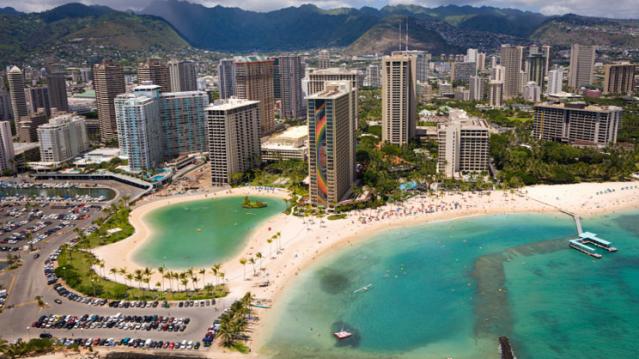
The friendliest city for visitors is Honolulu, according to more than 6,400 respondents in a newly released poll by Travelzoo.
Survey takers were asked to pick the cities, states and countries where they felt the most welcome, could easily ask for directions, and get dining recommendations. New York City came in second, followed by New Orleans.
Last year was a record-breaking year for tourism, and the numbers confirm the popularity of these destinations for travelers. In 2014, 8.3 million visitors came to the Aloha State, with total visitor expenditures estimated at $14.7 billion. On average, 205,044 visitors are in the state of Hawaii on any given day.
Related: They’re Leaving Las Vegas: Fewer I Do’s in Last Decade
New York City, where tourism also hit a record high in 2014 with 56.4 million visitors streaming into the Big Apple, claimed the second spot in the poll.
Third place New Orleans has 9.52 million visitors and tourism spending of $6.81 billion in 2014. Fourth place Las Vegas also broke tourism records with 40 million visitors last year, thanks to renovated and rebranded resorts and direct flights from Canada and Mexico. Boston rounded out the top five, with a total of 16,250,000 international and domestic visitors in 2014.
Here are the top 10 friendly cities:
- Honolulu
- New York
- New Orleans
- Las Vegas
- Boston
- San Diego
- San Francisco
- Charleston, S.C.
- Chicago
- Seattle
Travelzoo also ranked states for friendliness, with warm climes dominating the list. In the top spot was Florida, followed by California and Hawaii. New York and Maine were the only states from the Northeast to make the list.
- Florida
- California
- Hawaii
- New York
- Texas
- South Carolina
- Maine
- Georgia
- Washington
- Arizona
In Europe, Amsterdam, London, and Dublin were considered the friendliest cities to visit, with Italy and Ireland seen as the friendliest countries.
Why ‘In a Relationship’ on Facebook Means More Than You Think

Worried about your relationship with your significant other? A quick look at your Facebook profile can tell you a lot about how you’re doing as a couple.
Listing yourself as “in a relationship” with your partner, posting photos of you and your partner together, and posting on your partner’s wall are all signs of a committed relationship, at least among college-age couples, according to a new study from the University of Wisconsin-Madison.
The study looked at 180 undergraduates who were in romantic relationships and asked them a number of questions about their relationship and looked at their Facebook profiles. Six months later, the researchers returned and asked the students whether they were still in that relationship.
The study results suggest that displaying a public commitment on Facebook, a highly public platform, is correlated with more enduring relationships between couples. These public displays of devotion actually help cement relationships as they develop over time.
However, not all couple-related activity on Facebook is good for a relationship. The number of mutual friends each couple had and the number of partner-initiated wall posts were negatively correlated with relationship commitment. In addition, joint affiliations, such as attending the same events or being in the same Facebook groups, was not associated with commitment.
As annoying as couples who broadcast their relationship all over Facebook might be, they’re more likely to be in it for the long haul. So consider blocking them if you’ve had enough of the online PDA, because as they study suggest, there’s probably going to be a whole lot more of it.
Why GM Should Send a Thank You Note to Saudi Arabia
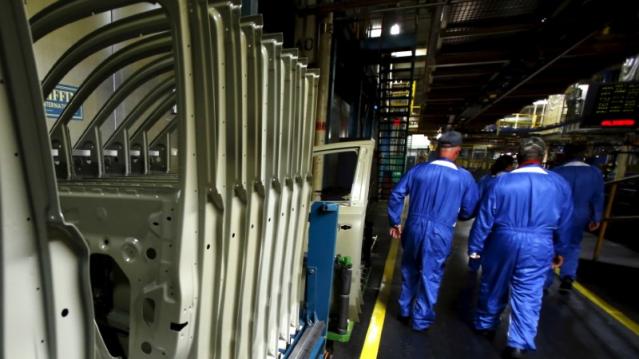
General Motors shares are up more than 4 percent Thursday after the automaker reported better-than-expected profits. The company earned more than $1 billion in profits last quarter, well above Wall Street’s forecasts.
A big reason for the blowout quarter was record margins in North America, thanks in large part to increased sales of trucks and SUVs. The headline at the Detroit Free Press says it all: “GM earns $1.1B in Q2 as pickup, SUV sales surge in U.S.”
Related: What's Next for Oil Prices? Look Out Below!
As a general rule, big pickup trucks and SUVs deliver higher profit margins than smaller, cheaper cars, so Detroit is always happy when large vehicles are selling. Another general rule seems to be that when gas is cheap, Americans start dreaming about gas-guzzling vehicles of all kinds, from blinged-out GMC Yukon XL Denalis to fuel-blasting Chevy Camaro ZL1s. And gas certainly has been cheap lately, thanks in large part to Saudi Arabia’s decision to maintain crude oil production levels in the face of increased U.S. production and a global slowdown in demand for energy.
Here’s a chart of gas and oil prices over the last three years, courtesy of GasBuddy. Note the steep decline starting in 2014:

As long as oil and gas are cheap, GM can probably count on selling lots of its most profitable vehicles. And with China slowing and Iran rejoining the global oil market, cheap fuel may be here for a while.
Top Reads from The Fiscal Times:
- 7 Revelations from Donald Trump’s Financial Disclosure
- The New Generation of ‘Genuinely Creepy’ Electronic Devices
- The Best Things to Charge on Your Credit Card