
Facebook Patents a Technology That Could Use Your Social Network Against You
All that data Facebook has been gathering on you and your friends could someday be used to approve -- or deny -- your application for a loan.
Facebook was just granted an updated technology patent for “authorization and authentication based on an individual's social network.” This innocent-sounding technology can no doubt be applied in a multitude of ways, many of them benign. But one troubling use of the technology consists of assisting lenders in discriminating against a borrower based on his or her social network connections.
The patent application explains that a lender can use the technology to examine the credit ratings of members of the social network of the individual who is applying for a loan. If the average credit rating of the social network reaches a minimum, pre-defined level, the lender moves forward with the loan process. If the average credit score is too low, the loan application is rejected.
Related: Now Facebook Wants to Know Where You Buy Your Toothpaste
The new technology raises concerns about potential unjust bias, but banks would most likely use it as an additional factor in the loan approval process, not as an end-all metric. The Equal Credit Opportunity Act imposes strict guidelines as to what factors creditors can use when determining whether to approve a loan. It’s unclear if Facebook’s new technology falls under the criteria the federal law defines – things like income, expenses, debt and credit history.
Another fear involves predatory lenders. People rejected for loans through this process would make a nice customer list for unscrupulous financial operators.
Some of the less worrisome uses of the technology include preventing spam email and inappropriate content and improving the accuracy of searches. At this point, it’s not clear how Facebook plans to implement the new technology. Let’s hope the social networking giant stays on the sunny side of the street on this one.
Top Reads from the Fiscal Times:
- The 10 Fastest-Growing Jobs Right Now
- Teens Are Having Much Less Sex Than Their Parents Did at That Age
- 9 Social Security Tips You Need to Know Right Now
Craigslist Car Scams Are on the Rise, Especially in Midwest
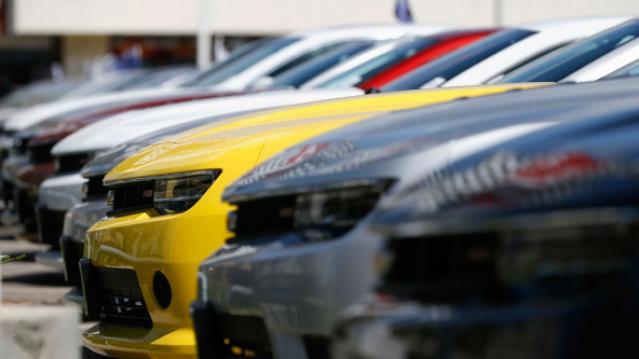
An insurance group is warning consumers of a widespread scam in which fraudsters are buying cars on Craigslist with bogus checks.
The National Insurance Crime Bureau has identified nearly 100 instances throughout the Midwest of Craigslist car sales in which the buyers used fake bank checks.
“These scams are well organized and have all the appearances of being legitimate,” NCIB President and CEO Joe Wehrle said in a statement. “But in the end, the criminal gets the car and the sellers or their financial institutions are left on the hook for thousands of dollars still owed on the car.”
Related: A New Vicious Scam Targets Desperate Homeowners
The scam appears to be especially prevalent in states where vehicle owners retain the title despite an outstanding lien. NCIB, a nonprofit supported by the insurance industry, advises car sellers never to sign over the title until they have the money for the sale in hand, even if that means waiting a week or more for a check to clear.
Craigslist offers its own list of tips to avoid scams. Remember, the online marketplace offers no guarantees regarding items bought or sold via its site and little recourse if you are the victim of a scam.
The site’s No. 1 tip is to do all transactions in person. A growing number of police stations now offer dedicated space for people meeting in person for transactions they’ve agreed to online.
Those with information about insurance fraud or vehicle theft can anonymously report it by calling 800-835-6422 or texting keyword “fraud” to TIP411.
15 Restaurants Offering Free Food for Moms on Mother’s Day
Your Mom was the one who taught you to head straight for the clearance racks. Show her how much you've learned by taking her out for some deliciously cheap eats before taking a free garden tour.
Related: 10 Worst States for Working Mothers
Mother's Day Freebies 2015
- Beef O'Brady's: Free Meal with purchase of equal or greater value up to $10
- Billy Sims BBQ: Free Single Meat Sandwich, Side and Drink
- Brick House Tavern & Tap: Free Brunch Entree with Entree Purchase (reservations required)
- Chuck E. Cheese's: Free Individual Thin & Crispy Pizza with $29.99 purchase of Large 1 Topping Pizza, 4 Drinks & 30 Tokens (requires printable coupon, exp. 6/1)
- Corner Bakery: Free 6 Pack Bottoms Up Bundts with Entree Purchase (printable coupon, exp 5/11)
- Fogo de Chao: Free Lunch or Dinner on Next Visit for Moms who dine on Mother's Day
- Hooters: Free Meal with Drink Purchase (up to $10.99)
- Hurricane Grill & Wings: Free Dessert with Entree Purchase
- McCormick & Schmick's: Free Chocolate-Covered Strawberry with your order
- National Public Gardens Day: Free admission 5/8, with many activities continued through Mother's Day
- Orange Leaf: Free 8-oz. Froyo
- PDQ: Free Combo Meal with purchase of a Kids/Combo Meal
- Shoney's: Free Slice of Strawberry Pie with your order
- Spaghetti Warehouse: Free Strawberry Lemonade and Surprise Gift
- Tijuana Flats: Free Entree (must show offer to redeem)
As always, local participation may vary, so call ahead to check - and then make reservations if you can.
This article originally appeared in The Brad's Deals Blog.
Read more from The Brad's Deals Blog:
6 Things You Should Never Waste Your Money
37 Things You Should Always Keep in Your Car
Is Vision Insurance Worth it For You
This Disease Hikes Health Care Costs By More than $10,000 a Year
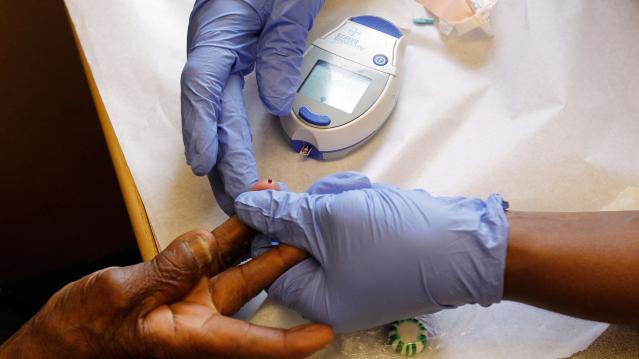
Medical professionals and economists have been worried about the growing prevalence of diabetes for years. A new report shows their concerns are well placed. In 2013, the per capita health care bills of consumers with diabetes was $15,000, nearly 71 percent ($10,700) higher than those without the disease, according to the Healthcare Cost Institute.
The brunt of those bills are borne by health care providers, but consumers with diabetes have per capita out-of-pocket costs of $1,922, compared to just $738 for those who do not have diabetes.
For those under the age of 65, health care expenses grew an average 4.1 percent from 2012 to 2013, but the increase was even higher among children, who saw expenses rise 7 percent from 2011 to 2012 and then another 9.6 percent from 2012 to 2013.
Related: Diabetes Detection Up in Pro-Obamacare States
“There has been extraordinary growth in health spending for children with diabetes,” HCCI senior research Amanda Frost said in a statement, citing branded insulin as one factor in the increase.
For children, the costs go beyond medication. A 2012 study in Health Affairs found that people who develop diabetes before age 30 make less money than their peers, are more likely to drop out of high school and less likely to attend college.
One of the most widespread chronic diseases in the United States, diabetes care consumes about 10 percent of U.S. health care spending, according to a study by the University of Michigan.
This College Choice Could Make You $3Million Richer
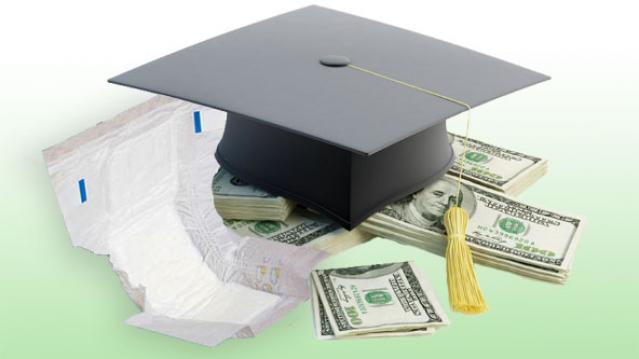
The differences in starting salaries for STEM majors versus those who study the humanities have been widely publicized. Now, a new study looks at how those differences add up over a lifetime of earnings – and the results are staggering.
The lowest paid graduates, early childhood education majors, earn just $39,000 annually mid-career, while the highest paid petroleum engineering majors, make an average of $136,000 per year. Over a career, that difference amounts to more than $3 million, according to the report The Economic Value of College Majors by economists at Georgetown University.
Among the major fields of study, architecture and engineering students earn highest average salary--$83,000 per year, and education majors earn the lowest--$45,000 per year.
Related: 10 Public Universities with the Worst Graduation Rates
The study finds that generally it’s still worth it to go to college. The average bachelor’s degree holder makes $1 million more over a lifetime than a person with just a high school diploma.
A separate report released last fall by the Federal Reserve Bank of New York found that the value of a bachelor’s degree has reached an all-time high of around $300,000. Researchers found that it takes about 10 years to recoup the cost of a degree, a historically low level, down from close to 25 years in the late 1970s and 1980s.
So those education majors should still go to college, but they might be smart to look for more moderately priced options and to be more wary about taking on debt than their engineering peers.
Putin’s Shiny New Tank Breaks Down

According to news reports, including the Associated Press, the pride of the Russian military – Vladimir Putin’s T-14 Armata tank – broke down in the middle of Red Square on Thursday during a practice run of the Victory Day parade scheduled for Saturday. The state-of-the-art tank was one of eight rolling through Moscow Thursday morning when it unexpectedly came to a halt while the others rolled on.
According to the AP, the soldiers on hand first tried to tow the tank away, but were unsuccessful. After about 15 minutes, the problem was apparently solved, and the tank rolled off under its own power.
Related: 7 New Weapons in Vladimir Putin's Arsenal
An executive of the company that produced the tank told the AP that, despite the apparent attempts to tow it away, the tank had not broken down and was functioning properly.
The T-14 is meant to be the main battle tank that will carry the Russian Army into the rest of the 21st century. Its unmanned turret is controlled remotely by crew members safely inside an armored compartment in the body of the tank. It has advanced weapons system and armor, and is believed to be a match for any tank currently in service with North Atlantic Treaty Organization forces.
The T-14 has been written about extensively in the government-controlled Russian press, and its public unveiling is being treated as a major event. In addition, the parade Saturday will be watched not only by millions of Russians, but also by dozens of foreign dignitaries on hand to hel celebrate the 70th anniversary of the end of World War II. That means any malfunction of the tank during the actual parade on Saturday would be terribly embarrassing to the Kremlin.