
On Campaign Trail, Rubio Truant in the Senate
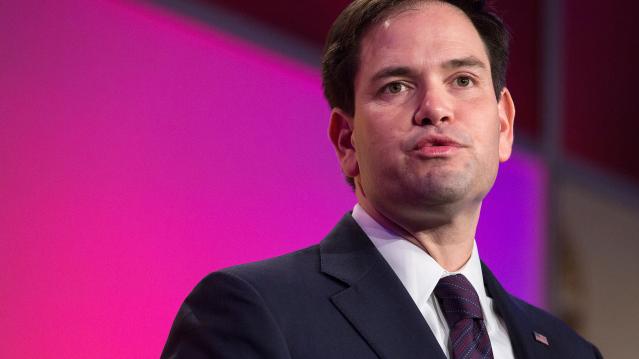
Last week Sen. Marco Rubio warned it’s “important to be qualified, but if this election is a resume competition, then Hillary Clinton's gonna be the next president” because of her long history in office and in federal government.
For his sake, he’d better hope the GOP primary doesn’t turn into a disqualifying truancy competition, too.
A study by The Tampa Bay Times found that of the four Republican senators running for the White House, Rubio has missed the most Senate votes.
In June alone, Rubio missed 67 percent of the Senate votes, and he wasn’t there for more than half of them in July, according to The Times.
Related: The New York Times Just Made Rubio the Hero of the Struggling Middle Class
In all, the first-term lawmaker missed 29 percent of Senate votes, or 76 of 262 recorded, in the first six months of 2015. Over 50 of those came after his April 13 campaign announcement.
The numbers show how much time Rubio has had to spend off Capitol Hill and on the campaign trail as he looks to break out of a crowded GOP field that includes his friend and former Florida Gov. Jeb Bush.
By contrast, Sen. Ted Cruz (R-TX) has missed 54 votes since declaring his candidacy in March, while Sen. Lindsey Graham (R-SC) was truant for 35 votes since he launched his presidential bid on June 1.
Sen. Rand Paul (R-KY) has skipped only three votes throughout 2015 and only one since declaring for president.
On the Democratic side, Sen. Bernie Sanders (I-VT) has missed four votes since hitting the campaign trail.
Rubio has missed nearly 11 percent of votes since he joined the Senate in January 2011, The Times analysis shows, well above the median 1.6 percent rate for the lifetimes of current senators.
A Rubio spokesperson did not respond to a request for comment.
Top Reads from The Fiscal Times:
- Trump’s Debate Performance Should Kill His Candidacy … but Won’t
- Battle Lines Form in the Fight Over Social Security Payment Reductions
- Robert Gates Says U.S. Got ‘Out-Negotiated’ on Iran Deal, Backs It Anyway
Why You Might Want to Cancel That Restaurant Reservation

The cost of dining out rose 3 percent in May year-over-year, while the amount paid to eat at home inched up just 0.6 percent. The growing disparity in prices could prompt consumers to abandon restaurants for home-cooked meals, according to a report today by Bloomberg.
“Eating in hasn’t been this attractive compared to dining out since 2010,” Bloomberg reports. That’s good news for consumers worried about their budgets, but could be a problem for restaurants’ bottom lines.
So far, consumers aren’t making the shift. This spring, spending at restaurants and bars totaled more than sales at grocery stores for the first time.
Related: The 11 Worst Fast Food Restaurants in America
Part of the reason consumers are sticking with restaurants could be that wages are starting to slowly increase, so consumers have a little more money to spend on meals.
They may also be dining out because it’s often an easier option. Shopping and preparing meals takes time – time that people simply don’t have these days. A quarter of employees say that they are working after the standard work day has ended, and about 40 percent work at least one weekend a month, according to Staples Advantage. That leaves little time for food prep.
Supermarkets have responded to the time-pressed consumer by increasingly offering prepared meals that require little more than reheating at home. The prices for such meals tend to be higher than the cost of their ingredients but less than the price of eating out or ordering in.
Here’s What Consumers Were and Weren’t Buying in June
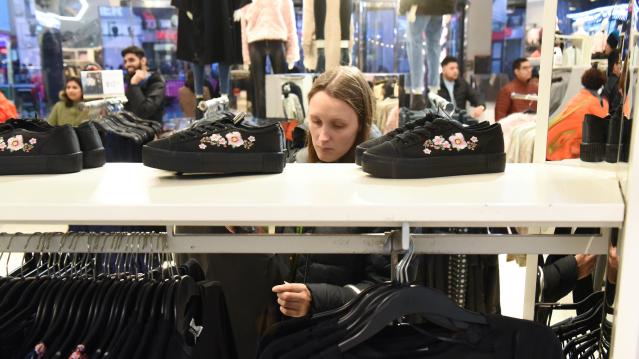
Retail sales were disappointingly soft in June, continuing a zig-zag pattern of strength and weakness this year. Sales fell 0.3 percent, falling shy of economists’ expectations for a 0.3 percent gain after a 1 percent jump in May. The only spending categories to post decent gains were electronics and appliance stores sales, gas station sales and discount stores.
“In May, retail gains signaled that consumers may have started using their so-called pump price dividend toward purchases of discretionary items,” Chris G. Christopher, Jr., the director of consumer economics at IHS Global Insight, wrote in an email to clients. Now, he added, the retail data “are pointing to a consumer that spends their paycheck in fits and starts.”
Related: What the U.S. Must Do to Avoid Another Financial Crisis
Those fits and starts averaged out to a fairly healthy 2.6 percent annualized increase over April, May and June. “The glass half-full take on consumers is that 2.6 percent is still somewhat better than the 2.3 percent consumption growth we've averaged since the beginning of the current expansion,” J.P. Morgan economist Michael Feroli said in a research note. “The glass half-empty view is that there is now even less evidence of a sharp snapback in spending after an unambiguously disappointing Q1.”
Here’s a breakdown from the Bespoke Investment Group of how different retail categories fared:

7 Personal Details You Should Never Divulge Online
What do the following have in common?
- The name of your favorite movie
- Concert tickets or sporting event passes with a barcode
- Your high school
- Your mother’s maiden name
- The name of your best friend in high school
- Your full birthdate, including the year
- The street address of your childhood home
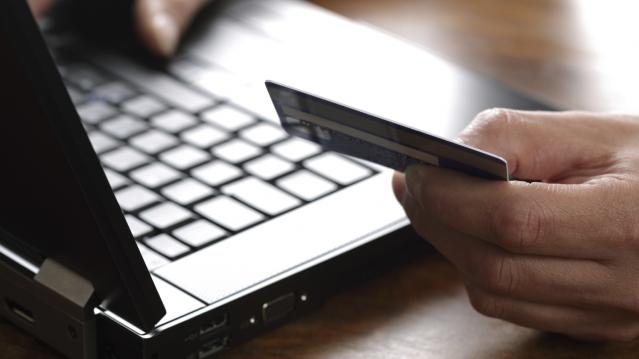
Basically, any of the answers above can be used to answer common security questions that would allow cyber thieves to gain access to an online banking or credit card account. They can be used to reset your password. That’s why you should never post these details publicly on a social media account. Even the name of a beloved pet or school mascot can be fair game.
Related: Think You’ve Been Hacked? 10 Tips to Protect Yourself Now
We already know not to post our vacation plans, where we are meeting friends for drinks or dinner, or where our children go to school. But we should be aware that information we post on our social media accounts can be used by others to profile and target us.
This is especially important when you consider that Facebook users admit that as much as 7 percent of their Friend lists, which can easily number 200 or more, are people they’ve never met in person. If you share your address and phone number on Facebook with Friends only, make sure all of your contacts are people you know; otherwise cut them from your list or relegate them to Acquaintance status.
Even if you don’t have a profile on Facebook, chances are your spouse, co-worker, or teenager does. According to the Pew Research Center, half of Internet users who do not use Facebook themselves live with someone who does. Make sure they’re not giving out your personal information too.
Shopping Showdown: Walmart Takes On Amazon’s ‘Prime Day’

In case it wasn’t already perfectly obvious that Walmart is gunning for Amazon, the Bentonville, Ark. giant just kicked up its e-tailing competition.
Walmart announced today that it will also offer thousands of discounts for online purchases on July 15, the same day Amazon plans on hosting its Prime Day shopping extravaganza. And in its blog post announcing the sales, Walmart took a clear swipe at Amazon’s push to have shoppers subscribe to its $99 a year Prime service.
“We’ve heard some retailers are charging $100 to get access to a sale,” the Walmart blog says. “But the idea of asking customers to pay extra in order to save money just doesn’t add up for us. We’re standing up for our customers and everyone else who sees no rhyme or reason for paying a premium to save.”
Related: Amazon’s Prime Concern—A New Online Blitz by Walmart
Walmart, the world’s largest retailer, is also offering another limited-time deal to boost e-commerce sales. Starting today, customers will receive free standard shipping with online purchases that cost a minimum of $35, instead of the usual $50. The change will be effective for at least 30 days.
In February, Walmart CEO Doug McMillon told analysts on an earnings conference call that the company would invest between $1.2 billion and $1.5 billion in e-commerce throughout the year.
Neither Walmart nor Amazon has released information about specific sale offers yet, so the early hype might prove unwarranted, but the battle is clearly on and now the claws are out.
Update: Amazon responded to Walmart’s gibe with its own accusation. “We’ve heard some retailers are charging higher prices for items in their physical stores than they do for the same items online,” Greg Greeley, vice president of Amazon Prime, wrote in an email to Bloomberg. “The idea of charging your in-store customers more than your online customers doesn’t add up for us.”
We’re All Becoming Distracted Victims of Smartphones

Your phone buzzes at work. You promised yourself you wouldn’t check your phone until you turn in your half-finished assignment that’s due in an hour, so you don’t. But you start to wonder — who is texting you? What does the text say? Your mind wanders.
A new study has found that even when we try to disregard a notification, just being aware of a new message distracts us enough to impair our concentration and hurt our performance. These distractions are equal to actively opening the notification on your mobile device.
A Gallup poll reveals that 81 percent of smartphone users keep their phone in close proximity “almost all the time during waking hours.” Depending on the volume of notifications users receive, keeping a phone so close could lead to a noticeably negative impact on work performance.
Related: The New Workplace Trend — Smartphone Mini-Vacations
The study adds to the growing list of negative affects smartphones can have on users. Other effects include impaired sleep, increased pressure to communicate with friends and family, and the inability to detach from work.
Smartphones are only going to affect more and more individuals. The number of people who own a smartphone has increased from 35 percent in 2011 to 64 percent in April of this year. Among millennials, 84 percent report owning a smartphone.
As millennials begin to enter the workforce and the number of apps available for download increases, the potential for distraction only grows larger.