Americans Just Went on a $32 Billion Credit Card Shopping Spree
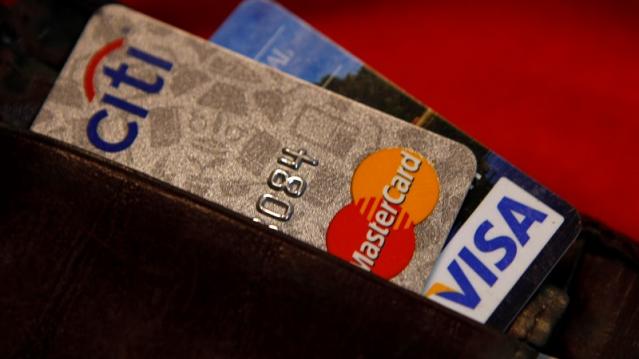
Americans may be heading for another credit card crunch. After paying down almost $35 billion in credit card debt in the first quarter of the year, consumer charged up a storm in the second quarter, racking up $32.1 billion in new debt, according to CardHub, a credit card comparison site. CardHub says that’s the second highest quarterly total since it began keeping data on credit card debt in 2009.
While that buying binge could potentially signal improved confidence in the economy and in their own financial prospects, CardHub warns that the debt risks are building. It projects that consumers will close out the year with an annual net increase of more than $60 billion in credit card debt, with the total credit card debt outstanding climbing to more than $900 billion, the highest since the recession.
Related: 5 Cities with the Most Credit Card Debt
CardHub CEO Odysseas Papadimitriou says that jump brings Americans “perilously close to a tipping point at which balances become unsustainable and delinquency rates skyrocket.”
For 7 out of the past 10 quarters, consumers have racked up more debt than they’ve paid off. Papadimitriou cites that as evidence that consumers are going back to the bad habits they had before the economic downturn.

CardHub based its study on data from the Federal Reserve, and if the results are a sign of trouble then another new report from the Federal Reserve Bank of New York suggests that problem is even worse than it looks. In a report called “Do We Know What We Owe,” the New York Fed found that people widely underestimate their credit card debt, telling the Fed’s survey-takers that it’s about 37 percent lower than what lenders say it is.
So if we are actually getting to a tipping point with credit card debt, it may be even closer than we realize.
Top Reads From The Fiscal Times
- Millions Facing a Hefty Increase in Medicare Premiums in 2016
- How Much Does Our Social Safety Net Cost? $742 Billion a Year and Rising
- The 10 Worst States for Property Taxes
Will Trump's Tax Cuts Really Happen? Economists Are Surprisingly Optimistic
Despite all the thorny questions swirling around President Trump's nascent tax reform plan, 29 of 38 economists surveyed by Bloomberg in a monthly poll said they expect Congress to cut taxes by November of next year.
The hitch: The economists don’t expect the cuts will help the economy much. The median projection of a larger group of 71 economists is for 2018 growth of 2.3 percent, up only slightly from 2.1 percent this year — and by 2019, the economists see growth slipping back to 2 percent.