
GOP Governor Asks Voters to Raise Their Own Taxes
Michigan voters go to the polls today to vote on Proposal 1, a referendum that would hike the state sales and gasoline taxes. An unexpected twist in the story, though, is who is backing the plan and why. Support for the proposal speaks to the declining state of infrastructure in the U.S. and the increasing urgency with which states are taking matters into their own hands.
Proposal 1 is a complex mix of policy changes that would raise more than a billion dollars to fund road construction and repair, plus hundreds of millions for education and other purposes. It would do so by hiking the Michigan state sales tax from 6 percent to 7 percent. That represents a 17 percent increase in total sales taxes Michiganders will face on taxable items.
Related: America’s Energy Infrastructure in Desperate Shape
However, the bill also abolishes the sales tax on gasoline – Michigan is one of the few states in which gas is not exempt from state sales tax – and would dramatically increase the wholesale gasoline tax. The net effect, according to the Detroit Free Press, would be an increase of between 7 and 9 cents per gallon in what consumers pay at the pump. The proposal would net about $1.9 billion per year for the state’s coffers, the majority of it coming out of the pockets of Michigan’s taxpayers. (A small percentage would come from out-of-state visitors paying taxes on items purchased in Michigan.)
Normally, a $2 billion tax hike – the biggest in the state in a generation – would be the sort of thing Republican politicians would attack mercilessly, but in Michigan, Republican Governor Rick Snyder is a strong proponent of the deal. And Snyder isn’t alone. Prominent Republican and Democratic lawmakers have thrown their support behind the measure.
Related: Get Ready to Pay More Tolls If Infrastructure Isn’t Funded
The move also has significant support from the business community. Unsurprisingly, the biggest backers of the deal are the construction companies and related industries. But there is also support in the general business community, even among some companies whose products would be more expensive.
Even with substantial support from legislative leaders and businesses, though, the prospects for Proposal 1 looked poor heading into the vote today Public opinion remains generally against the proposition despite a multimillion-dollar advertising campaign by supporters that has dwarfed efforts by the opposition.
Should the vote fail, though, the state’s pothole-pocked roads and crumbling bridges won’t fix themselves, so legislators will have to find the revenue somewhere, either by increasing taxes via a different route, or cutting spending from an already tight state budget.
We’re All Becoming Distracted Victims of Smartphones

Your phone buzzes at work. You promised yourself you wouldn’t check your phone until you turn in your half-finished assignment that’s due in an hour, so you don’t. But you start to wonder — who is texting you? What does the text say? Your mind wanders.
A new study has found that even when we try to disregard a notification, just being aware of a new message distracts us enough to impair our concentration and hurt our performance. These distractions are equal to actively opening the notification on your mobile device.
A Gallup poll reveals that 81 percent of smartphone users keep their phone in close proximity “almost all the time during waking hours.” Depending on the volume of notifications users receive, keeping a phone so close could lead to a noticeably negative impact on work performance.
Related: The New Workplace Trend — Smartphone Mini-Vacations
The study adds to the growing list of negative affects smartphones can have on users. Other effects include impaired sleep, increased pressure to communicate with friends and family, and the inability to detach from work.
Smartphones are only going to affect more and more individuals. The number of people who own a smartphone has increased from 35 percent in 2011 to 64 percent in April of this year. Among millennials, 84 percent report owning a smartphone.
As millennials begin to enter the workforce and the number of apps available for download increases, the potential for distraction only grows larger.
Can Anyone Stop the $38 Billion Airline Fee Squeeze?
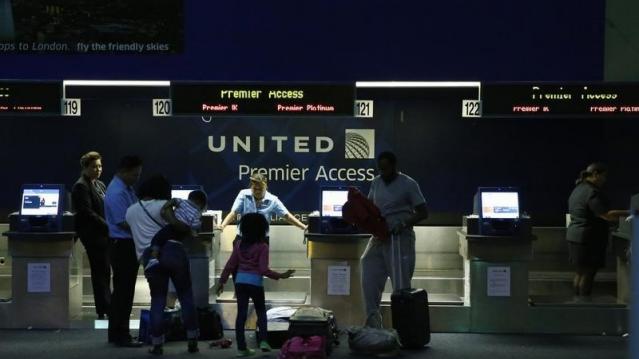
U.S. airlines earned $2.6 billion in fees and frequent flier mile sales in 2014, an 18.7 percent increase from 2013, according to an annual report by consultancies IdeaWorks and CarTrawler.
That represents the eighth consecutive year that carriers saw substantial revenue ancillary to ticket sales. Globally, ancillary revenue soared more than 20 percent to $38.1 billion.
“Ancillary revenue is an increasingly important indicator of commercial success, and a major contributor to the bottom line of airlines across the globe,” said Michael Cunningham, CarTrawler’s Chief Commercial Officer, in a statement.
Related: 6 Sneaky Fees that Are Making Airlines a Bundle
By passenger, additional revenue grew by 8.5 percent to $17.49. Low cost carriers increased ancillary revenue by 32.8 percent for the year, or $2.9 billion.
Ten airlines earned two-thirds of the ancillary revenue, led by United Airlines, American/U.S. Airways, and Delta. Delta brought in $350 million through its Comfort Plus program, which allows passengers to pay extra for more legroom and priority boarding.
Among passengers’ most hated fees are checked bag fees. Airlines typically charge $25 for the first bag, $35 for the second, and more than $100 for a third bag.
As frequent fliers turn to branded credit cards as a means of avoiding fees, airlines are still earning money. Last year, American’s Citibank-issued credit card, which gives consumers one free checked bag and priority boarding, yielded an additional $624 million for the carrier last year.
The additional fees are not improving the customer experience. More than 60 percent of consumers surveyed by the U.S. Travel Association in March said they were frustrated with air travel generally.
Memo to Michelle Obama: Americans Still Aren’t Eating Their Greens

Maybe First Lady Michelle Obama should refocus her healthy eating campaign more on adults than children. Fewer than 20 percent of American adults are eating enough fruits and vegetables, newly released data from a Centers for Disease Control and Prevention survey.
The United States Department of Agriculture’s nutrition guidelines recommend that Americans have two to three cups of vegetables every day, along with 1.5 to two cups of fruit. Based on those criteria, only 13 percent of adults in the survey ate enough fruit and a meager 9 percent of individuals ate enough vegetables. These numbers are worse than in years past. Between 2007 and 2010, 76 percent of Americans didn’t consume the recommended amount of fruit and 87 percent failed to eat enough vegetables.
Related Link: The 11 Worst Fast Food Restaurants in America
What’s more, while consumption of fruits and vegetables varies substantially from place to place, the residents of each and every state in the union fell short of the USDA recommendations. In Tennessee, 7.5 percent of residents consume enough fruit, while in Mississippi, a mere 5.5 percent of individuals eat enough vegetables. California ranked highest for eating both fruits and vegetables, but even there, just about 18 percent eat enough fruit and 13 percent eat enough veggies.
“Substantial new efforts are needed to build consumer demand for fruits and vegetables through competitive pricing, placement, and promotion in child care, schools, grocery stores, communities, and worksites,” the CDC report says.
The report comes out after a study published in last month’s JAMA Internal Medicine found that fewer than one-third of Americans are currently at a healthy weight. The majority of individuals are either overweight or obese.
Diane von Furstenberg Will Sell a Purse that Charges Your Phone
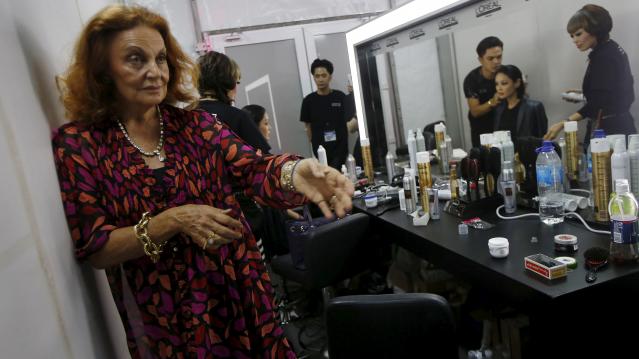
Fashion mogul Diane von Furstenberg said she will launch a high-tech purse that automatically—and cordlessly—charges smartphones.
The purse, which does not yet have a price tag, will go on sale in limited edition this holiday season, before rolling out broadly next year. The designer is working with an undisclosed technology partner on the handbag.
"My role in fashion is really solution driven," von Furstenberg said. "I'm always on the go, so [it's important] you have everything at the right time."
The idea of creating a handbag that charges a smartphone isn't entirely new. Kate Spade recently announced that it will launch a similar product line this fall.
Related: 16 Must-Have Products to Make Your Home Smarter Right Now
Von Furstenberg, a regular in Sun Valley, Idaho, took the stage at this year's Allen & Co. conference for a panel on the future of fashion, along with Spanx founder Sara Blakely.
She's there to meet with technology companies as she works to bring fashion into the future.
"Technology is the biggest revolution," von Furstenberg said. "It's such a big part of our lives, we do everything with technology, so it's not even separate anymore. It just is."
Related: 10 Biggest Tech Flops of the Century
Though she doesn't wear an Apple Watch, the designer said she's also interested in wearable technology. At her New York Fashion Week show in September 2012, she sent models down the runway wearing Google Glass.
But von Furstenberg cautions the term "wearable tech" will soon become obsolete.
"Wearable technology won't even be a word anymore, because everything you do will have technology," she said.
Von Furstenberg added that technology isn't just important for the future of fashion products—it's already crucial to their marketing.
"If you're interested in millennials, everyone is on social media and everyone is a brand," she said. "It's very interesting to brands to see how they can work with a generation, who each of them is [their own] brand."
This article originally appeared on CNBC.
Read more from CNBC:
For an airline upgrade, miles aren't the best
How movie theaters are striking back against Netflix
14 retailers shaking up the industry
Corporate Sponsors Pass on Women's World Cup Ticker-Tape Parade
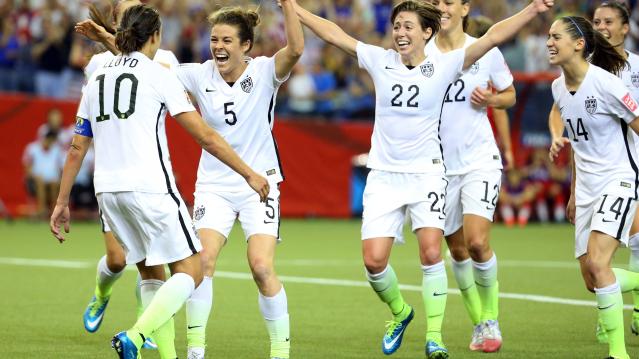
While the country celebrates the U.S. Women’s Soccer team’s World Cup Championship with a New York City ticker tape parade, corporations have been reluctant to pony up cash to cover the $2 million celebration.
Major League Soccer, Nike, fod company Mondelez and video game giant Electronic Arts have contributed a total $450,000 toward the parade, leaving New York City to cover the difference, the New York Post reports. That includes the cost of cleanup and security.
By contrast, the 2012 parade that celebrated the New York Giants winning the Super Bowl had more than a dozen corporate sponsors.
Related: For World Cup Hero Carli Lloyd, 16 Minutes Can Mean Millions
City officials told the Post that the dearth of sponsors reflected the short period of time in which the city pulled together plans for the parade. The team is the first women’s squad to receive a New York City ticker tape parade, although the city has honored individual women, such as Olympic athletes and Amelia Earhart.
More than 12,000 people entered a lottery for tickets to the parade, which will feature the team atop patriotic floats moving down the Canyon of Heroes in lower Manhattan as spectators throw confetti from surrounding buildings.
While companies may not have shown much interest in the parade, they are clearly interested in star Carli Lloyd. Her agent has repeatedly received more than 200 inquiries from marketers who want to work with the athlete.
That’s good news for Lloyd, who like all other National Women’s Soccer League players, is subject to a $37,800 salary cap, about one 10th of what the average male Major League Soccer player makes in a year.