
Did Kasich Just Do an About-Face on Climate Change?
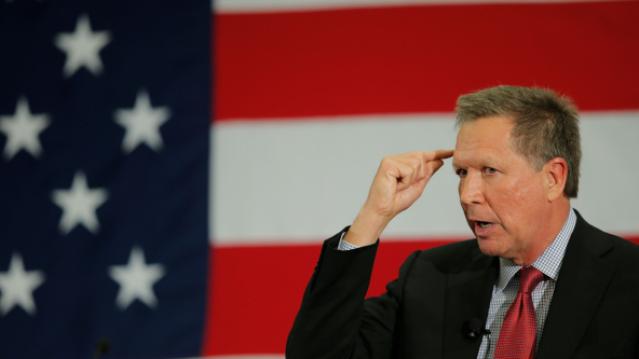
Maybe it’s because he is still feeling his way as a late entrant into the GOP presidential campaign, but Ohio Gov. John Kasich did a fairly dramatic about-face over the weekend on the politically charged issue of climate change.
Kasich, a former House Budget Committee chair and Wall Street business executive, has positioned himself as a “kinder, gentler” conservative than Jeb Bush, Ted Cruz and the dozen other Republicans running for the 2016 presidential nomination. So it wasn’t surprising that he would take a more moderate stand on global warming during the first nationally televised GOP presidential debate Thursday evening.
Related: 10 Things You Need to Know About John Kasich
Kasich, a devout Christian, declared during the two-hour debate sponsored by Fox News that climate change is a real problem requiring government and society to protect the “creation that the Lord has given us.”
While the vast majority of Republicans on Capitol Hill and the campaign trail are highly skeptical of President Obama’s campaign to curb industrial carbon emissions to prevent the disastrous long term effects of global warming on the environment and economy, Kasich appeared to be one of the few who took the threat seriously.
He emphasized the importance of unity and cooperation, saying at one point that “we’ve got to unite our country again, because we’re stronger when we are united and we are weaker when we are divided.”
Just a few days later, though, after winning plaudits for his Thursday night performance – with some even favorably comparing his views on environmental threats to those of Pope Francis – Kasich sounded much like a climate-change doubter.
Related: Does Kasich Have a Chance? How He Can Catch Up to the GOP
During an appearance on NBC News’ “Meet the Press,” Kasich told moderator Chuck Todd that “I think man absolutely affects the environment, but as to whether, you know, what the impact is, the overall impact, I think that’s a legitimate debate.”
Kasich went on to say that in Ohio, “we preciously take care of Lake Erie, and we’ve reduced emissions by 30 percent over the last ten years.”
“We believe in alternative energy,” he added. “So of course we have to be sensitive to it, but we don’t want to destroy people’s jobs, based on some theory that’s not proven.”
According to National Journal, the Kasich 2016 campaign attempted to clarify his remarks following his appearance on “Meet the Press.” "The governor has long believed climate change is real and we need to do something about it,” according to the statement. “The debate over exact percentages of why it is happening is less important than what can be done about it. We know it is real, we know man has an impact, and we know we need to do something."
A number of prominent presidential candidates -- including former Florida governor Jeb Bush and Sens. Ted Cruz, Marco Rubio, and Rand Paul -- are climate change doubters or deniers. Sen. Lindsey Graham of South Carolina is one of the few who unquestionably accepts scientific evidence that man-made greenhouse gas emissions are a principal cause of global warming, and has sharply criticized his party for lacking a comprehensive environmental platform.
Top Reads From The Fiscal Times:
- How GOP Candidates Would Steer U.S. Foreign Policy
- Fiorina Takes on Trump in a Brave Battle of the Sexes
- As Politicians Bicker Over Funding, Military Families Cut Back on Vacations
Hoping for a Raise? Here’s How Much Most People Are Getting
Nearly all companies plan to give raises to their employees next year, with an average salary bump of 3 percent, the same increase workers received this year, according to a new survey released Monday by Towers Watson.
Raises for executives and management will be 3.1 percent.
“To a large extent, 3 percent pay raises have become the new norm in corporate America,” Sandra McLEllan, North American Practice Leader for Towers Watson said in a statement. “We haven’t seen variation from this level for many years.”
Related: The Real Root of America’s Wage Problem
While the average raise is 3 percent, companies plan to tie the amount of individual raises to worker performance. Employees with the best reviews will receive an average 4.6 percent increase in salary, while workers with below-average ratings will get less than 1 percent.
The survey also found that companies are shifting their compensation packages to include more short-term incentives and bonuses. Eighty-five percent of workers took home a bonus this year, up from 81 percent this year. Nearly 90 percent of exempt employees were eligible for an annual or short-term bonus.
Even as unemployment has finally fallen, wage growth since the Great Recession remains largely stalled. Last month, wages for civilian workers grew just 2.1 percent, according to the Employment Cost Index.
Fed Chair Janet Yellen, who is looking for economic growth before instituting a rate hike, has said that stagnant wages are one factor hampering such growth. After all, consumers can’t increase the amount of goods and services they can purchase if they aren’t increasing their pay.
Top Reads from the Fiscal Times:
- Fiorina Takes on Trump in a Brave Battle of the Sexes
- When Buying Car Insurance, Young Drivers Should Stick with Mom and Dad
- Trump’s Campaign, Leaking Oil, Rumbles Onward
When Buying Car Insurance, Young Drivers Should Stick with Mom and Dad
The parents of young drivers have enough to worry about, but a new study from insuranceQuotes.com finds that those who add coverage for an 18-to-24-year-old can expect to see an average annual premium increase of 80 percent on their existing car insurance. The good news: That’s still cheaper than if the young drivers bought insurance on their own. If those young drivers were to buy individual plans of their own, they’d pay 8 percent more on average — and in some cases, over 50 percent more — than their coverage costs on a parental plan.
Related: The Shocking Secret About How Your Car Insurance Rate Gets Set
Premiums can vary widely depending on the driver’s age and state. An 18-year-old can expect to pay an average of 18 percent more for an individual policy than he or she would if added to an existing policy. But in Rhode Island, an 18-year-old will pay an average of 53 percent more for an individual policy. In Connecticut and Oregon, the difference is 47 percent.
In states such as Arizona, Hawaii, and Illinois, it actually becomes cheaper, on average, for a young driver to get his or her own policy after turning 19. When it comes to determining premiums, Hawaii is the only state that doesn’t allow insurance providers to consider age, gender, or length of driving experience.
These are the five states with the greatest difference in premiums for young drivers buying their own coverage.
1. Rhode Island: 19 percent
2. Connecticut: 16 percent
3. North Carolina: 14 percent
4. Vermont: 14 percent
5. Maine: 14 percent
Related: Now 16-Year-Olds Can Double Your Car Insurance
And these five states have the smallest difference:
1. Hawaii: No difference
2. Illinois: No difference
3. Arizona: 2 percent
4. Mississippi: 5 percent
5. South Carolina: 5 percent.
Top Reads from The Fiscal Times:
- As Politicians Bicker Over Funding, Military Families Cut Back on Vacations
- Why We’re Wasting Billions on Teacher Development
- The Future of War Belongs to the Bots
Vladimir Putin’s Cheesy Act of Defiance

The United States and European Union have been squeezing Russia with sanctions since it annexed Crimea, a territory that previously belonged to Ukraine, in March 2014. In response, Russian President Vladimir Putin established a ban on U.S. and EU foodstuffs a few months later as a snub to the West.
On Thursday, Russia commemorated a tightening of that year-old ban on Western agricultural products by bulldozing bright yellow blocks of cheese. The country also streamrolled fruit and set piles of bacon ablaze. By midday, 28 metric tons of apples and tomatoes from Poland had been demolished, as well as 40 tons of apricots from an unknown country, according to The Wall Street Journal.
Related: Move Over, Santa: Putin Claims the North Pole
The Western sanctions and a plunging ruble have caused Russian food prices to spike this year. Some politicians, religious leaders and other Russian citizens denounced the destruction of the food, noting that millions of Russians are living in poverty. More than 285,000 people signed an online petition that asked Putin to distribute the food rather than destroy it.
The Kremlin has promised to help develop Russia’s own agricultural industries and to promote domestic food products that the middle-class generally ignore in supermarkets in favor of status symbols like French cheese and Italian meat. In addition, the Kremlin announced that any contraband foodstuffs found would be destroyed. Russia’s Agricultural Minister Alexander Tkachyov said on state TV that the quality of Western food products could no longer be guaranteed.
Top Reads from The Fiscal Times:
- Vladimir Putin’s Spokesman Wears a Golden Skull Watch Worth $620K
- The Pentagon’s Next-Generation Budget Busting Bomber
- Born in the USA: 24 Iconic American Foods
This May Be the Best Frequent Flier Perk Ever
Forget about getting bumped up to first class. Delta Airlines is now bumping its best customers off commercial flights entirely -- and onto private jets.
The program got off the ground last week, according to Bloomberg, with its first flight traveling from Cincinnati to Atlanta.
To be eligible for the upgrade, fliers must have at least 125,000 miles in travel and $15,000 in annual spending with the airline. The bump costs an extra $300 to $800.
In addition to improving the loyalty among some of Delta’s best customers, the program has a side benefit for Delta, allowing it to get some value from positioning flights, known as “empty legs,” which make up about 30 percent of industry flying.
Delta and other airlines have been shifting their loyalty programs in ways that make it easier for elite flyers to earn rewards and more difficult for more irregular customers.
Related: Rethinking airline points strategy with the Points Guy
Starting in June 2016, Delta will issue rewards based on the amount of money spent rather than miles traveled, and the airline may change the number of miles necessary to book a flight based on demand and other factors.
Analysts say that other airlines may follow suit. Airline reward programs have been unsuccessful in fostering loyalty among patrons, many of whom book flights based on cost and convenience rather than brand preference. Only 44 percent of travelers and 40 percent of business travelers fly at least three-quarters of their miles on their preferred airline, reports Deloitte.
Delta’s reward program ranked 9th on U.S. News’ annual ranking of the best airline rewards programs, released this week, receiving 3.1 stars out of 5. Alaska Airlines was ranked first.
You’ve Got to See This GOP Hawk’s Grisly Ad Opposing the Iran Deal
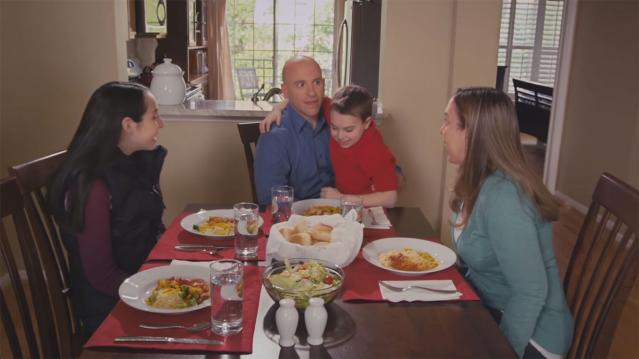
A group led by John Bolton, the aggressively hawkish Republican insider who served as George W. Bush's ambassador to the United Nations, has released an unusually grisly ad that vividly portrays a nuclear attack on the United States.
The 30-second video was produced by the Foundation for American Security and Freedom, which Bolton leads. It shows an all-American family of four sitting down to a dinner of pasta and red sauce. The father kindly asks, “How was your day?” As his wife and children enthusiastically reply, a blinding flash rips through the scene to the sound of burning and destruction. The screen fades to black, and then we see and hear Sen. Rand Paul speaking, with his words also written on the screen: “Rand Paul: ‘our national security is not threatened by Iran having one nuclear weapon’.” The screen fades to black again, and then we see a nuclear explosion, with the words: “It only takes one.” As the nuclear cloud boils up into the sky, we see the final message: “A nuclear threat is a threat to our national security.”
The 30-second video seems to consciously mimic Lyndon Johnson's infamous "Daisy" ad from the 1964 presidential election. That ad was widely criticized for using a nuclear explosion to frighten the audience into believing that, if elected, Republican nominee Barry Goldwater would risk all-out war with the Soviet Union. The ad was shown only once (on September 7, 1964) but that proved to be enough.
Several differences between the Bolton group’s ad and “Daisy” stand out. For one, the new ad shows a family being destroyed by a nuclear blast. By contrast, the Johnson ad implied the death of a small girl and many others, but without showing the blast and its victims together.
Another difference is the target. The “Daisy” ad took aim at a hawkish Republican candidate for president, implying that an aggressive attitude toward a major enemy could lead to the destruction of the world. The Bolton group’s ad takes aim at a dovish Republican candidate — and, by implication, a dovish American president — while suggesting that a diplomatic approach toward a major enemy could lead to war on American soil.
A final difference: The Johnson campaign withdrew the “Daisy” ad as the criticism poured in. The Bolton group’s ad is on the Internet, where it can be seen over and over again. And thanks to the dynamics of social media, it will likely reach a larger audience than “Daisy” ever did — though to what effect, it remains to be seen.
Here’s the Daisy ad: