
Americans Just Went on a $32 Billion Credit Card Shopping Spree
Americans may be heading for another credit card crunch. After paying down almost $35 billion in credit card debt in the first quarter of the year, consumer charged up a storm in the second quarter, racking up $32.1 billion in new debt, according to CardHub, a credit card comparison site. CardHub says that’s the second highest quarterly total since it began keeping data on credit card debt in 2009.
While that buying binge could potentially signal improved confidence in the economy and in their own financial prospects, CardHub warns that the debt risks are building. It projects that consumers will close out the year with an annual net increase of more than $60 billion in credit card debt, with the total credit card debt outstanding climbing to more than $900 billion, the highest since the recession.
Related: 5 Cities with the Most Credit Card Debt
CardHub CEO Odysseas Papadimitriou says that jump brings Americans “perilously close to a tipping point at which balances become unsustainable and delinquency rates skyrocket.”
For 7 out of the past 10 quarters, consumers have racked up more debt than they’ve paid off. Papadimitriou cites that as evidence that consumers are going back to the bad habits they had before the economic downturn.

CardHub based its study on data from the Federal Reserve, and if the results are a sign of trouble then another new report from the Federal Reserve Bank of New York suggests that problem is even worse than it looks. In a report called “Do We Know What We Owe,” the New York Fed found that people widely underestimate their credit card debt, telling the Fed’s survey-takers that it’s about 37 percent lower than what lenders say it is.
So if we are actually getting to a tipping point with credit card debt, it may be even closer than we realize.
Top Reads From The Fiscal Times
- Millions Facing a Hefty Increase in Medicare Premiums in 2016
- How Much Does Our Social Safety Net Cost? $742 Billion a Year and Rising
- The 10 Worst States for Property Taxes
The IRS Gives Hurricane Harvey Victims a Break
The tax agency announced Monday that “victims in parts of Texas have until Jan. 31, 2018, to file certain individual and business tax returns and make certain tax payments.”
Fitch Sends a Warning on US Credit Rating
One of the three major credit ratings agencies warned Wednesday that a failure to raise the debt ceiling could result in a lower credit rating for the U.S.
Fitch Ratings currently assigns a AAA rating to U.S. debt, the highest level possible. However, a failure to raise the debt ceiling "may not be compatible with 'AAA' status," according to the agency.
If the U.S. cannot sell more debt after bumping up against the debt ceiling, it may not be able to make all of its interest payments on time and in full. The federal government could begin running out of cash as soon as October.
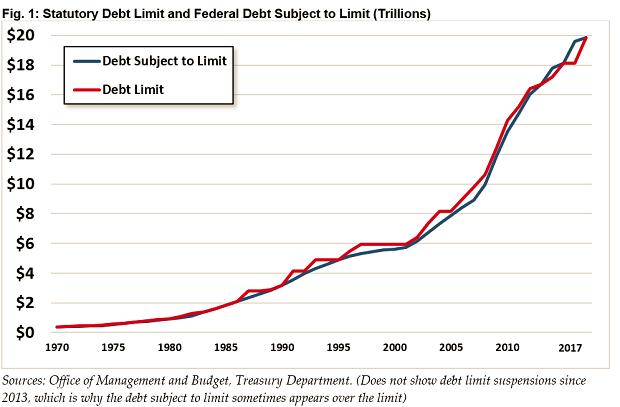
The debt ceiling is currently $19.9 trillion, and Treasury Secretary Steven Mnuchin has repeatedly urged Congress to raise the debt ceiling by September 29. A failure to do so could roil financial markets around the world, and ultimately increase the cost of servicing U.S. debt.
This is not the first time Congress has faced this problem. During an earlier debt ceiling showdown in 2011, Standard & Poor's reduced its rating on U.S. debt from its highest level to AA+. However, Fitch and Moody’s stuck with their top ratings.
Senators to Hold Hearings on a Bipartisan Fix for Health Care
Mark your calendars: Senate health committee Chairman Lamar Alexander (R-Tenn.) and Ranking Member Patty Murray (D-Wash.) announced today that they will hold bipartisan hearings on Sept. 6 and 7 focused on stabilizing premiums in the individual insurance market. The first hearing will be with state insurance commissioners; the second will be with governors.
In a statement, Alexander noted that 18 million Americans buy insurance on the individual market.
“My goal by the end of September is to give them peace of mind that they will be able to buy insurance at a reasonable price for the year 2018,” he said. “Unless Congress acts by September 27—when insurance companies must sign contracts with the federal government to sell insurance on the federal exchange in 2018— 9 million Americans in the individual market who receive no government help purchasing health insurance and whose premiums have already skyrocketed may see their premiums go up even more. Even those with subsidies in up to half our states may find themselves with zero options for buying health insurance on the Obamacare exchanges in 2018.”
McConnell: ‘Zero Chance’ the Debt Ceiling Will Be Breached
At an event in Kentucky to discuss tax reform, Senate Majority Leader Mitch McConnell and Treasury Secretary Steven Mnuchin insisted Monday that Congress will raise the debt ceiling by late next month, in time for the U.S. to avoid a default that could roil the global economy and markets.
Related: The Debt Ceiling — What It Is and Why We Should Care
The key quotes, per Roll Call:
McConnell: "There is zero chance — no chance — we won't raise the debt ceiling. No chance. America's not going to default. And we'll get the job done in conjunction with the secretary of the Treasury."
Mnuchin: “We’re going to get the debt ceiling passed. I think that everybody understands this is not a Republican issue, this is not a Democrat issue. We need to be able to pay our debts. This is about having a clean debt ceiling so that we can maintain the best credit, the reserve currency, and be focused on what we should be focusing on — so many other really important issues for the economy.”
Related: Here’s a Solution for the Annual Debt Ceiling Crisis — Get Rid of It
Mnuchin reiterated his “strong preference” for a “clean” increase to the debt limit — one without other policy proposals or spending cuts attached to it — but some House conservatives continue to press for such cuts.
Bonus McConnell quote on what tax breaks might be eliminated in tax reform: “I think there are only two things that the American people think are actually in the Constitution: The charitable deduction and the home mortgage interest deduction. So, if you’re worried about those two, you can breathe easy. For all the rest of you, there’s no point in doing tax reform unless we look at all of these preferences, and carried interest would be among them.”
Trump’s Travel and Family Size Squeeze Secret Service Budget
In an interview with USA Today, Secret Service Director Randolph "Tex" Alles said the agency is bumping up against federally mandated salary and overtime caps in executing its mission to protect the president and his family.
USA Today’s Kevin Johnson notes that 42 people in the Trump administration have Secret Service protection, including 18 of the president’s family members. Under President Obama, 31 people had such protection.
“The compensation crunch is so serious that the director has begun discussions with key lawmakers to raise the combined salary and overtime cap for agents, from $160,000 per year to $187,000 for at least the duration of Trump's first term,” Johnson reported.
Related: Which Former President Costs US the Most?
In a statement, Alles said the agency has the funding it needs for the rest of the fiscal year, which runs through Sept. 30, but estimated that 1,100 employees run into statutory pay caps as a result of overtime work during this calendar year.
“This issue is not one that can be attributed to the current Administration’s protection requirements alone, but rather has been an ongoing issue for nearly a decade due to an overall increase in operational tempo," Alles said in the statement.
Earlier: The Secret Service Won’t Get $60 Million More to Protect the Trumps