
The Rapidly Rising Death Toll of the Heroin Epidemic
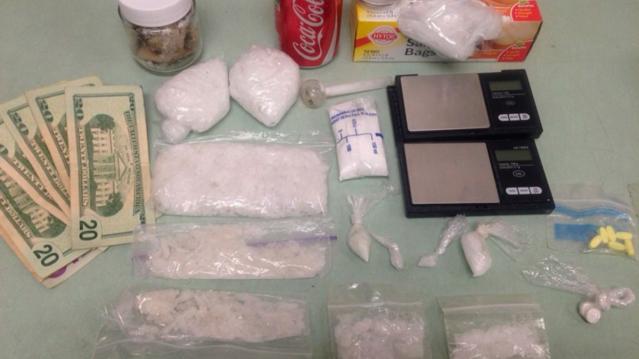
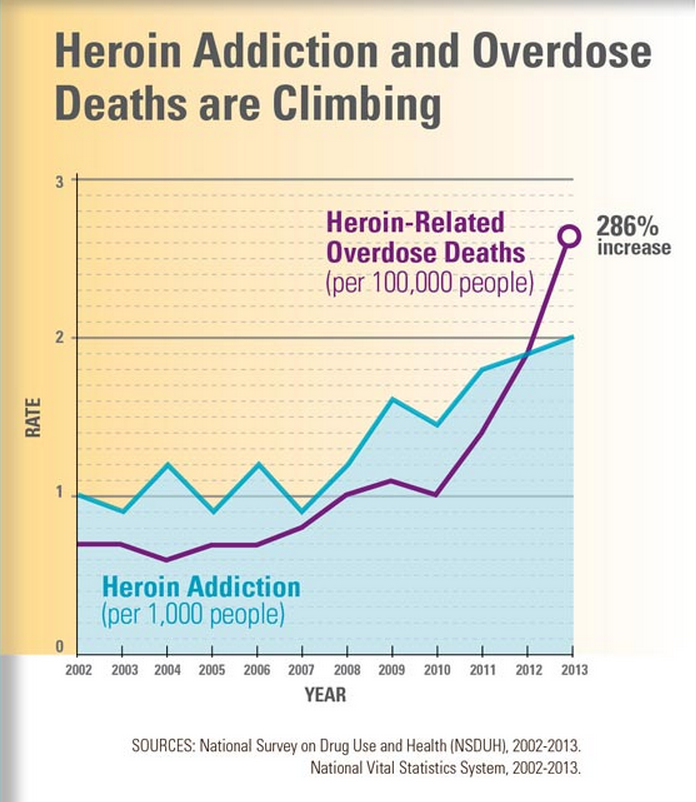
The death toll from the heroin epidemic has been climbing dramatically in recent years — and the annual rate of overdose deaths nearly doubled between 2011 and 2013, according to a new CDC study.
From 2002 through 2013, heroin use in the United States rose by 63 percent, and the rate of abuse or dependence climbed a staggering 90 percent. Deaths from heroin-related overdoses nearly quadrupled, with more than 8,200 people dying in 2013 alone.
The CDC report says that heroin use has increased across most demographic groups — men and women, most age groups, and across all income levels. Rates of heroin use are still highest among men, those ages 18 to 25, people with income less than $20,000 a year, people in urban areas, and those who do not have health insurance or are on Medicaid. But other groups are turning to the drug, too. “Some of the greatest increases occurred in demographic groups with historically low rates of heroin use: women, the privately insured and people with higher incomes,” the CDC says.
The heroin trend isn’t happening in isolation, the CDC study says. Almost all heroin users — 96 percent — also took at least one other drug, and 61 percent used at least three other drugs. Abuse or dependence on opioid painkillers is the strongest risk-factor for heroin use or addiction, the report says, with cocaine addiction also high on the list. People who are addicted to prescription opioid painkillers are 40 times more likely to use or be addicted to heroin, and 45 percent of people who used heroin were also addicted to painkillers.
Another key reason is that heroin is becoming cheaper and more widely available. According to the DEA, the increase in heroin seizures in the U.S. from 2010 and 2014 rose 81 percent, from 2,763 kilograms to 5,014 kilograms. More and more law enforcement agencies are identifying heroin as their primary drug threat, but the CDC report suggests that health care workers focus on reducing the abuse of painkillers by improving prescribing practices.
The study also recommends that states increase access to “medication-assisted treatment” programs that use methadone, buprenorphine and naltrexone along with behavioral counseling. And it says the rapid rise in heroin-related deaths highlights an “urgent need” to broaden access to naloxone, a drug that can reverse the effects of heroin and opioid overdose.
Meet Blade, the Uber for Helicopters in NYC
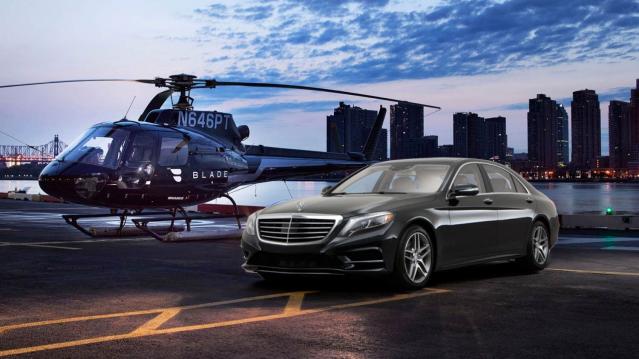
Uber may be convenient, but New York’s Hamptons set doesn’t always have the time or patience to deal with the traffic getting out to their summer spots on Long Island’s East End.
Blade, which calls itself “the first digitally driven short distance aviation company,” says it has a solution for those who want to get to East Hampton within the hour, or Southampton in 35 minutes: Ordering their own chartered helicopter via an app.
Related: 10 Biggest Tech Flops of the Century
Once you download the app, you can select your flight time, chill out in a Blade lounge at a Manhattan heliport and then enjoy “a snack, a drink, a newspaper and lots of other fun things” on your flight. Passengers are allowed one carry-on weighing 25 lbs. maximum — but no golf clubs.
The service, which launched in May 2014, doesn’t come cheap, at $595 per seat to go to Quogue, Southampton, East Hampton, Montauk or Fire Island. Blade can also be booked for trips to Nantucket, Martha’s Vineyard, Cape Cod and some other destinations in the Northeast as well as to the New York area’s major airports.
The website advises that if your flight is grounded due to bad weather, you’ll be offered a ride to your destination in a chauffeured Mercedes at no extra cost.
Top Reads from The Fiscal Times:
- The Best Things to Charge on Your Credit Card
- The Wealthy Worry, Too—And It’s Not All About Money
- 10 Best Islands in the World
The Best and Worst States for Student Debt
Where you go to college and what major you pick can have huge financial consequences, but where you live after graduating can also have a big impact on how much your diploma is worth — and how well you can handle your student debt.
How likely are you to land a good paying job? How high will your living expenses be? The answers to those questions and others like them go a long way to determining how burdensome those monthly student loans payments are.
Related: The Best Investment the U.S. Could Make—Affordable Higher Education
To ensure your loan doesn’t break you, experts suggest that your payment should not exceed 8 to 10 percent of your monthly income.
Unsurprisingly, the personal finance website WalletHub says, “Student-loan borrowers will fare better in states that produce a combination of lower college-related debt levels, stronger economies and higher incomes.”
To find those states, WalletHub looked at seven metrics, with special emphasis given to student debt as a percentage of average income, the local unemployment rate for people aged 25 to 34 and the percentage of borrowers aged 50 or older. Here are the 10 best and worst states for student debt. You can click on your state on the map below to see where it ranks.
Related: Private Student Loans: Everything You Need to Know
10 Best States for Student Debt
- Utah
- Wyoming
- North Dakota
- Washington
- Nebraska
- Virginia
- Wisconsin
- Minnesota
- Colorado
- South Dakota
10 Worst States for Student Debt
- Mississippi
- Rhode Island
- Connecticut
- Maine
- Georgia
- South Carolina
- New York
- Alabama
- West Virginia
- Oregon
Top Reads from The Fiscal Times:
Why We’re Wasting Billions on Teacher Development
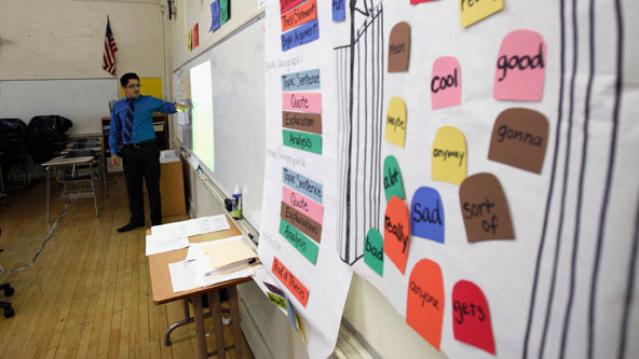
School districts spend an average $18,000 per year on teacher development, and teachers devote about 10 percent of their time to professional learning, but a new report finds that such programs may not be producing any measurable results.
The report, released today by TNTP, a nonprofit aimed at addressing educational equality, finds even with development programs, teachers do not show much improvement year over year, and the performance for the vast majority (70 percent) remained constant or declined over the past two to three years.
The report’s authors believe the lack of improvement stems from low expectations for teacher development and performance, and they suggest that schools need to rethink completely the ways that they measure teacher performance and the way they conduct student development.
Related: The Education Department Is Failing Students Who Got Defrauded
The study evaluated information on more than 10,000 teachers at three large school districts and a charter network covering nearly 400,000 students.
The authors report that teachers who do show improvement do not appear to be the result of deliberate, systemic efforts, and show no clear patterns that could improve development for others. “The absence of common threads challenges us to confront the true nature of the problem,” they write. “That as much as we wish we knew how to help all teachers improve, we do not.”
Rather than offer specific solutions, the authors suggest that schools redefine professional development, re-evaluate professional learning programs, and reinvent the ways they support teachers.
Top Reads from The Fiscal Times:
- Teens Are Having Much Less Sex Than Their Parents Did at That Age
- The 2016 Presidential Election Is Already a Dumpster Fire
- You’re Richer Than You Think. Really.
Happy Watermelon Day! 16 Sweet, Juicy Facts You Didn’t Know
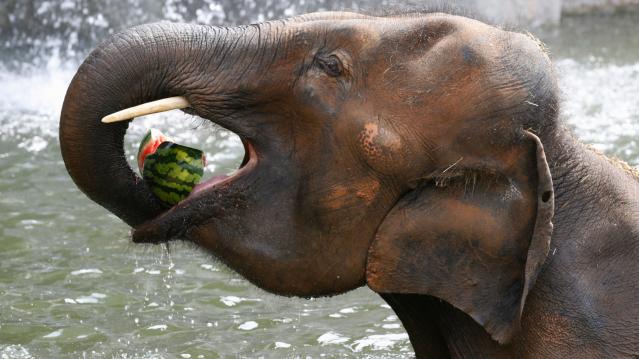
Frida Kahlo painted them and poets have celebrated them. In his “Ode to the Watermelon,” Pablo Neruda described it as “a fruit from the thirst-tree” and “the green whale of the summer.” He wrote: “its hemispheres open/showing a flag/green, white, red,/ that dissolves into/wild rivers, sugar, delight!” Abundant in summer, watermelons are by their very nature sweet and heavy, plus they’re full of vitamins: A, B6, and C. Aug. 3 is National Watermelon Day. We celebrate it here with 16 fun facts.
Related: Born in the USA: 24 Iconic American Foods
- Watermelons are 92 percent water.
- The word “watermelon” first appeared in English dictionaries in 1615, according to John Mariani’s The Dictionary of American Food and Drink.
- Watermelons are related to pumpkins, as well as cucumbers and squash.
- The world’s largest watermelon was grown by Lloyd Bright of Arkadelphia, Arkansas in 2005 and weighed 268.8 pounds, according to the Guinness Book of World Records.
- Watermelons originated in southern Africa.
- They appear in Egyptian hieroglyphics nearly 5,000 years ago. Watermelon seeds were found in the tomb of King Tut.
- Early explorers carried watermelons on long trips as a source of water, like canteens.
- Watermelons are both fruits and vegetables.
- China is the largest producer of watermelons in the world today, followed by Turkey and Iran.
- The U.S. currently ranks fifth in watermelon production worldwide. Georgia, Florida, Texas, California and Arizona are the states that grow the most watermelon.
- On April 17, 2007, the Oklahoma State Senate passed a bill declaring watermelon as the official state vegetable.
- Over 1,200 varieties of watermelon are grown in 100 countries across the world.
- Watermelons were introduced to the New World by European colonists and African slaves. Spanish settlers started growing watermelon in Florida in 1576.
- One cup of watermelon has more lycopene, a pigment with antioxidant effects, than a large fresh tomato.
- You can eat the seeds. And the rind. Here’s a recipe for pickled watermelon rind.
- Are your muscles feeling sore? Have some watermelon before your next workout. The juice contains L-citrulline, which the body converts to L-arginine, an amino acid that helps relax blood vessels and improves circulation.
Top Reads from The Fiscal Times:
- 16 Companies Taking Some ‘Junk’ Out of Their Food
- Here’s Why Americans Are Keeping Their Cars Longer than Ever
- Amazon’s Prime Concern—A New Online Blitz by Walmart
Why Believing Donald Trump Will Be the GOP Nominee Is Delusional
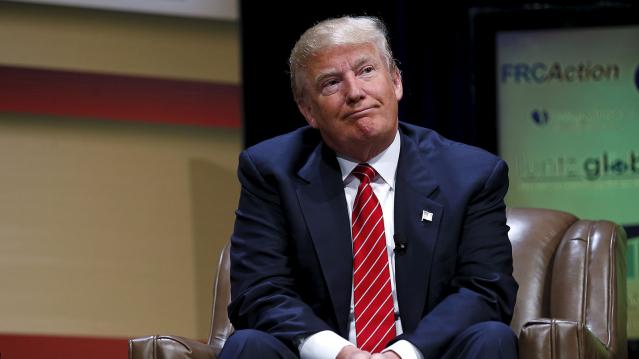
Despite his commanding lead at this early stage among GOP candidates, the 2016 nomination is anyone’s game.
It is risky to put too much stock in the latest findings, including the NBC/Wall Street Journal poll released Sunday. That’s because the national telephone survey of 1,000 adults included only 252 registered voters who said they would vote for a Republican, and the poll has a margin of error of plus or minus 6.17 points.
Related: Why Jeb Bush’s Pragmatic Immigration Plan Has No Chance of Passing in the House
There are plenty of downsides to Trump’s candidacy – including his threat to mount a third-party campaign if he is denied the Republican nomination -- which has alarmed GOP leaders who are looking down the road to the general election.
Trump has the highest negatives of any of the top tier candidates, and a majority of Americans in the survey said they think Trump is hurting the Republican Party. Not surprisingly, the vast majority of Democrats interviewed said Trump was harming his party’s image, but nearly half the Republicans interviewed said the same thing.
Political analyst Nate Silver notes that Trump ranks just 13th in overall favorability among Republicans in a series of national polls. “If you’re going to imply that a candidate is popular based on their receiving 20 percent of the vote, you ought to consider what the other 80 percent thinks about him,” Silver wrote recently in his FiveThirtyEight blog. “Most Republicans who don’t plan to vote for Trump are skeptical of him instead.”
Related: Donald Trump Just Showed Why His Campaign Is Doomed
What’s more, about three in four Latinos said they have a negative view of Trump – and that more than half consider his comments about lawless Mexican immigrants to be racist or highly inappropriate, according to a separate NBC News/Wall Street Journal Telemundo poll released today.
The survey of 250 Hispanic-American voters revealed widespread hostility towards Trump, with only 13 percent saying they have a positive view of him.
The Republican presidential frontrunner has said repeatedly that many Latino voters “love” and support him, and that he would win the majority of that vote if he ends up as his party’s nominee. There is little evidence in this poll to suggest Trump is dealing with reality.
Top Reads from The Fiscal Times:
- Clinton Tries to Change the Narrative with First Two Campaign Ads
- Super PAC or Not-so-Super PAC? The Difference Between Jeb and Bernie
- States Are Finally Overcoming the Fiscal Headwinds